- India's RBI increased its net-short dollar book to near $100 billion to defend the rupee
- RBI used offshore non-deliverable forwards and onshore buy-sell swaps for interventions
- RBI's FX reserves stood at $717 billion in early March, near a record high
India ramped up use of a key tool for defending the rupee to record levels as the currency weakened to an all-time low against the dollar, according to people familiar with the matter.
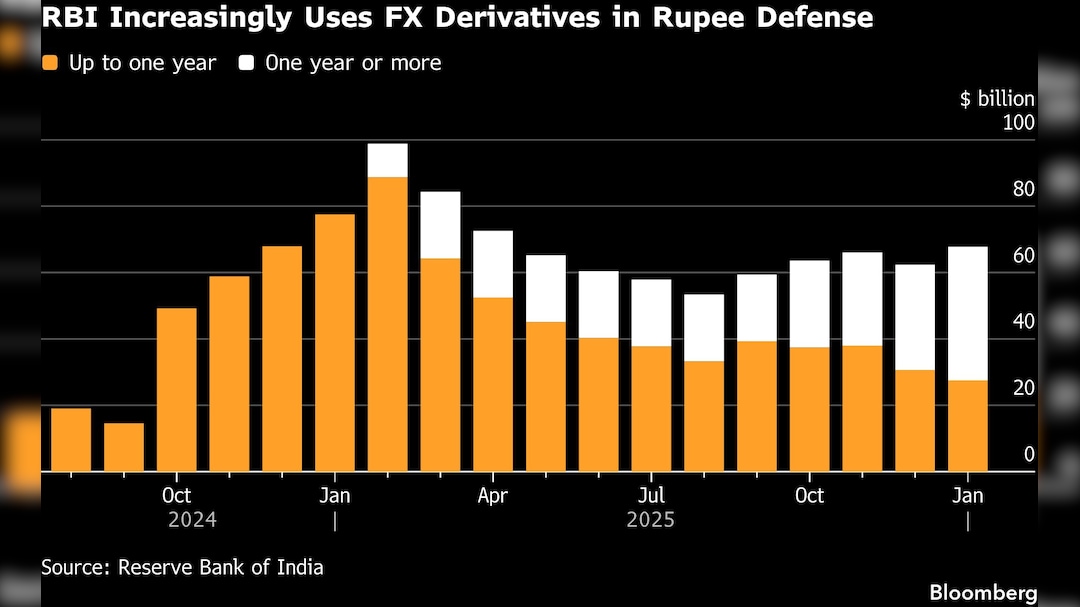
The Reserve Bank of India's net-short dollar book, a measure of the degree it has sold forward its stockpile of US currency, is nearing $100 billion across offshore and onshore markets, said the people, who asked not to be identified as the information is private. The measure was $67.8 billion in January, according to the latest official data, and last hit a record $88.8 billion in February 2025.
The buildup comes as emerging markets face renewed pressure from a resurgent dollar. Even before the conflict broke out, the RBI was already heavily intervening to steady the rupee for months as high US tariffs spurred record equity outflows.
Also Read | Layoffs Are Rising In Tech, But These Skills Are Helping People Unlock Better Pay
The RBI focused much of its intervention in offshore markets, particularly through non-deliverable forwards, the people said. These dollar-settled contracts account for a significant share of its derivatives book, the people added.
The central bank has been selling dollars largely via short-dated contracts, typically maturing within weeks to a month, the people said. Onshore, it has supplemented this with buy-sell swaps — including longer-tenor trades exceeding a year, they added. The latter help offset the liquidity impact of RBI intervention.
India's FX reserves stood at $717 billion in the week of March 6, near a record high.
ALSO READ: Goldman Sees Rupee Sliding To 95, Putting Pressure on RBI
Using NDFs allows the RBI to influence the exchange rate without immediately depleting foreign-exchange reserves, while also keeping intervention costs relatively lower. Such moves can signal policy intent and help steady the currency during periods of volatility.
A spokesperson for the RBI didn't respond to an email seeking comment.
Still, the growing derivatives book may become a headwind. As contracts mature, they create recurring demand for dollars, which — alongside steady importer demand — could limit any sustained recovery in the rupee, Barclays Plc strategists including Mitul Kotecha wrote in a note Tuesday.
ALSO READ: RBI Announces Cancellation Of Certificate Of Registration For 36 Companies
The rupee has marked successive record lows in March, breaching the closely watched 92-per-dollar level.
Essential Business Intelligence, Sharp Market Insights, Practical Personal Finance Advice, Daily Fuel, Gold and Silver Prices and Latest Stories — On NDTV Profit.