Premium petrol grades sold by state-run fuel retailers will continue to remain ethanol-free, while the government has no plans to restore E0 or E10 petrol or increase ethanol blending beyond the current 20% level.
The Centre has clarified that premium petrol variants such as Indian Oil's XP100, Hindustan Petroleum's poWer100 and Bharat Petroleum's Speed100 will continue to be sold without ethanol blending, citing their specialised formulation and limited market share.
The three premium fuels account for just 0.5% of India's total petrol sales and are designed with performance-enhancing additives for high-performance vehicles.
Also Read | Layoffs Are Rising In Tech, But These Skills Are Helping People Unlock Better Pay
Responding to questions in the Lok Sabha, Minister of State for Petroleum and Natural Gas Suresh Gopi said the government has also not taken any decision to increase ethanol blending beyond 20%, adding that any future move would require scientific studies and consultations with automobile manufacturers, oil marketing companies and research institutions.
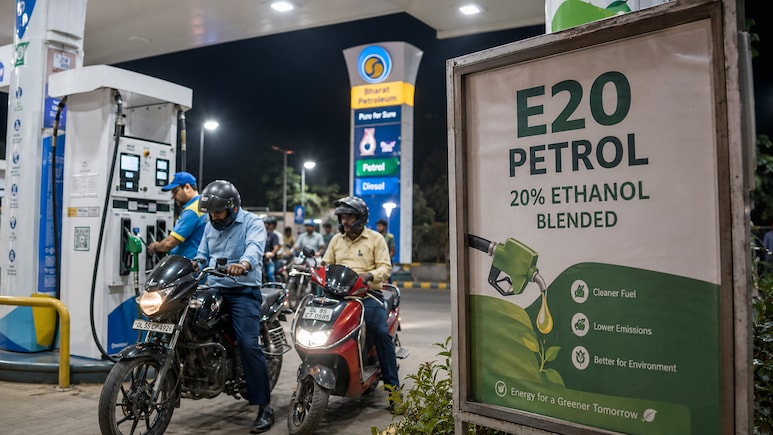
The clarification comes amid concerns from motorists following the nationwide rollout of E20 petrol, which has replaced lower ethanol blends across more than one lakh fuel stations.
ALSO READ: OMCs Spend Rs 1.72 lakh Crore On Ethanol Procurement
The government reiterated there is no proposal to reintroduce E0 or E10 petrol, arguing that maintaining parallel supply chains would significantly increase logistics, storage and inventory costs.
To counter concerns over vehicle compatibility, Gopi said the government has not received any widespread or substantiated complaints from automakers, consumer groups or automobile associations regarding engine damage linked to E20 fuel.
According to laboratory studies, field trials and operational data, even vehicles originally designed for E10 experience only a 3% to 5% reduction in fuel efficiency, without evidence of widespread engine failures or corrosion. More than 20 crore two-wheelers and over 3 crore petrol cars are already operating on higher ethanol blends, he added.
The minister also highlighted that India's ethanol programme is becoming less dependent on sugarcane.
Maize now contributes around 37% of the country's ethanol feedstock, alongside damaged foodgrains, broken rice and other surplus grains, supporting the government's twin objectives of improving energy security while reducing pressure on water-intensive crops.
ALSO READ: Govt Evaluates Phased Shift To Higher Ethanol Blend
With PTI inputs
Essential Business Intelligence, Sharp Market Insights, Practical Personal Finance Advice, Daily Fuel, Gold and Silver Prices and Latest Stories — On NDTV Profit.