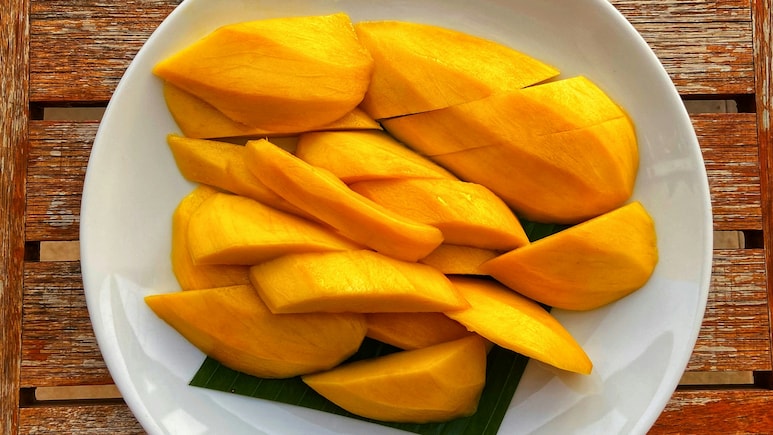
One of the simple joys of school vacations, alongside endless games of cricket and family trips, was the arrival of mango season. In the coming weeks, that ritual returns, with aamras, amrakhand, and mango desserts taking over homes and restaurant menus.
Despite being a seasonal fruit, the mango's economic contribution to India's fruit industry is significant. It accounts for nearly one-fifth of the country's total fruit production, is cultivated across about 24 lakh hectares and yields close to 23 million tonnes annually. That makes India the world's largest producer, contributing over 40% of global mango output.
Farmers Prefer Exports
There is a common complaint that the quality of mangoes isn't what it used to be. The easy explanation is that the best fruit gets exported, and what remains is inferior. That is partly true, but it is only one piece of the story.
Let's start with the basic principle. In any business, incentives shape outcomes. If a farmer earns more from exports than from selling to a local mandi, the natural and rational response is to prioritise exports. So, farmers aren't wrong when they choose exports over domestic markets.
But let me also clear our export math. Despite being the largest producer of mangoes, India exports only a tiny fraction (less than 1%) of what it produces. A country that dominates global production doesn't participate much in global trade. So, there's more than the 'exported mangoes are better' narrative.
Stricter Compliance in Export Supply Chain
The more important point is why exported mangoes are of better quality. Exports come with strict conditions and standards on appearance, size, pesticide residue, and handling. All shipments get inspected and even rejected if they fail these norms. As a result, farmers take extra care at every stage.
Exporting them requires facilities such as cold-chains and irradiation or vapour heat treatments. Farmers must also use fewer pesticides, as most countries have stricter pesticide residue norms.
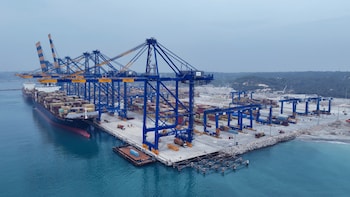
India's capacity on these fronts remains limited. Naturally, only a small, well-prepared segment of the supply chain meets such export requirements. The highest-quality fruit — uniform, blemish-free and compliant with pesticide-residue norms — is, then, packed for exports while the rest move into domestic markets.
Poor Compliance in Domestic Supply Chain
Domestic markets, in contrast, don't have the same level of standards, inspection, and compliance. That translates into practices like early harvesting, carbide ripening, and higher pesticide use. Faster ripening means quicker sales, and early harvesting protects against weather uncertainty or spoilage.
Over the years, climate uncertainty has reduced the choices available to farmers. Faced with a trade-off between losing the crop and compromising on quality, most choose the latter to protect their livelihoods. This leads to greater use of pesticides and growth regulators, even as costs continue to rise.
In doing so, farmers reduce all kinds of risks because uncertain weather, rising geopolitical tensions, rising costs, changing government policies and volatile yields add to their economic pressure.
Cautious But Targeted Measures Needed
The mango economy today is shaped by multiple forces, such as limited exports, uneven domestic supply chains that affect quality, and rising volatility from climate and geopolitics.
So, what we experience as a decline in quality is, therefore, not just about "exporting the best", but also about differences in incentives and their effects on supply chains.
An intuitive solution would be stricter standards in domestic markets. But that means more testing, longer delays, and increased compliance costs. In practice, only larger and more organised farmers can manage all this. Small ones may need more support. Therefore, we must approach such changes carefully.
The real challenge, then, is not just stricter regulation, but better alignment of incentives. That requires investing in cold chains, improving food safety enforcement, strengthening market access for farmers, and ensuring that better quality also earns better prices domestically.
Until that happens, the gap between what is exported and what we consume will remain.
Disclaimer: The views expressed in this article are solely those of the author and do not necessarily reflect the opinion of NDTV Profit or its affiliates. Readers are advised to conduct their own research or consult a qualified professional before making any investment or business decisions. NDTV Profit does not guarantee the accuracy, completeness, or reliability of the information presented in this article.
ALSO READ: Southeast Asia's Digital Bet Comes With Risks | The Reason Why
Essential Business Intelligence, Continuous LIVE TV, Sharp Market Insights, Practical Personal Finance Advice and Latest Stories — On NDTV Profit.