For years, Asia has been treated as the natural destination for China's outbound capital, the first stop in the country's global investment expansion. Oxford Economics suggests that era may be ending.
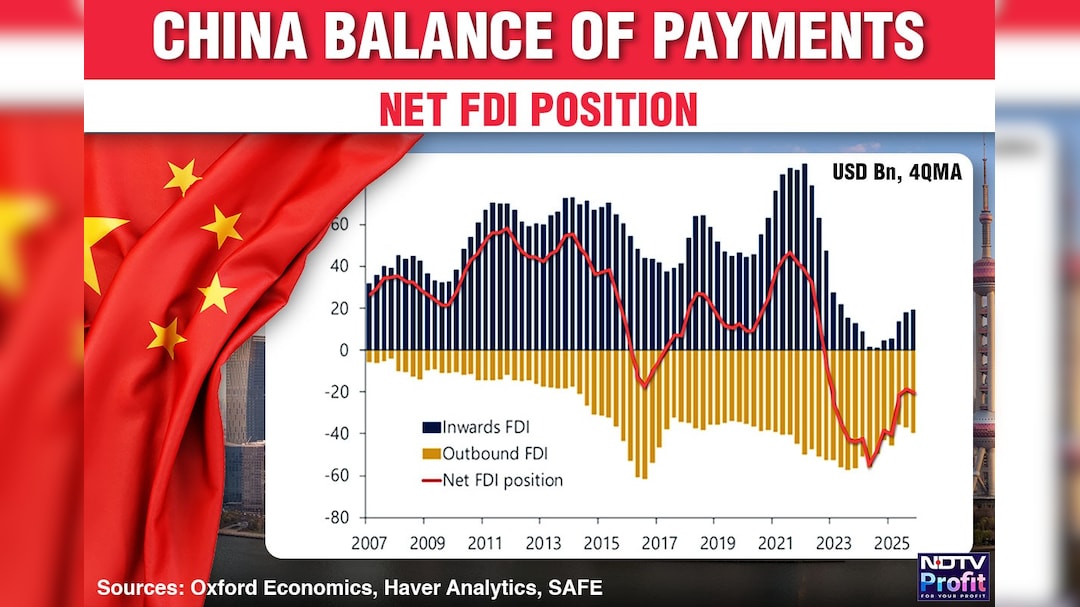
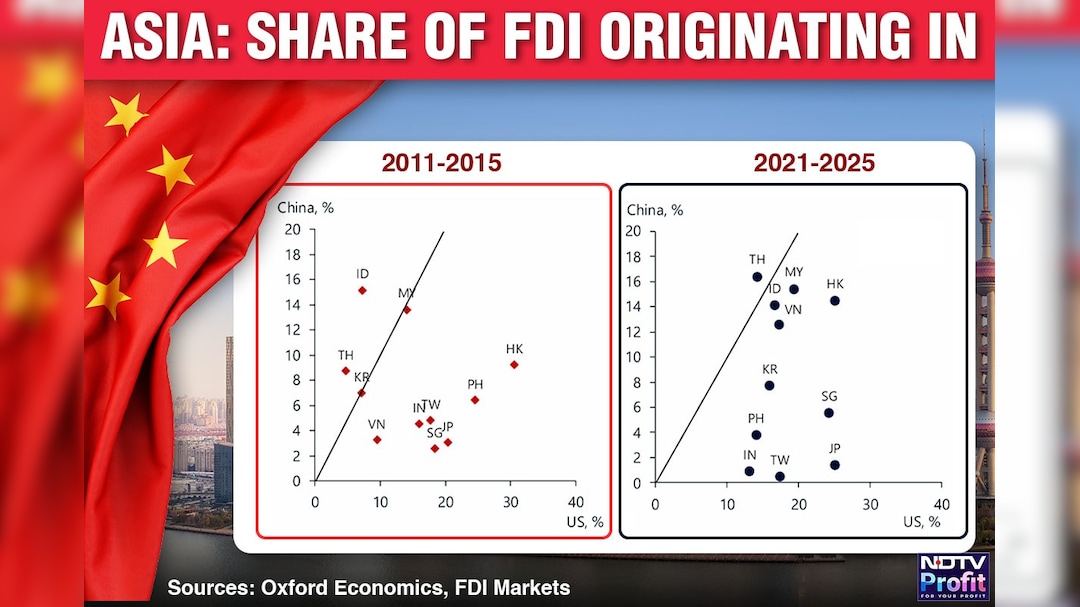
While Chinese outward direct investment remains resilient, the underlying geography and industrial focus of those flows are shifting in ways that weaken Asia's once-central role. As economist Adam Samdin and assistant economist Jun Hao Ng put it, "Asia's reliance on Chinese FDI relative to US FDI seems to be more bifurcated than a decade ago." In fact, they note, "China's FDI footprint in some Asian economies outside of EM ASEAN appears to be much lower than it used to be, almost all Asian economies are still relying more on US FDI."
That bifurcation, gains for a few, declining relevance for many, is the defining theme of China's new investment map.
Asean Benefits, But Region As Whole Doesn't
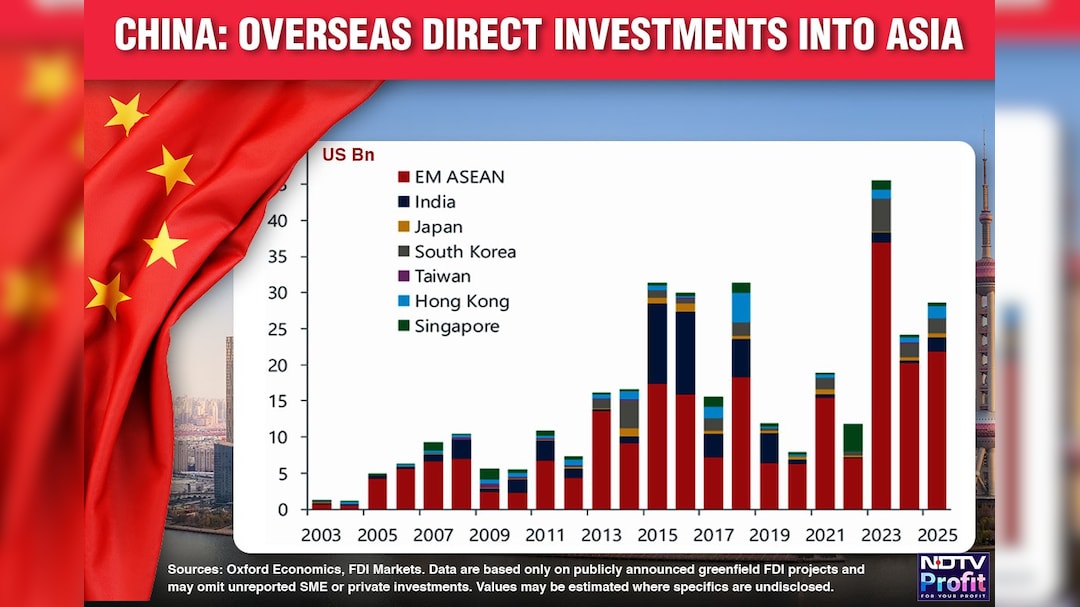
Emerging Asean economies remain the clearest beneficiaries of Chinese investment. Vietnam, Thailand, Indonesia, and Malaysia continue to attract manufacturing-linked FDI as Chinese firms seek tariff hedges, lower production costs, and supply-chain resilience. Thailand stands out in particular, with China accounting for more than half of inbound FDI last year, bolstered by investment in both electric vehicles and digital infrastructure.
But this strength is narrowly distributed. Outside EM Asean, China's presence has faded rather than grown. The Philippines has attracted little Chinese manufacturing investment, partly because of political friction with Beijing and partly because its services-heavy economy offers fewer synergies with China's industrial exporters. India, meanwhile, continues to place regulatory limits on Chinese capital despite recent easing.
The result is a fragmented investment landscape: Asia is still relevant, but no longer uniformly so.
Structural Break, Not Cyclical Dip
The more significant development, however, lies beyond Asia altogether. In 2025, Latin America overtook Asia as the largest destination for Chinese ODI, a shift that Oxford Economics says "reflects something deeper than temporary volatility."
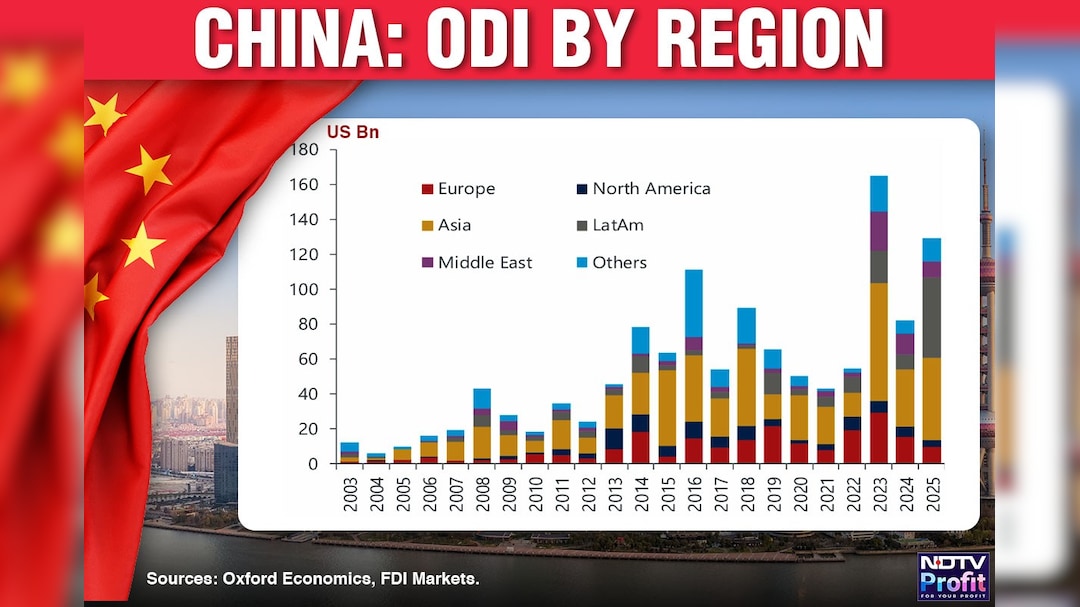
"The speed and scale of Chinese ODI reallocation, both geographically and across sectors, suggest a more structural shift in capital deployment rather than a purely cyclical one," the authors argue. The change coincided with renewed US tariff actions, which hit several Asian economies disproportionately while leaving Mexico relatively insulated under the USMCA framework.
For Chinese firms trying to maintain access to the US market, Mexico's manufacturing platform, being a neighbour and tariff-protected, increasingly looks more attractive than Southeast Asia's longer and politically riskier supply chains.
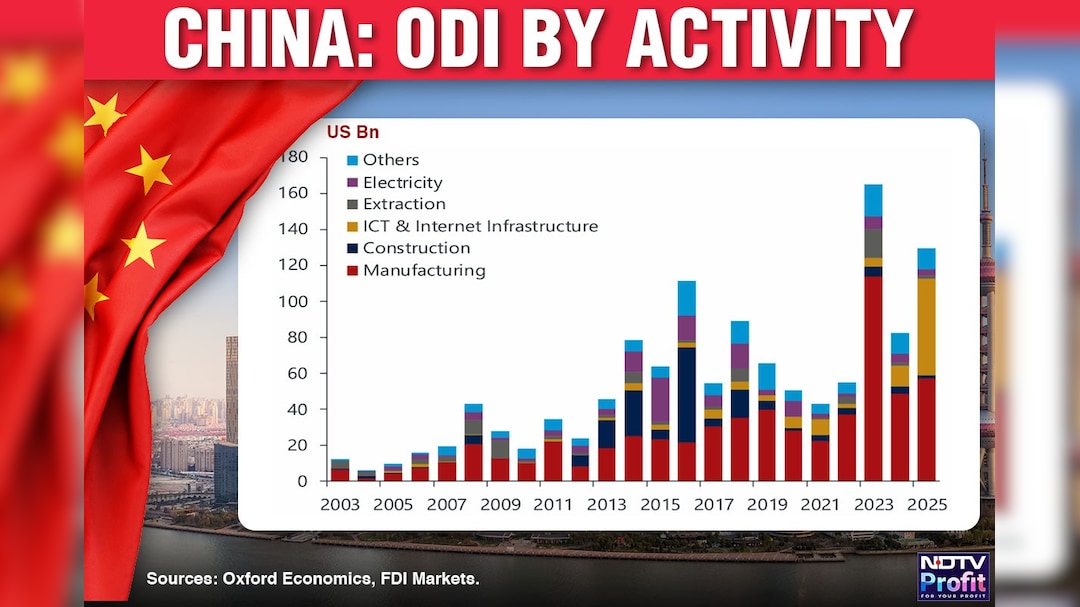
Equally important is what China is investing in. While manufacturing has long underpinned Asia's gains from Chinese FDI, much of the recent surge in outbound investment has been driven by Information and Communications Technology (ICT) and internet infrastructure rather than factories.
Data centres, cloud computing facilities, and AI-related infrastructure dominated Chinese ODI growth in 2025. But here too, Asia has been overshadowed. "Importantly, Chinese ODI in this sector has so far overwhelmingly benefitted Latin America, with announced flows rising by around $38bn between 2024 and 2025," Samdin and Ng write. "Asia came in a distant second, with $10bn of FDI from China in the same sector."
This imbalance matters because tech infrastructure generates far fewer spillovers than manufacturing. Unlike factories, data centres do not anchor deep supplier networks or deliver large-scale employment gains.
As the authors warn, "This suggests that the positive spillovers from higher Chinese manufacturing FDI into Asia may not be repeated as this sector continues to expand."
What It Means for India's Policy Choices
India's relative isolation from the Chinese capital is not necessarily a weakness. US, European, and Japanese investors remain core pillars of India's foreign investment story, both in scale and in quality. According to RBI and DPIIT data, the United States consistently ranks among India's top three direct investors, accounting for around 11-20% of annual FDI equity inflows in recent years, while Japan remains a stable source of long‑term manufacturing capital, particularly in automobiles, electronics, chemicals, and industrial machinery.
European investors, led by the Netherlands, the UK, Germany, and France, together account for a sizeable share of inflows, with European capital disproportionately concentrated in high value‑added segments such as renewable energy, pharmaceuticals, advanced manufacturing, financial services, and R&D‑intensive activities.
This is reflected in sectoral composition. Between FY2022 and FY2025, manufacturing, computer software and hardware, services, and energy together absorbed more than half of India's total FDI, sectors where Western and Japanese firms dominate and where investments typically bring deeper technological transfer, management integration, and export linkages than assembly‑oriented flows.
Unlike much of Chinese manufacturing FDI in Asia, which is geared toward tariff arbitrage and cost minimisation, India's largest foreign investors tend to embed capital for the long term, aligning with domestic value‑chain upgrading rather than short‑cycle supply‑chain relocation.
But the global investment environment is tightening. As Chinese capital becomes more selective and Western capital more geopolitically conditioned, India cannot assume that scale and demographics alone will guarantee inflows.
Asia's New Challenge
The message is not that Chinese investment is abandoning Asia, but that Asia can no longer assume it will be the default beneficiary. Capital is becoming more selective, more strategic, and more politically conditioned. Regions that once thrived on low costs and scale now face competition from proximity, trade agreements, and technology platforms.
For Asian policymakers, the implication is stark: competing for Chinese capital in the next decade will require more than industrial parks and tax breaks. It will demand value-chain upgrading, regulatory credibility, and insulation from geopolitical risk.
China's money is still moving. But for Asia, the terms of engagement have fundamentally changed.
ALSO READ: Blow To Petrodollar? How China Stands To Gain From Iran's Currency Offensive In Hormuz
Essential Business Intelligence, Sharp Market Insights, Practical Personal Finance Advice, Daily Fuel, Gold and Silver Prices and Latest Stories — On NDTV Profit.