- Banks seek RBI relaxation on new $100 million net open position cap in onshore market
- RBI rule forces banks to unwind $250-300 million positions by April 10, hitting profits
- New norms aim to curb rupee fall, which hit a record low of 94.81 per dollar on March 27
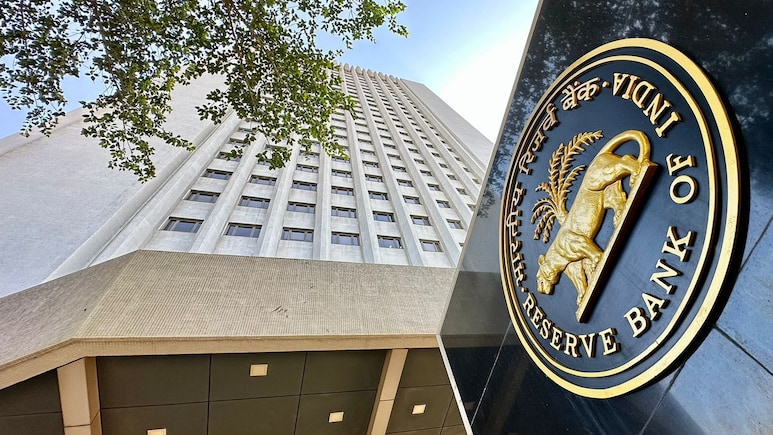
Banks have approached the Reserve Bank of India (RBI) seeking relaxation on the new directive capping their net open position (NOP) in the onshore deliverable market at $100 million, sources say.
"Large banks' officials met with RBI officials on Saturday and conveyed their concerns on the immediate hit to profitability if the new rules are implemented from next month. The RBI should consider making these rules applicable from a prospective manner and give us a three-month timeline to wind-down positions," a senior treasury official at a private bank said.
Large banks are estimated to have $250-300 million NOP each in this market and as they are forced to wind-down their positions by April 10 — as directed by the RBI — they will have to mark-to-market trading losses in Q4FY26 itself, denting treasury income and thereby the profitability.
Also Read | Layoffs Are Rising In Tech, But These Skills Are Helping People Unlock Better Pay
Indian banks were previously allowed to hold NOP upto 25% of their total capital. The RBI has introduced the new norms to arrest the fall in Indian rupee, which has seen it depreciate to a historical low of 94.81 per dollar on March 27.
Arbitrage Income, Hedging Costs Impacted
According to Ritesh Bhusari, trading head at South Indian Bank, commercial banks will be forced to sell their excess holdings in the forward market to meet the $100-million cap by April 10. Due to this, arbitrage income will vanish and banks will essentially provide the "supply" the RBI needs.
Traders can also move bearish bets offshore where the NOP cap doesn't apply. This could lead to offshore bets becoming expensive and lead to rise in hedging costs for FPIs. "The RBI is signaling that while it respects market forces, it will not tolerate "disorderly movements." For Treasury professionals and CFOs, the focus now shifts from "predicting the rate" to "managing the liquidity." In a restricted NOP environment, the basis risk between onshore and offshore markets is set to become the new primary challenge," Bhusari said.
Further, the onshore and offshore spreads are expected to widen further due to this asymmetry in regulatory limits. While immediate volatility is certain, Bhusari says if the RBI takes this opportunity to accept the delivery and let their earlier Buy/Sell contract mature and act as counterparty to banks, the losses will be limited.
Kunal Sodhani, treasury head at Shinhan Bank, says by enforcing a uniform limit, the RBI is effectively forcing banks to unwind large long-dollar positions, with estimates suggesting $10-18 billion of positions that could be squared off in the near term, leading to immediate dollar selling and short-term support for the INR. The move would also lead to a dent in banks' treasury income, he says.
"The measure also disrupts onshore-offshore arbitrage, compressing NDF spreads and reducing speculative activity. While it acts as a form of "synthetic intervention" without depleting reserves, it may tighten liquidity and increase hedging costs. Overall, the move signals clear discomfort with rupee weakness and reflects a shift from direct intervention to controlling market positioning, offering near-term stability but limited influence on longer-term fundamentals," Sodhani said
Essential Business Intelligence, Sharp Market Insights, Practical Personal Finance Advice, Daily Fuel, Gold and Silver Prices and Latest Stories — On NDTV Profit.