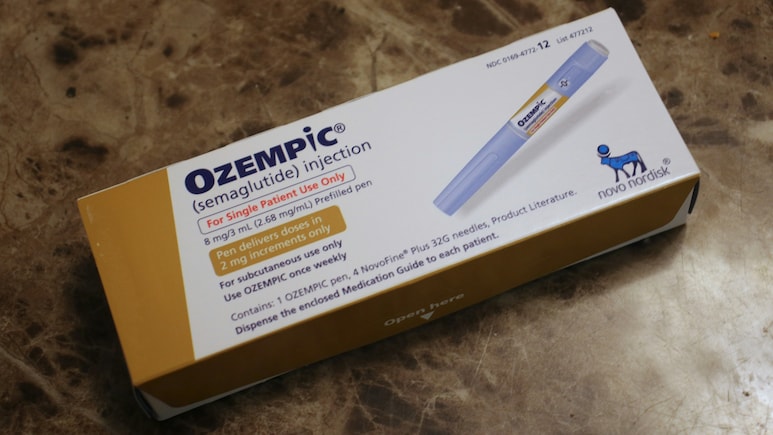
- Semaglutide sales in India rose modestly by 6% in May to Rs 93 crore, slowing from April's 50% surge
- Total semaglutide units increased 12% in May to 3.31 lakh, down from April's 88% jump
- Injectable semaglutide volumes rose slightly to 1.9 lakh units in May from 1.7 lakh in April
India's booming semaglutide market appears to be entering a more measured growth phase after the explosive surge seen in April, with only a handful of brands continuing to post strong gains, according to exclusive Pharmarack data reviewed by NDTV Profit. Total semaglutide sales rose to Rs 93 crore in May from Rs 88 crore in April, translating into a modest 6% month-on-month increase.
That is a sharp slowdown from the nearly 50% growth recorded in April, when demand surged following the launch and expansion of multiple semaglutide brands.
Sinilarly, total units sold increased 12% month-on-month to 3.31 lakh units in May from 2.95 lakh units in April. By comparison, volumes had jumped 88% in April.
Also Read | Layoffs Are Rising In Tech, But These Skills Are Helping People Unlock Better Pay
The slowdown was particularly evident in injectable semaglutide products. Injectable volumes rose to 1.9 lakh units in May from 1.7 lakh units in April.
Only A Few Winners
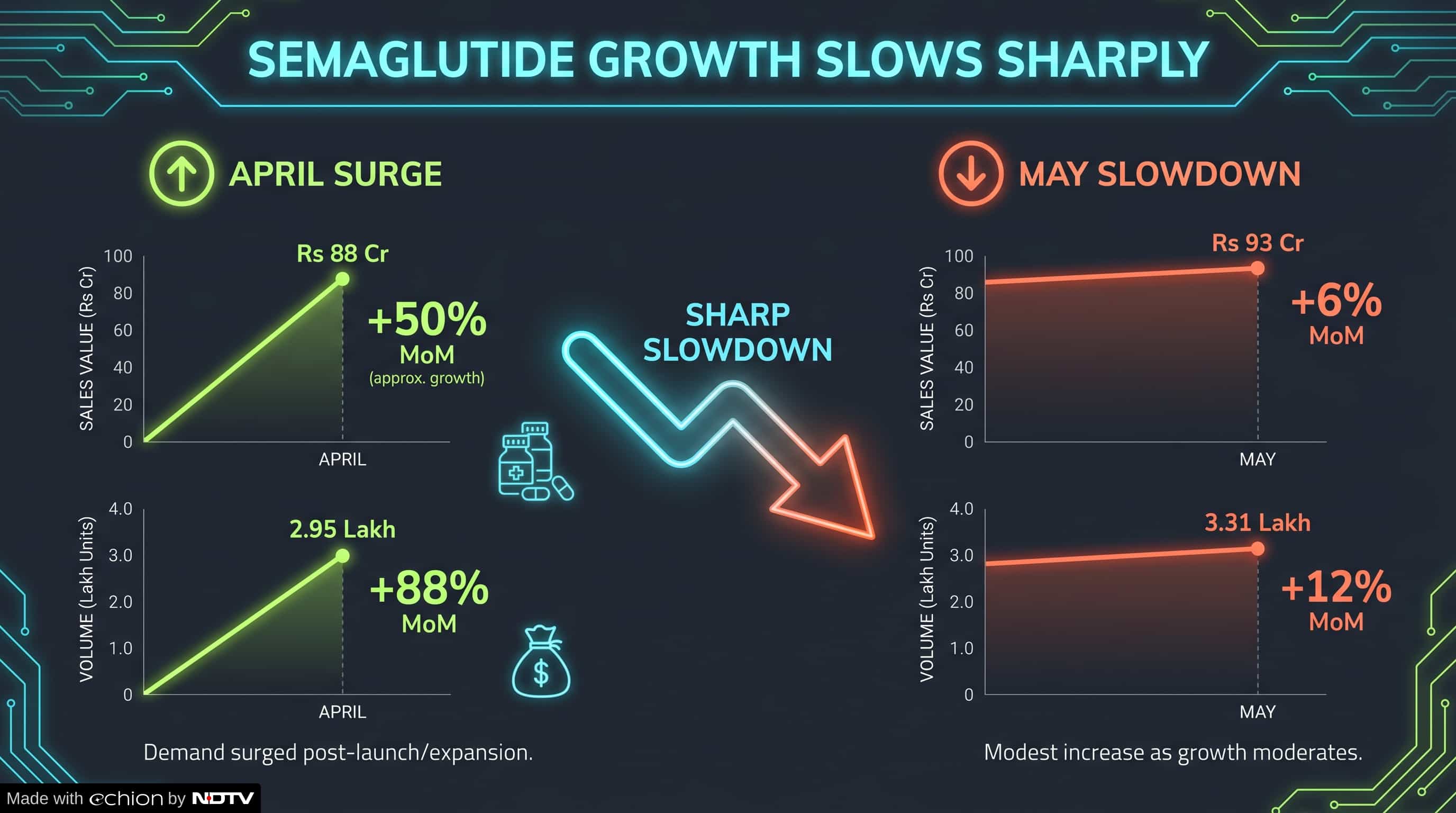
Of the 35 semaglutide brands tracked by Pharmarack, only seven recorded month-on-month growth in May. Among multinational players, Novo Nordisk's Ozempic continued to gain traction despite the broader slowdown. Volumes rose 33% month-on-month to 16,000 units, making it one of the strongest-performing brands in the market.
Among domestic pharmaceutical companies, Sun Pharmaceutical Industries Ltd. emerged as the standout performer. Its brand Noveltreat posted a 124% jump in volumes to 15,000 units in May, while Sematrinity recorded 66% growth, reaching 7,000 units.
Other brands that continued to grow included Eris Lifesciences' semaglutide offering, which rose 29% to 27,000 units, Alkem Laboratories' Hepaglide, which gained 20% to 8,000 units, and Torrent Pharmaceuticals' Semalix and Sembolic, which grew 19% and 32%, respectively.
Why The Slowdown?
The slowdown is largely attributed to a natural cooling after the rapid patient onboarding seen in April. With a significant portion of early adopters already initiated on therapy, repeat purchases are now emerging as the primary growth driver for the category.
Government intervention may also be playing a role. In March and April, authorities issued advisories aimed at curbing misleading advertising, tightening patient onboarding practices and preventing unauthorised sales of weight-loss drugs.
Another emerging concern is inventory. With a growing number of generic semaglutide products entering the market, some industry participants are beginning to flag the possibility of inventory build-up if demand growth continues to normalise.
ALSO READ: Weight Loss Drugs Boom: Wellness Platforms Advertise Treatment Plans, But Is It Legal?
Essential Business Intelligence, Sharp Market Insights, Practical Personal Finance Advice, Daily Fuel, Gold and Silver Prices and Latest Stories — On NDTV Profit.