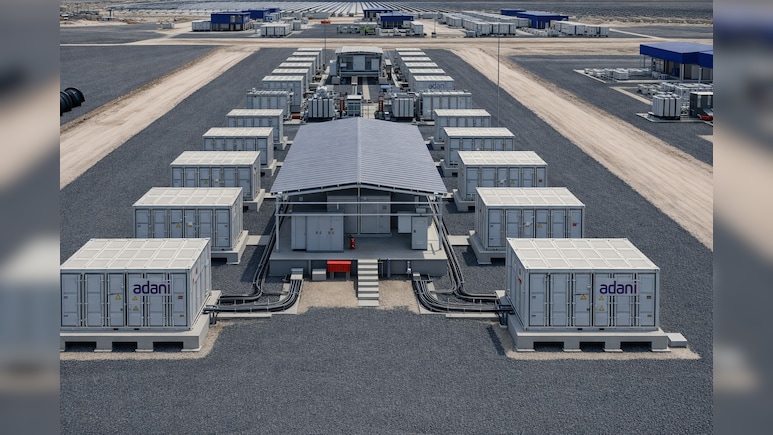
Adani Green Energy Ltd has commissioned a cumulative 3.37 gigawatt-hour (GWh) battery energy storage system (BESS), the world's largest single-location battery storage deployment outside China and among the fastest executed globally. The deployment includes the 1.37 GWh capacity commissioned in March 2026, taking India's largest renewable energy company's total operational BESS capacity at Khavda, Gujarat to 3.37 GWh. The project was delivered within just 10 months of commencement of on-site construction, marking one of the fastest utility-scale battery storage deployments globally.
The commissioning marks a major milestone in strengthening grid reliability, peak-hour supply and enabling renewable energy to deliver dependable, round-the-clock power at scale. The company plans to add over 10 GWh of battery storage capacity in FY27 and scale this to 50 GWh over the next five years. Adani Green Energy's 3.37 GWh BESS can store enough clean energy to power nearly one million homes for an entire day, supporting peak electricity demand of cities like Indore, Chandigarh or Goa.
ALSO READ: Adani Enterprises Hits 52-Week High As Stock Surges After Bullish Bernstein Report
Also Read | Layoffs Are Rising In Tech, But These Skills Are Helping People Unlock Better Pay
It can power more than 12 million LED bulbs continuously for ten hours. This would be a game changer as battery storage will help keep renewable heavy grids stable and deliver green power round-the-clock. Sagar Adani, Executive Director, Adani Green Energy, said, "Large-scale energy storage will play a defining role in the next phase of India's clean energy transition. As renewable energy capacity scales rapidly, storage infrastructure becomes critical for delivering reliable, round-the-clock clean power.''
''With the commissioning of the 3.37 GWh BESS at Khavda, Adani Green Energy Ltd. is strengthening the foundation for resilient, dispatchable and flexible energy systems. Our investments in battery storage reflect a long-term commitment to building future-ready clean energy infrastructure at global scale,'' said Executive Director, Sagar Adani.
The BESS project integrates advanced energy management systems with lithium-ion battery technologies to optimise efficiency, reliability and grid responsiveness. It has been strategically located at Khavda, Gujarat to further strengthen the world's largest renewable energy plant where AGEL is developing 30 GW by 2029 of which 9.9 GW is already operational.
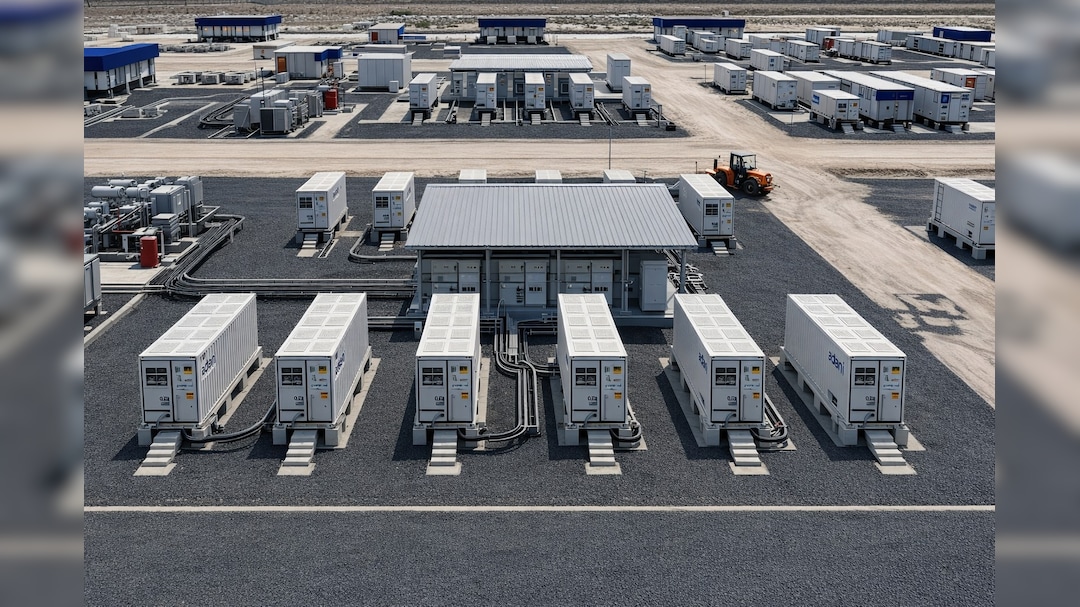
Adani Green Energy's battery energy storage system
As renewable energy adoption accelerates globally, utility-scale battery storage is emerging as critical infrastructure for reliable clean energy delivery. Renewable energy output varies with time, climate, season or geographic location. BESS helps address this variability since it stores extra energy and supplies it during peak demand. BESS deployment demonstrates how renewable power can evolve from intermittent generation into dependable, dispatchable energy infrastructure at scale.
Adani Green Energy has set a target of achieving 50 GW by 2030 aligned to India's decarbonization goals. The renweable energy major is focused on leveraging technology to reduce the Levelized Cost of Energy (LCOE) in pursuit of enabling largescale adoption of affordable clean energy. The company is developing the world's largest renewable energy plant (30 GW) on barren land at Khavda, Gujarat, covering 538 square kilometers, an area five times larger than Paris.
ALSO READ: Adani Enterprises Q4 Results: Revenue Jumps 20%, Total Income Rises
(Disclaimer: New Delhi Television is a subsidiary of AMG Media Networks Limited, an Adani Group Company.)
Essential Business Intelligence, Sharp Market Insights, Practical Personal Finance Advice, Daily Fuel, Gold and Silver Prices and Latest Stories — On NDTV Profit.