US President Donald Trump personally approved the plan to strike Iran and ordered the operation on Tuesday while in Turkey for the NATO summit, reported Axios quoting US official, as Washington and Tehran appeared headed back towards open conflict weeks after signing a ceasefire memorandum.
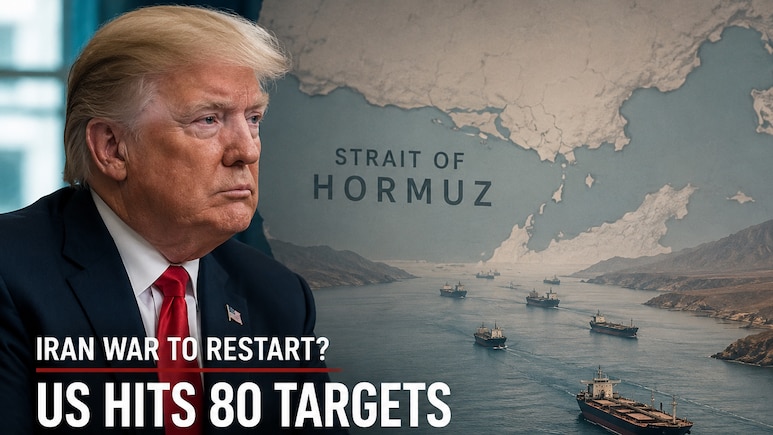
The US Central Command (CENTCOM) said that the forces hit over 80 targets with precision munitions as an immediate response to Iran's latest attacks on commercial vessels transiting the Strait of Hormuz.
"US forces struck Iranian air defense systems, command and control networks, coastal radar sites, anti-ship missile capabilities, and more than 60 Islamic Revolutionary Guard Corps small boats in and near the strait to degrade Iran's ability to continue attacking international commerce flowing through the international trade corridor."
Also Read | Layoffs Are Rising In Tech, But These Skills Are Helping People Unlock Better Pay
According to Axios journalist Barak Ravid, Trump held a meeting in Ankara with Defence Secretary Pete Hegseth, Secretary of State Marco Rubio and Treasury Secretary Scott Bessent, who had flown with him aboard Air Force One, alongside Chairman of the Joint Chiefs of Staff Dan Caine, who was already on the ground for the summit.
The US official said it remained unclear how long the strikes would continue. "We'll get the assessment about the results of the strikes and make decisions after," the official said.
????????????????????Trump approved the Iran strike plan and ordered it today while in Turkey for the NATO summit, a U.S. official said
— Barak Ravid (@BarakRavid) July 7, 2026
????????????????????Trump held a meeting in Ankara with Hegseth, Rubio and Bessent who flew with him on Air Force 1, with Chairman Dan Caine who was already on the ground… https://t.co/II5TyO3seP
The strikes came in retaliation for three separate Iranian attacks on commercial vessels transiting the Strait of Hormuz on Monday and Tuesday, which shattered a fragile pause in hostilities that had followed last month's memorandum of understanding aimed at restoring safe passage through the strait and launching nuclear talks.
Shortly before the military response, the US Treasury Department revoked sanctions waivers that had permitted Iran to sell oil, escalating pressure on Tehran on a second front.
ALSO READ: US Strikes Iran After Hormuz Ship Attacks Amid Khamenei funeral, Revokes Sanction Waiver On Oil
CENTCOM described the "powerful strikes" as intended to impose "heavy costs for targeting and attacking commercial shipping crewed by innocent civilians in an international waterway," adding that Iran's actions were "unwarranted, dangerous, and a clear violation of the ceasefire."
Adding to the diplomatic strain, US Defence Secretary Hegseth is expected to travel to Israel on Wednesday to meet Prime Minister Benjamin Netanyahu and Defence Minister Israel Katz, according to CNN, partly to address Israeli concerns over a potential sale of F-35 stealth fighter jets to Turkey that Trump had floated during the NATO summit.
It was not immediately clear whether the overnight strikes would affect Hegseth's travel plans.
The renewed exchange marks the most serious challenge yet to the memorandum signed by Trump and Iranian President Masoud Pezeshkian on 17 June, with talks in Doha last week having ended without progress on the Hormuz dispute.
ALSO READ: US-Iran War Live News Updates: US Strikes Port Cities Of Iran After Three Ships Were Hit In Hormuz
Essential Business Intelligence, Sharp Market Insights, Practical Personal Finance Advice, Daily Fuel, Gold and Silver Prices and Latest Stories — On NDTV Profit.