American forces have counted nearly 1,000 commercial vessel transits in and out of the Strait of Hormuz in the last two months, according to an official familiar with US Central Command operations, a figure that's higher than private sector estimates that rely mostly on ship transponders.
Military analysts measured the number of ship passages since a ceasefire took effect between the US and Iran on April 8 using continual air, sea and space surveillance deployed as part of the war against Iran, the official said, asking not to be identified to discuss data that hasn't been made public. The bulk of the vessels are large cargo and container ships and the figure doesn't count smaller craft, such as traditional dhows, they added.

-
 India's Market Leaders To Decode The New Samvat At NDTV Profit Ignite In Mumbai On Oct 28
 -
 NDTV Profit IGNITE Diwali 2026: Top Market Veterans Decode Wealth Creation
 -
 The Week Ahead: Earnings Season, Fed Policy Verdict And Crude Oil In Focus
 -
 Silver Is Now Down From Rs 4.2 Lakh To Rs 1.9 Lakh: Where It Goes From Here
 -
 NDTV Ignite, The Trillion-Dollar Trajectory: India's Road to 2030
The figure is still far below the more than 100 ships passing daily through the vital waterway for oil and gas from the Persian Gulf before President Donald Trump launched a war against Iran in late February, which effectively shuttered the Strait of Hormuz and sent global energy prices soaring.
Also Read | Layoffs Are Rising In Tech, But These Skills Are Helping People Unlock Better Pay
But the new US tally suggests commercial traffic in the strait has been at least slightly busier than previously believed. A Bloomberg tally of ship-tracking data using transponders counts just over 650 transits since April 8 — 402 outbound and about 260 inbound.
The US count likely reflects — at least in part — the rising number of so-called dark transits ships are making with transponders turned off to help avoid detection by Iran, as US forces attempt to get traffic moving again amid a rising outcry about the worsening impact of the strait's closure on the global economy.
Asked on Friday how much oil was getting out of Hormuz, Trump replied: “A lot.”
“I don't want to say how many, but a lot,” the president told reporters traveling aboard Air Force One. “A lot of oil is coming into the world that people don't even know about. And that's why it's at $97 a barrel instead of $300 a barrel.”
US and Israeli airstrikes on Feb. 28 quickly prompted Tehran to shutter the strait with threats to sink commercial vessels, a move that — along with attacks on regional energy infrastructure — has caused global energy prices to soar and fueled inflation, piling pressure on the White House to end the unpopular war.
The Strait of Hormuz has also emerged as a key sticking point in US-Iran talks to end the conflict, with Tehran repeatedly suggesting it wants to retain control — and possibly toll — the strait, and US officials insisting the strait remain free and open.
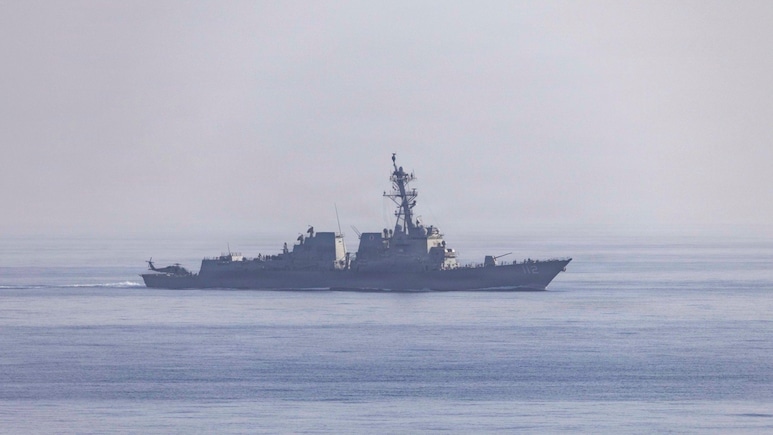
In recent weeks, the US military has quietly restarted efforts to get more commercial traffic moving through the strait, helping commercial vessels navigate along a sea mine free route closer to the Omani — rather than Iranian — coast, and protecting them from Iranian attacks if needed.
The effort follows a previous US military attempt to protect vessels exiting Hormuz in early May, which was quickly abandoned after Iranian attacks on the ships leaving Hormuz spooked other shipping companies from attempting it.
But traffic appears to be continuing, despite a flareup earlier this week, when Iran launched a wave of drones and missiles at Kuwait's international airport — killing one and injuring more than 60 people — and at US forces stationed in Bahrain. US Secretary of State Marco Rubio said the attacks were because of the US helping ships move through Hormuz.
US Central Command issued a statement saying its forces shot down Iranian attack drones aimed at “civilian mariners that were rightfully transiting regional waters.”
US forces are communicating with commercial shippers preparing to enter or transit the Strait of Hormuz and the Persian Gulf through a longstanding ecosystem that involves radio, telephone and chat that was previously developed by the current Centcom commander Admiral Brad Cooper, the US official said. Cooper headed US Navy forces in the Middle East between 2021 and 2024 as 5th Fleet commander, and would regularly convene conference calls with shipping companies to share best practices, the official added.
Today, the US Navy is passing information on transit routes, timing considerations and potential Iranian threats with vessels going into and out of the Persian Gulf via operations centers in the region and Centcom's main headquarters in Tampa, Florida, the official said.
The communication is informed by continuous imagines and other data gathered by US surveillance aircraft flying over the region as well as systems from Navy vessels. The aircraft include Boeing Co. P-8 reconnaissance aircraft, fifth-generation F-35 warplanes, MQ9 Reaper surveillance drones and satellite coverage, the official said.
Essential Business Intelligence, Sharp Market Insights, Practical Personal Finance Advice, Daily Fuel, Gold and Silver Prices and Latest Stories — On NDTV Profit.