Authorities in the United Arab Emirates are considering relaxing tax residency rules for expatriates who left the country following the outbreak of the Iran conflict, Financial Times reported citing people familiar with the matter.
Officials have privately indicated that expats who spent time outside the UAE after the conflict began may be allowed greater flexibility in meeting residency requirements, according to the report.
Under existing rules, individuals are required to stay in the country for a minimum number of days each year to qualify as tax residents.
Sources quoted by FT said those who left after the war began are likely to receive leniency regarding these conditions. This is being considered as part of efforts to encourage residents to return, particularly as the conflict has affected travel and raised concerns among expatriates.
ALSO READ: Watch: Bengaluru Woman Packs Father In Sack For Reel, Attempts To ‘Courier' Him
The move is seen as especially significant for Dubai, which has positioned itself as a major financial hub in the region. The city has attracted wealthy individuals due to its zero income tax policy, along with its reputation for safety and access to capital.
“Dubai has already seen its safety and security selling point damaged by recent events. It is really important for its economy and image to retain these expats,” Elsa Littlewood, a tax partner at BDO who advises wealthy individuals, was quoted as saying in the report.
Currently, the UAE follows two main criteria for tax residency. Individuals are generally required to spend at least 183 days in the country within a 12-month period. In some cases, a minimum of 90 days may be sufficient if the individual has strong ties such as employment or a permanent residence.
According to the report, officials at the Federal Tax Authority are not expected to introduce blanket exemptions. However, according to two lawyers briefed on the plans, applications may be reviewed individually after the conflict ends. The authority is working with the Federal Authority for Identity, Citizenship, Customs and Port Security on possible adjustments.
Apart from the day-count requirement, the UAE also applies a “centre of life” condition. This allows tax residency to be granted if a person's “usual or primary residence and centre of financial and personal interests” are based in the country. Authorities may also consider force majeure situations while assessing eligibility.
ALSO READ: Bengaluru To Himachal: IMD Flags Rain, Hailstorms Across Several Regions In India — Here's All You Need To Know
“The UAE government will react to the situation as needed, taking into consideration travel disruption on a case-by-case basis,” Michael Kortbawi, senior partner at Dubai-based BSA Law told the newspaper.
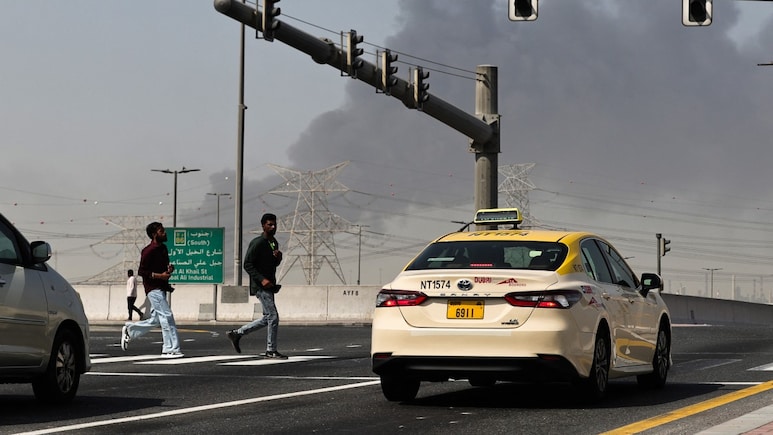
According to the report, the ongoing conflict has already led some wealthy residents to leave the UAE earlier this month, as Iran began targeting US allies in the region.
Some returned quickly to maintain their tax status, but concerns have continued as the situation has prolonged and key infrastructure has been affected, including areas in Dubai's financial district where many expatriates are based.
Travel disruptions have added to the uncertainty. Several airlines have cancelled their flights at the Dubai and Abu-Dhabi airports. There have been intermittent closures of UAE airspace, making it difficult for those abroad to return.
ALSO READ: CBSE Set To Declare CTET February 2026 Results: Check Minimum Passing Marks
Tax residency calculations in the UAE begin on Jan. 1 each year. Individuals who left after the conflict started on Feb. 28 may risk losing their residency status if they are unable to return within the required timeframe or if rules are not eased.
Also Read | Layoffs Are Rising In Tech, But These Skills Are Helping People Unlock Better Pay
Essential Business Intelligence, Sharp Market Insights, Practical Personal Finance Advice, Daily Fuel, Gold and Silver Prices and Latest Stories — On NDTV Profit.