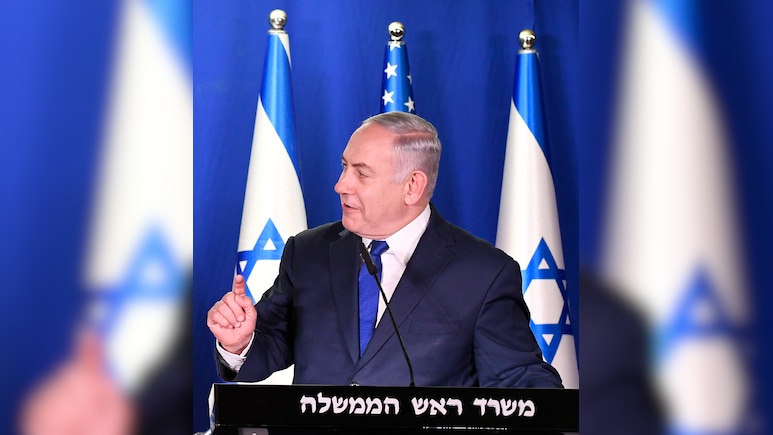
Israeli Prime Minister Benjamin Netanyahu offered opposition leader Gadi Eisenkot power-sharing rotation in an attempt to establish a national unity government and prevent his removal from power. Under the proposal, Eisenkot would serve as prime minister first, while Netanyahu would initially become alternate prime minister.
Netanyahu said on social media post,"my responsibility as a leader requires me to set everything aside... and agree that Gadi Eisenkot will serve first as prime minister, while I will serve as alternate prime minister at the beginning of the term".
The announcement came as Eisenkot moved closer to forming an opposition-backed coalition following the inconclusive October 27 election, which left neither leader with a clear parliamentary majority. Israeli President Isaac Herzog tasked Eisenkot with forming a government, giving him until December 6, with a possible 14-day extension, as per Reuters.
Also Read | Layoffs Are Rising In Tech, But These Skills Are Helping People Unlock Better Pay
Eisenkot's centrist Yashar party has already reached coalition agreements with the left-wing Democrats and right-wing Yisrael Beiteinu. Together, the parties hold 36 seats in Israel's 120-member parliament, falling short of the 61 required to secure a majority.
Eisenkot said his negotiating team had spent nearly three weeks attempting to reach an agreement with Likud but encountered repeated delays and an absence of concrete proposals. He invited Netanyahu and his representatives to begin immediate discussions on government policies and national priorities, insisting that genuine unity must be based on shared values and meaningful compromises.
Netanyahu's proposal also attracted criticism from opposition leaders. Former Prime Minister Yair Lapid dismissed the offer as another political manoeuvre, accusing Netanyahu of misleading political partners and violating agreements.
Meanwhile, Arab-majority parties could play a decisive role in determining the coalition's future, although disagreements remain among Eisenkot's potential allies over cooperation with Arab representatives and ultra-Orthodox groups.
ALSO READ: Italy Approves School Face-Covering Ban, Restricting Burqas, Niqabs During Activities
With negotiations intensifying and the deadline approaching, Israel faces a crucial political moment. The outcome will determine whether Eisenkot can assemble a parliamentary majority, establish a new government and bring an end to Netanyahu's prolonged leadership or whether the country will face further political uncertainty.
Essential Business Intelligence, Sharp Market Insights, Practical Personal Finance Advice, Daily Fuel, Gold and Silver Prices, Watch Business News Live and Latest Stories — On NDTV Profit.