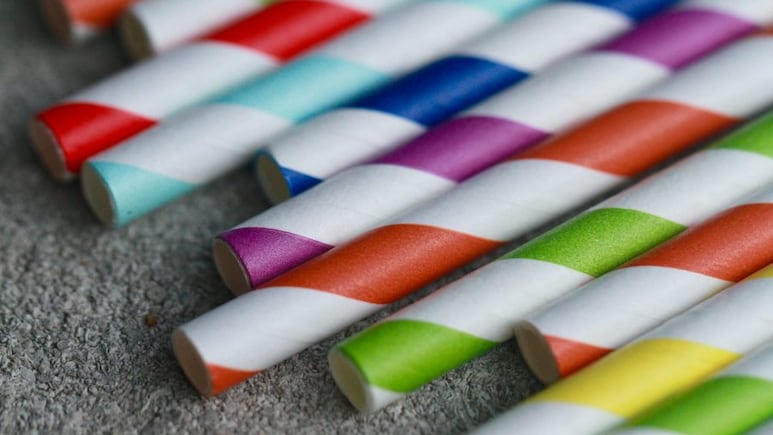
As demand for healthier and more environmentally friendly alternatives to plastic straws grows, paper straws have emerged as a popular substitute. However, they may have greater environmental and health impacts than their predecessors, according to a South Korean government-commissioned study reported by the South China Morning Post.
The findings have reignited debate over whether replacing materials is enough to reduce pollution and environmental damage. The study, titled Comprehensive Study on Single-Use Straws, was commissioned by South Korea's Ministry of Climate, Energy and Environment. Its findings were disclosed by opposition People Power Party lawmaker Kim Wi-sang.
The study revealed that paper straws have significant impacts across several environmental assessment categories, including greenhouse gas emissions, human toxicity, particulate matter and acidification.
Also Read | Layoffs Are Rising In Tech, But These Skills Are Helping People Unlock Better Pay
Researchers compared conventional plastic, paper, biodegradable plastic and bio-based polystyrene straws using a life-cycle assessment covering 16 environmental impact categories. While, conventional plastic straws recorded the lowest impact in 10 categories.
The study found that paper straws had 6.33 times the carcinogenic impact of conventional plastic straws, alongside 2.04 times the acidification impact. These figures reflect potential environmental and health impacts associated with emissions throughout a product's life cycle, from raw material production to disposal, rather than the direct cancer risk from using a straw.
Biodegradable plastic straws also recorded higher impacts than conventional plastic, with 3.34 times the carcinogenic impact and 1.98 times the acidification impact.
Bio-based polystyrene performed worst overall among the materials assessed. Despite being derived from renewable plant sources, it is not biodegradable and remains chemically similar to conventional polystyrene plastic.
The material recorded 16.18 times the carcinogenic impact and 5.9 times the acidification impact, ranking highest in 10 of the 16 assessment categories.
The study also highlighted the difficulty of recycling disposable straws, regardless of material. According to South Korean waste statistics cited in reports, 73.6 per cent of discarded straws are incinerated, while 26.4 per cent are sent to landfills.
Lawmaker Kim called for policies focused on reducing single-use consumption rather than simply replacing one material with another.
South Korea's plastic-straw policy has undergone repeated delays. After announcing restrictions in 2021, the government postponed implementation and later suspended enforcement indefinitely. In 2025, it adopted a customer-request approach for providing plastic and paper straws.
ALSO READ: Cyclone Arnab: Which States And Districts Will Be Affected? Check IMD Alerts
Other regions have introduced different measures, including restrictions in Taiwan, Hong Kong and the European Union, while Japan has required businesses to develop plans to reduce plastic consumption.
Essential Business Intelligence, Sharp Market Insights, Practical Personal Finance Advice, Daily Fuel, Gold and Silver Prices and Latest Stories — On NDTV Profit.