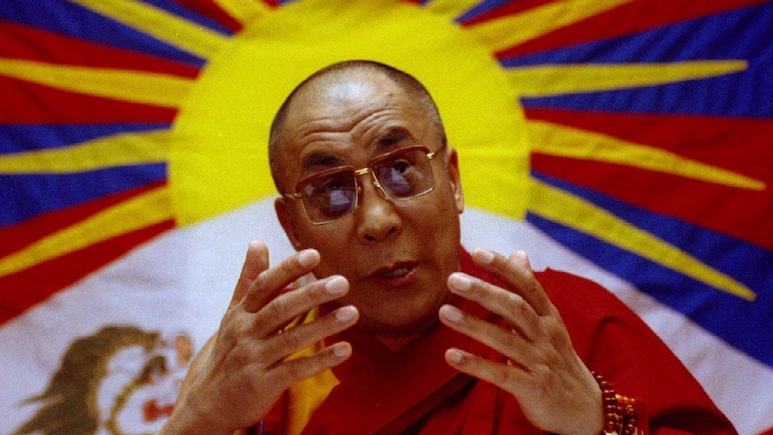
China on Thursday reiterated its opposition to any move that it believes could promote Tibetan independence, asserting that the issue of the Dalai Lama's succession remains an internal matter to be handled solely by Beijing under Chinese law and historical practice.
Spokesperson of Chinese Embassy in India, Yu Jing, while reacting to discussions surrounding Tibet and the Dalai Lama's future reincarnation, criticised the "Middle Way Approach" advocated by the Tibetan leadership.
ALSO READ | How China Has Reduced Its Oil Demand And Eased Pressure On Global Economy
Also Read | Layoffs Are Rising In Tech, But These Skills Are Helping People Unlock Better Pay
She said the proposal was effectively an attempt to advance the cause of Tibetan independence through the creation of a so-called "Greater Tibetan Region", a concept Beijing claimed has no historical foundation.
China maintained that it would not permit any action aimed at dividing the country or weakening national unity under the banner of seeking greater autonomy.
The so-called "Middle Way Approach" is, in essence, a step-by-step attempt to advance "Tibet independence" through the creation of a so-called "Greater Tibetan Region" — a concept with no basis in history. China will never allow any attempt to split the country or undermine… pic.twitter.com/qDVDI0xYBL
— Yu Jing (@ChinaSpox_India) June 11, 2026
The spokesperson also underlined Beijing's position on the selection of the Dalai Lama's successor, stating that the title and status of the Dalai Lama have historically been granted and recognised by China's central authorities.
According to the statement, the 14th Dalai Lama was formally approved by the then Government of the Republic of China.
Rejecting suggestions that the current Dalai Lama could determine his own successor, the spokesperson said there has never been a historical precedent for a Dalai Lama independently identifying or recognising a reincarnation.
ALSO READ | China Readying $295-Billion Blueprint To Power National AI Grid
Beijing further asserted that the process of the Dalai Lama's reincarnation must comply with Chinese laws, established religious customs and historical traditions, and take place within Chinese territory.
The embassy also urged India to remain mindful of the sensitivity of the matter, adhere to its commitments, and avoid actions that could adversely affect the broader trajectory of India-China relations.
Essential Business Intelligence, Sharp Market Insights, Practical Personal Finance Advice, Daily Fuel, Gold and Silver Prices and Latest Stories — On NDTV Profit.