- IMF chief Kristalina Georgieva urged central banks to fight inflation despite growth costs
- She warned pain is unavoidable due to supply shocks from the Iran war and energy prices
- Georgieva called on countries to avoid export and price controls that worsen global issues
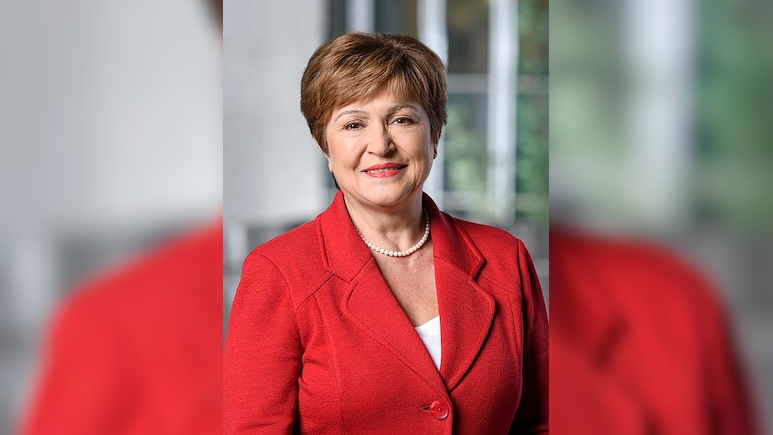
IMF chief Kristalina Georgieva Thursday encouraged central banks to fight inflation even at the expense of growth. Her comments came in the backdrop of the impact of the Iran war, and sharp rises in energy prices.
In her speech at the IMF headquarters in Washington, Georgieva further underscored “pain was an unavoidable consequence of any conflict".
She also urged policymakers from across the globe to reject “go-it-alone” actions such as export controls and price controls which can further upset global conditions.
Also Read | Layoffs Are Rising In Tech, But These Skills Are Helping People Unlock Better Pay
"A word of caution upfront: this being a classic negative supply shock, demand adjustment is unavoidable. We cannot go through it without some pain," she stated, referring to the impact of costlier oil on global economies.
"Policy makers can help to reduce this pain in multiple ways. Certainly, one way they can help is – please do not make matters worse. So, I appeal to all countries to reject go-it-alone actions – export controls, price controls, and so on – that can further upset global conditions: don't pour gasoline on the fire," Georgieva said ahead of the spring meetings of the IMF-World Bank next week.
The IMF chief said if inflation expectations threaten to break the anchor and ignite a costly inflation spiral, then central banks should step in firmly with rate hikes.
"Rate hikes, of course, would further dampen growth – that's how they work," she said, adding they are the "right price to pay for price stability".
The IMF chief made it clear that fiscal support should remain targeted and temporary.
"Finally, if a severe tightening of financial conditions adds a negative demand shock to the supply shock, then monetary policy returns to a delicate balancing act while fiscal policy – if and only if there is fiscal space – switches to well-calibrated demand support," she said.
Georgieva said that supporting countries to build strong policies and institutions is the raison d'etre for the IMF.
"And, as the firefighter, we are here for you when crisis hits," she said.
The IMF chief said given the spillovers of the West Asia war, she expects near-term demand for IMF balance-of-payments support to rise to somewhere between $20 billion and $50 billion, with the lower band prevailing if the ceasefire holds.
She added that food insecurity due to transport and supply chain disruptions caused by the war was expected to affect at least 45 million people.
"Even in the best case, there will be no neat and clean return to the status quo ante," she said.
Georgieva said that even in the Fund's "most hopeful scenario", infrastructure damage, supply disruptions and a loss of market confidence among other "scarring effects" meant growth would be less than expected.
She highlighted the "asymmetric" effects of the crisis, hitting low-income energy importers with limited fiscal space much harder than others.
"Spare a thought for the Pacific Island nations at the end of a long supply chain, wondering if fuel will still reach them in the wake of such a severe disruption," she said.
(With inputs from PTI)
Essential Business Intelligence, Sharp Market Insights, Practical Personal Finance Advice, Daily Fuel, Gold and Silver Prices and Latest Stories — On NDTV Profit.