The Bank of Japan kept its policy rate unchanged as uncertainty surrounding the Middle East conflict clouds the economic outlook, while also pledging to raise borrowing costs if its price forecast materializes.
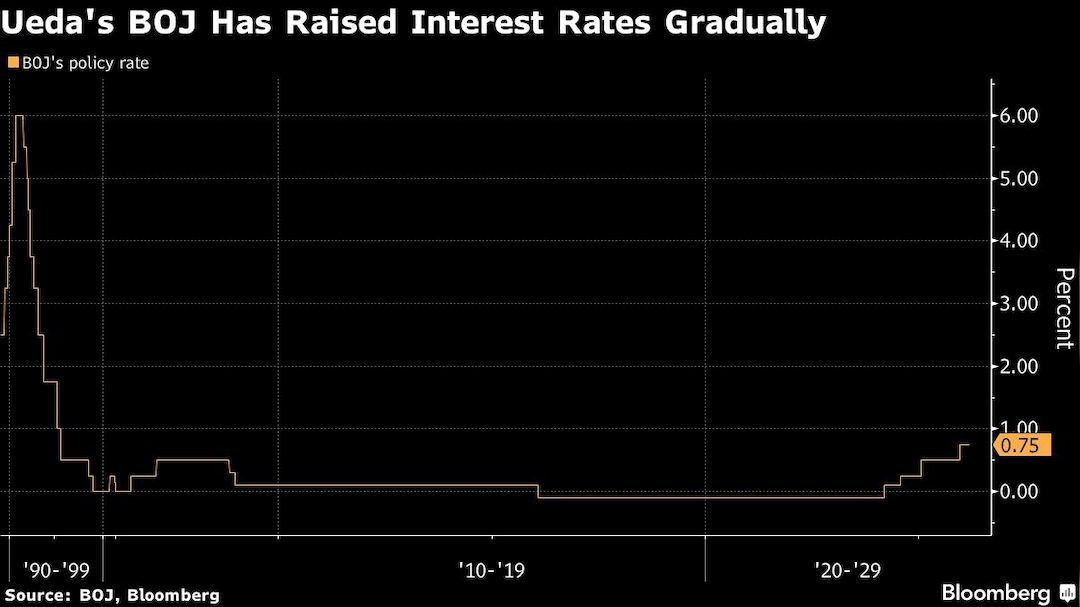
The BOJ left its benchmark interest rate untouched at 0.75% on Thursday at the conclusion of a two-day gathering, according to a statement. The outcome matched the expectations of all 51 economists surveyed by Bloomberg.
The central bank voted 8-1 on the decision, with Hajime Takata dissenting with a call for a rate hike for the second straight meeting.
The Nikkei 225 Stock Average extended losses following the statement, while the yen held on to a small gain.
The war in Iran puts the BOJ in a delicate position. Rapidly soaring oil prices are poised to fuel inflation. Higher costs rippling through the economy would then likely weigh on business activity and consumption. The central bank added the Middle East to its list of risk factors without altering its inflation outlook, suggesting it still sees a potential path to raise rates in coming months.
“I think the BOJ is saying it needs more time to monitor the situation because it's unclear how long high oil prices will persist due to the situation in the Middle East,” said Mari Iwashita, executive rates strategist at Nomura Securities. “I believe the BOJ doesn't feel the need to rush into raising interest rates, but navigating the communication around this issue is extremely difficult.”
ALSO READ: Powell Dismisses Stagflation Fears Despite Rising Inflation Concerns
The BOJ's statement cited uncertainty related to the war in Iran and its implications. “Risks to the outlook include the future course of the situation in the Middle East as well as developments in crude oil prices,” it said.
The statement added that Takata, the lone dissenter, had noted that risks to prices in Japan were skewed to the upside due to the second-round effects of price rises stemming from overseas developments.
At the same time, the BOJ reiterated its view that the price trend will be in line with its goal in the second half of its current outlook period, and the board still intends to raise the benchmark rate if its price outlook materializes. Typically it has omitted referencing its commitment to keep hiking from policy statements when it held settings steady. The inclusion Thursday may signal the bank wants to avoid sending dovish signals that could further weaken the yen.
The BOJ's remarks on the impact of crude oil prices on underlying CPI suggest that even cost-push inflation caused by higher oil prices could serve as a reason for a rate hike, which “leaves the door open to the possibility of an April rate hike,” said Hiroshi Namioka, chief strategist at T&D Asset Management.
BOJ Governor Kazuo Ueda will hold a press briefing at 3:30 p.m. in Tokyo where he will elaborate on the decision and outline his view on the trajectory for interest rates. Currency traders will be on guard, as his painstaking explanations for holding policy steady have in the past sometimes pressured the yen lower.
Japan is among the major economies most vulnerable to the fallout of the Middle East tensions, with more than 90% of oil imports coming from the region. Gasoline prices jumped to ¥190.8 per liter this week, the most expensive in data going back to 1990, according to a government report Wednesday.
Prime Minister Sanae Takaichi has reinstated gasoline subsidies after she secured a landslide victory in a national election last month by pledging to firmly address the cost-of-living crunch. The premier is scheduled to meet President Donald Trump at the White House on Thursday in her first visit to the US since taking office.
BOJ officials face the challenge of higher‑than‑anticipated inflation taking hold, adding to four consecutive years of price growth above the central bank's 2% target. That's a problem the BOJ didn't face during prior supply‑chain shocks, when a sticky deflationary mindset kept price spikes relatively short‑lived.
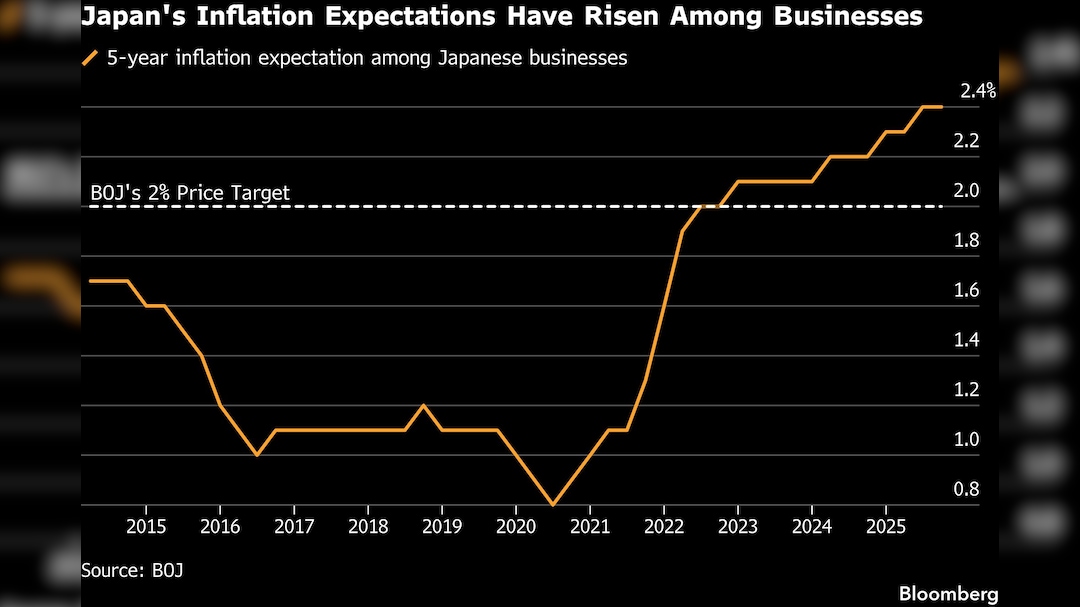
Central banks around the world are keeping watch on elevated price levels as they are increasingly expected to turn toward tightening. The Reserve Bank of Australia raised rates earlier this week, and on Wednesday the US Federal Reserve kept policy unchanged while projecting a rate cut in the months ahead. There's a roughly 77% chance the European Central Bank will hike rates by June, according to pricing in the overnight swaps market.
Up until the Israel‑US attack on Iran on Feb. 28, Japan's economy and inflation had been developing broadly in line with the BOJ's outlook. The economy grew more than the government initially estimated in the last quarter of 2025, and real wages turned positive in January for the first time since 2024 as inflation cooled, helped by easing food prices.
ALSO READ: US Fed Holds Rates Steady: What Does It Mean For Indian Market?
In the lead up to Thursday's decision, BOJ officials viewed the duration of the conflict as the key variable in assessing Japan's economic outlook and the trajectory of interest rates, people familiar with the matter told Bloomberg earlier this month.
The combination of solid economic data of late, along with a weak yen, has prompted more than a third of BOJ watchers to forecast a rate hike in April. Traders see even higher odds, with pricing in the overnight swaps market indicating a roughly 60% chance of a move next month.
“The key question during Governor Ueda's press conference is whether the economy and prices have been still on track if we strip out those external factors,” said Tetsuya Inoue, senior chief researcher at Nomura Research Institute. “If the impact from the Middle East situation proves to be short-lived then it's reasonable to expect that the rate hike narrative could come back into play.”
ALSO READ: Inflation Isn't Coming Down As Quickly As Chair Powell Hoped; No Rate Cut Without 'Progress'
Essential Business Intelligence, Sharp Market Insights, Practical Personal Finance Advice, Daily Fuel, Gold and Silver Prices and Latest Stories — On NDTV Profit.