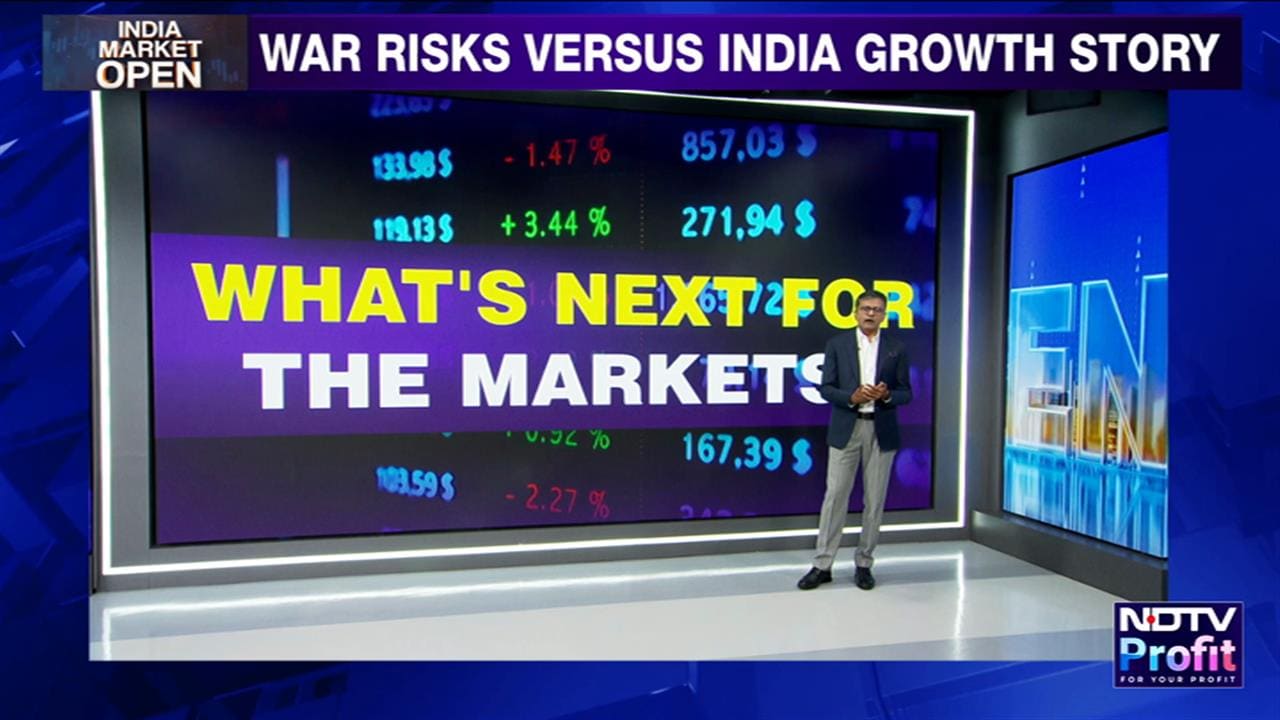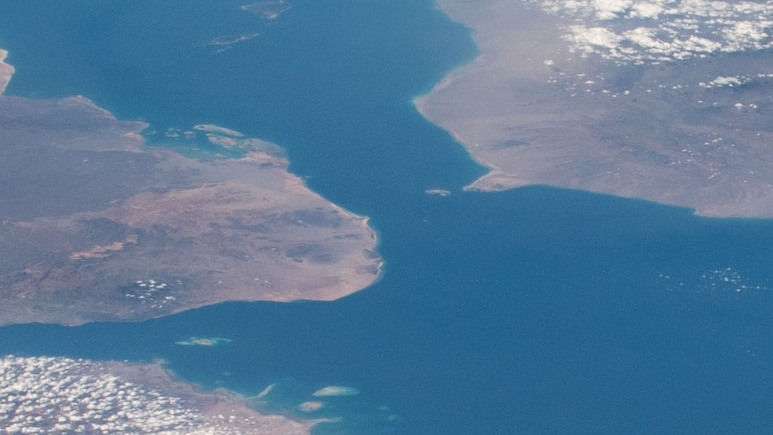
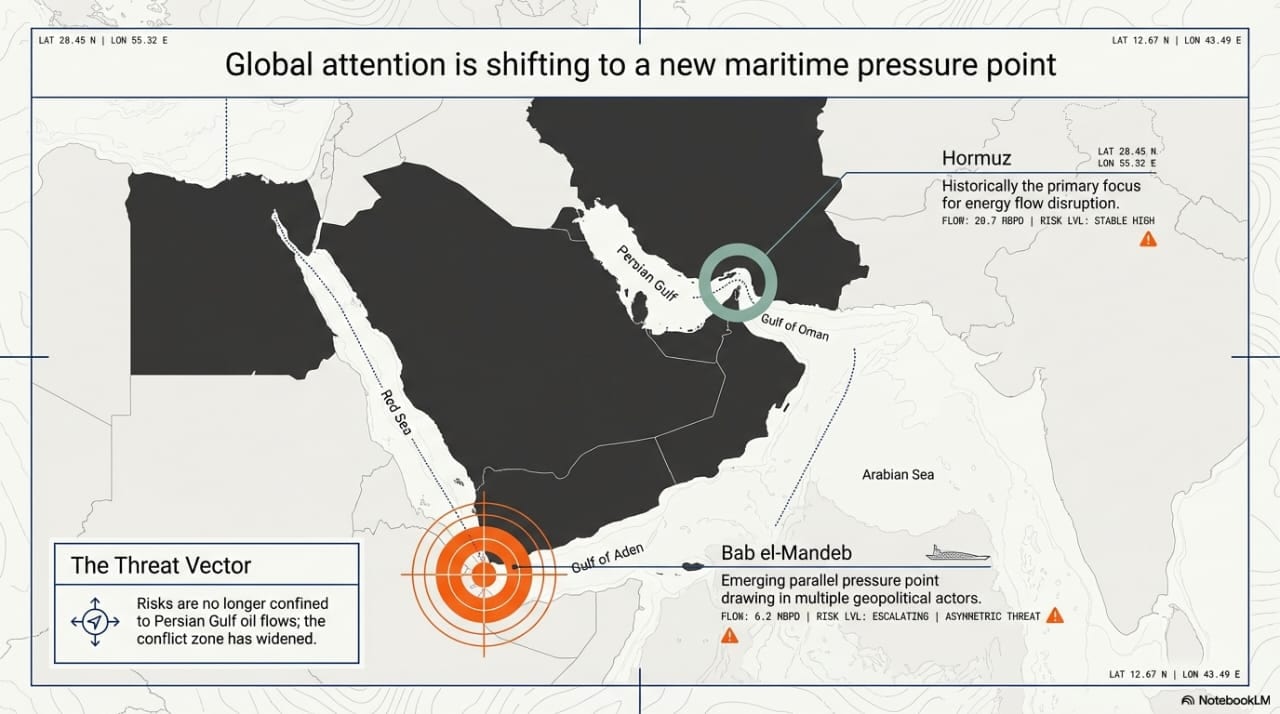
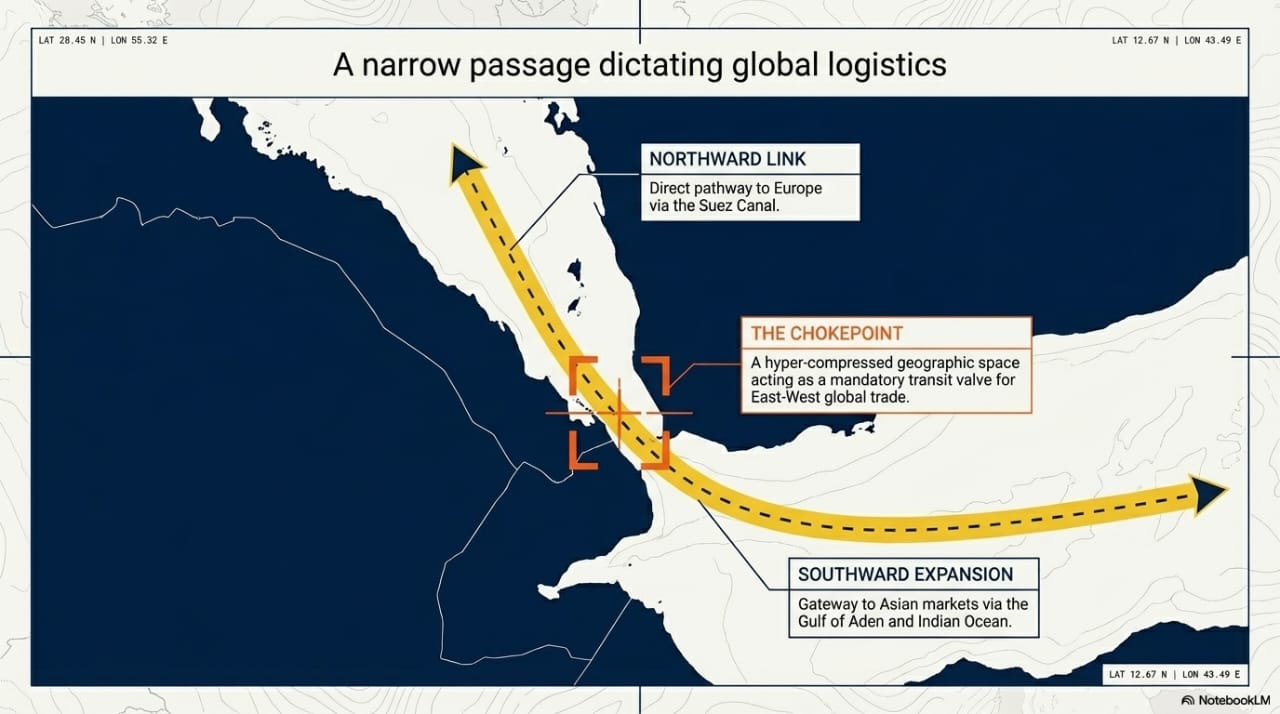
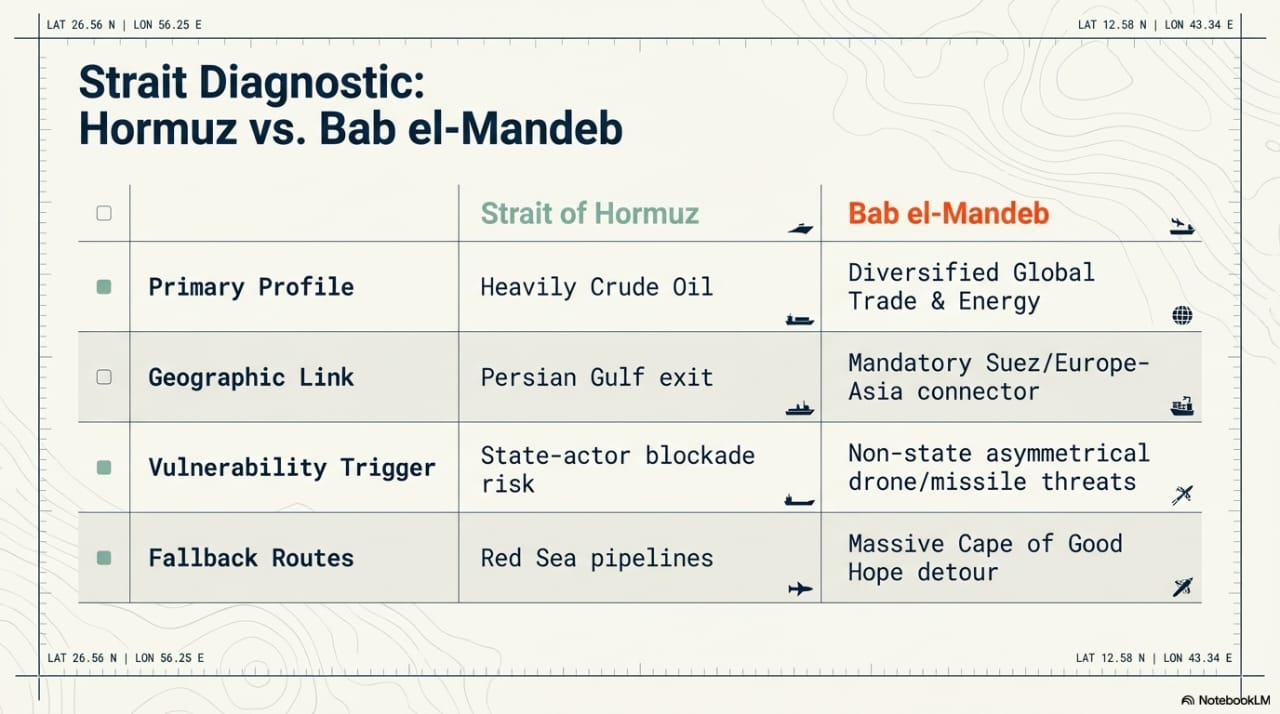
As tensions escalate in West Asia, global attention is beginning to shift from the Strait of Hormuz to another critical maritime chokepoint — the Bab el-Mandeb Strait. Located at the southern tip of the Red Sea, this narrow passage connects the Red Sea to the Gulf of Aden and the Indian Ocean, making it a vital artery for global trade.
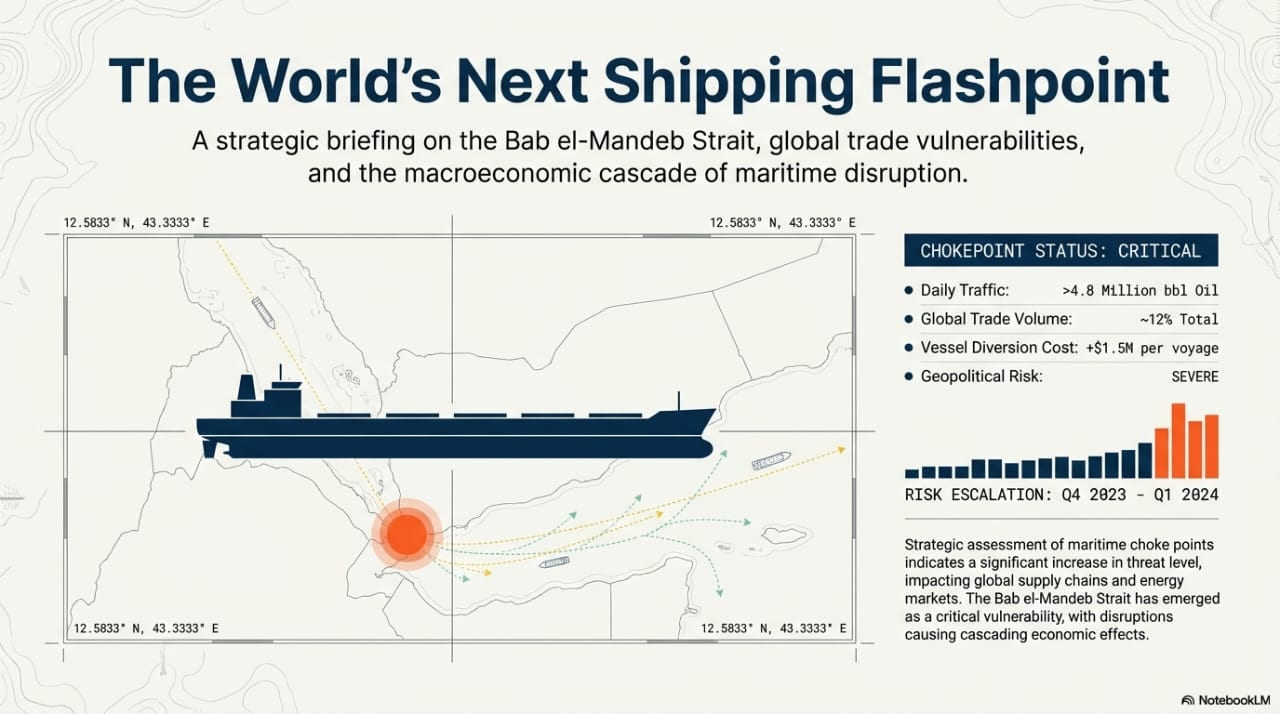
With the widening conflict drawing in multiple actors, risks are no longer confined to oil flows through Hormuz. Bab el-Mandeb is now emerging as a parallel pressure point — one that could disrupt not just energy shipments, but broader global trade.
Why Bab el-Mandeb Is So Critical
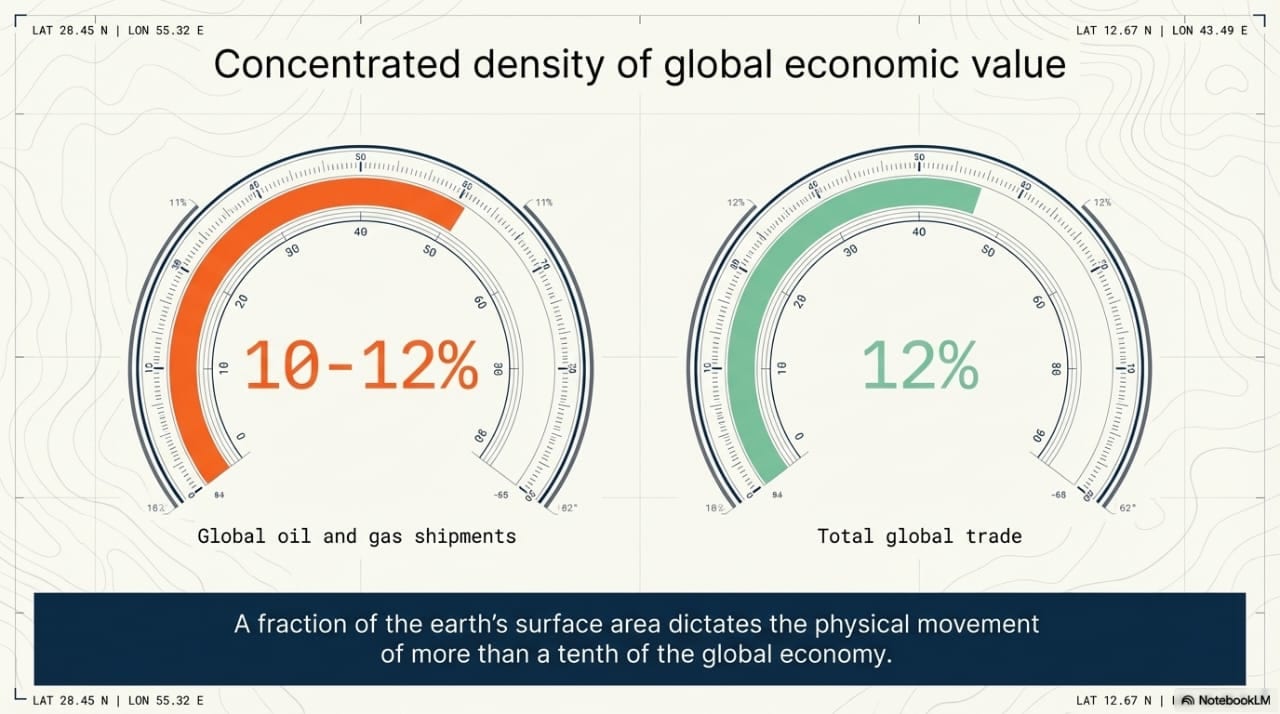
The strait plays a central role in connecting Asia and Europe via the Suez Canal. Around 10–12% of global oil and gas shipments pass through this route, alongside roughly 12% of total global trade.
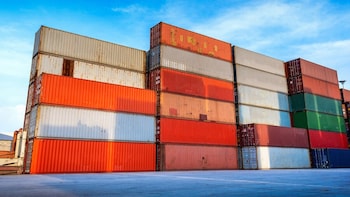
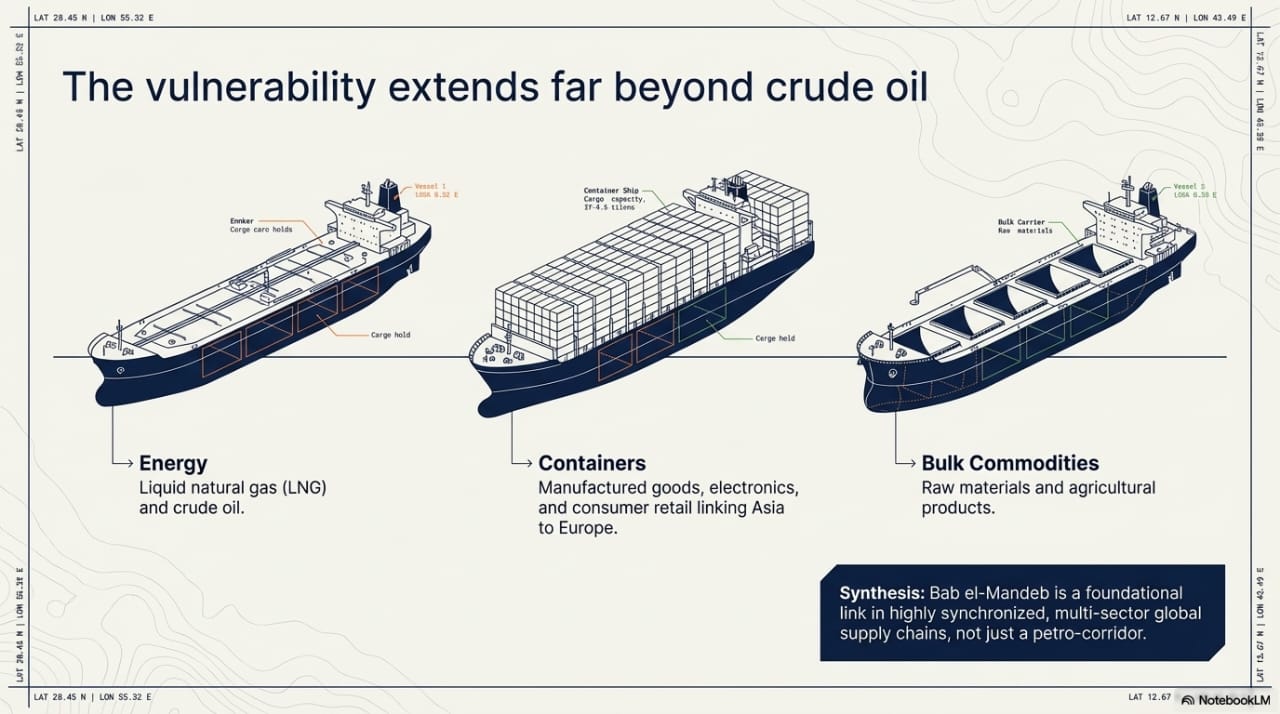
Its importance extends well beyond crude. The wider Red Sea corridor carries a significant share of container traffic, bulk commodities, and liquefied natural gas shipments. This makes Bab el-Mandeb not just an energy chokepoint, but a key link in global supply chains.
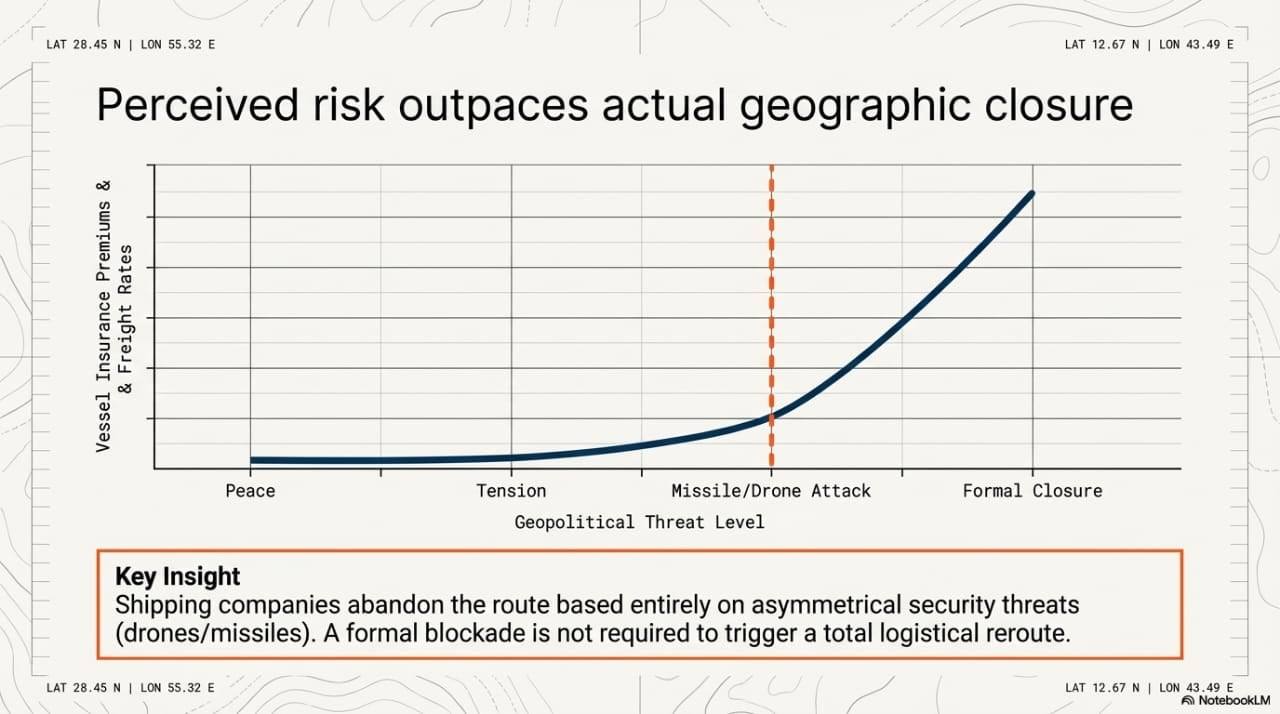
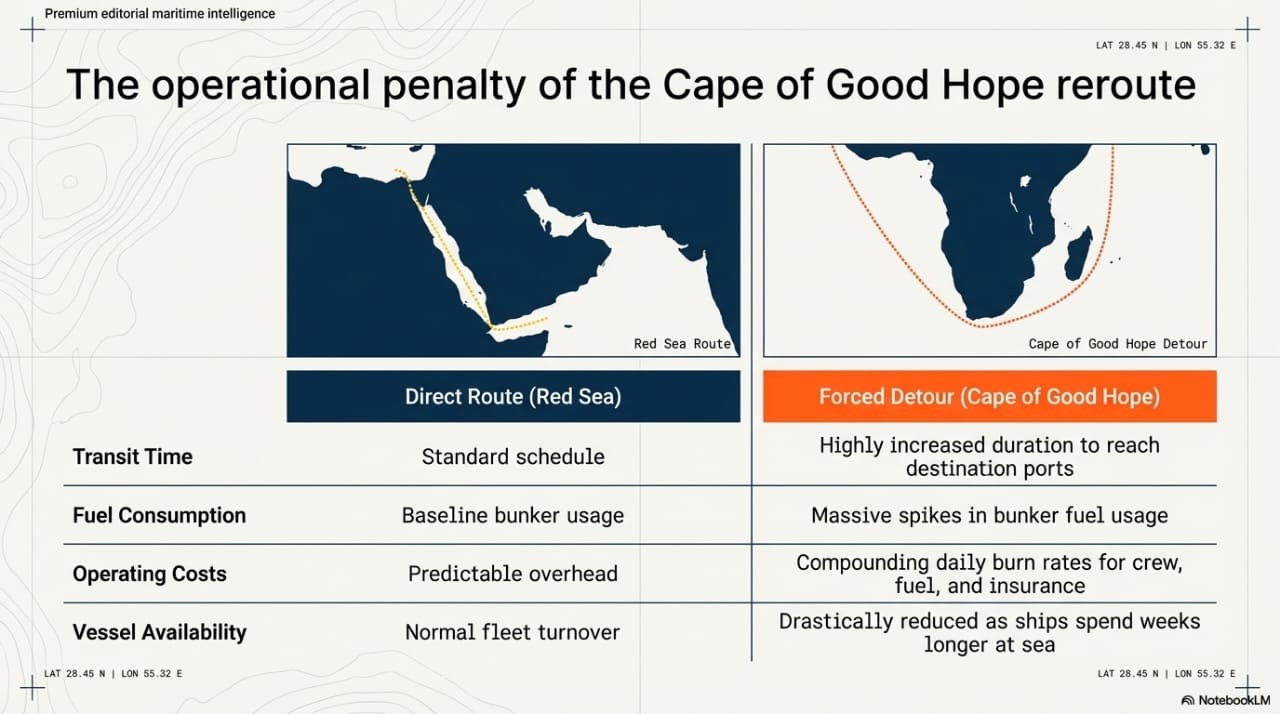
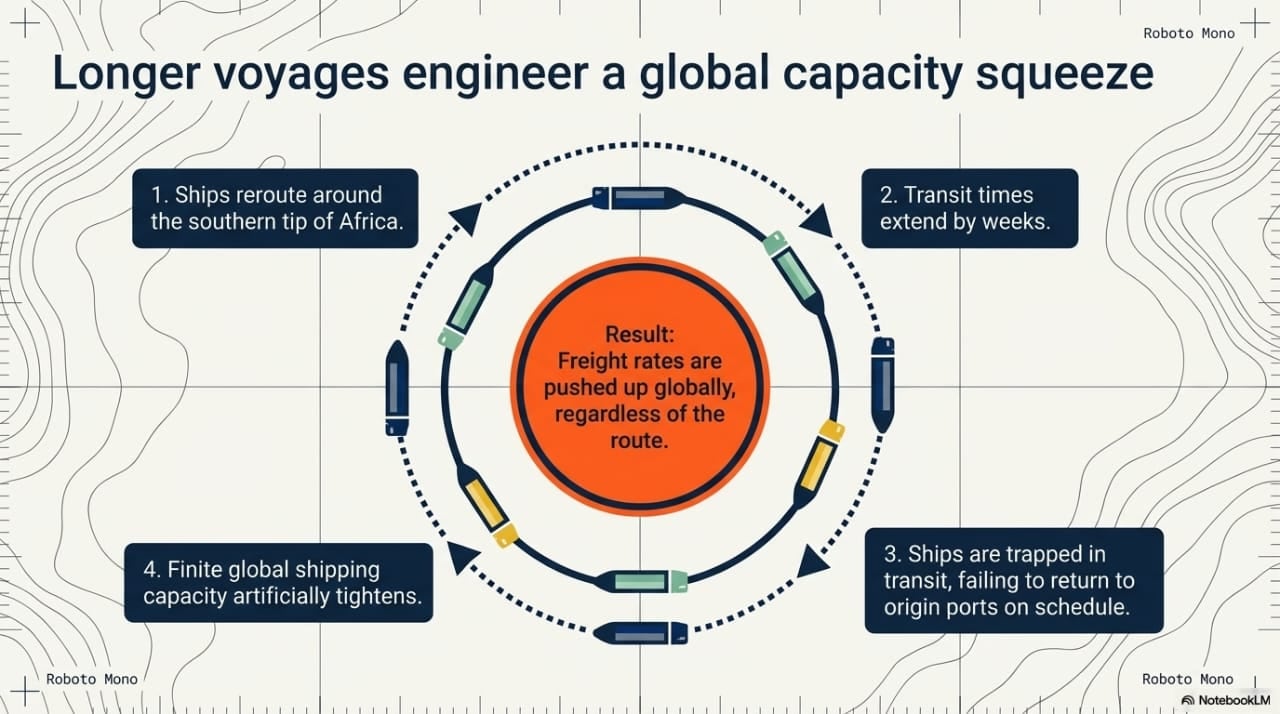
One of the biggest risks is that disruption can occur even without a formal closure of the strait. Heightened security threats — including missile or drone attacks — can be enough to deter shipping companies. In such scenarios, vessels are forced to reroute around the Cape of Good Hope at the southern tip of Africa. This significantly increases transit times, fuel consumption, and overall shipping costs. Longer voyages also reduce vessel availability, tightening global shipping capacity and pushing up freight rates.
A Fragile Alternative to Hormuz
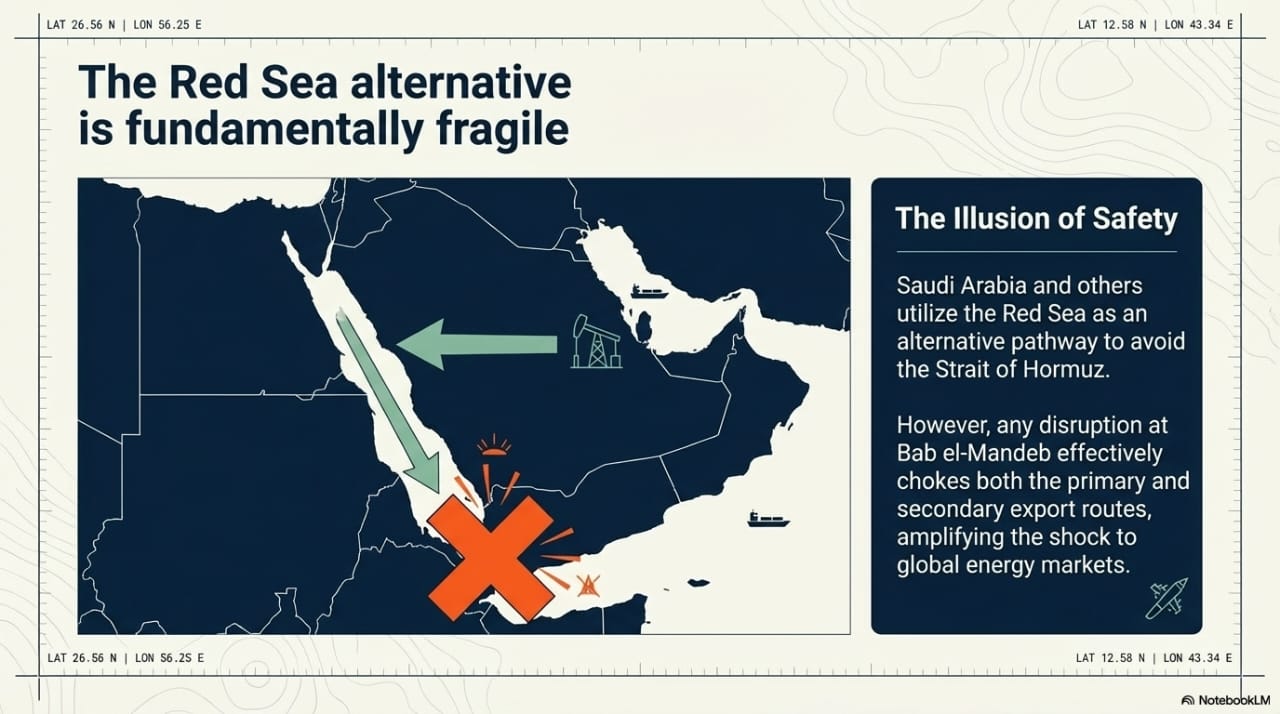
As flows through the Strait of Hormuz come under pressure, the Red Sea route via Bab el-Mandeb has gained importance as an alternative pathway for oil exports — particularly for countries like Saudi Arabia, which can route crude to Red Sea ports. However, this alternative is increasingly fragile. Any disruption at Bab el-Mandeb would effectively choke both primary and secondary routes, amplifying the shock to global energy markets.
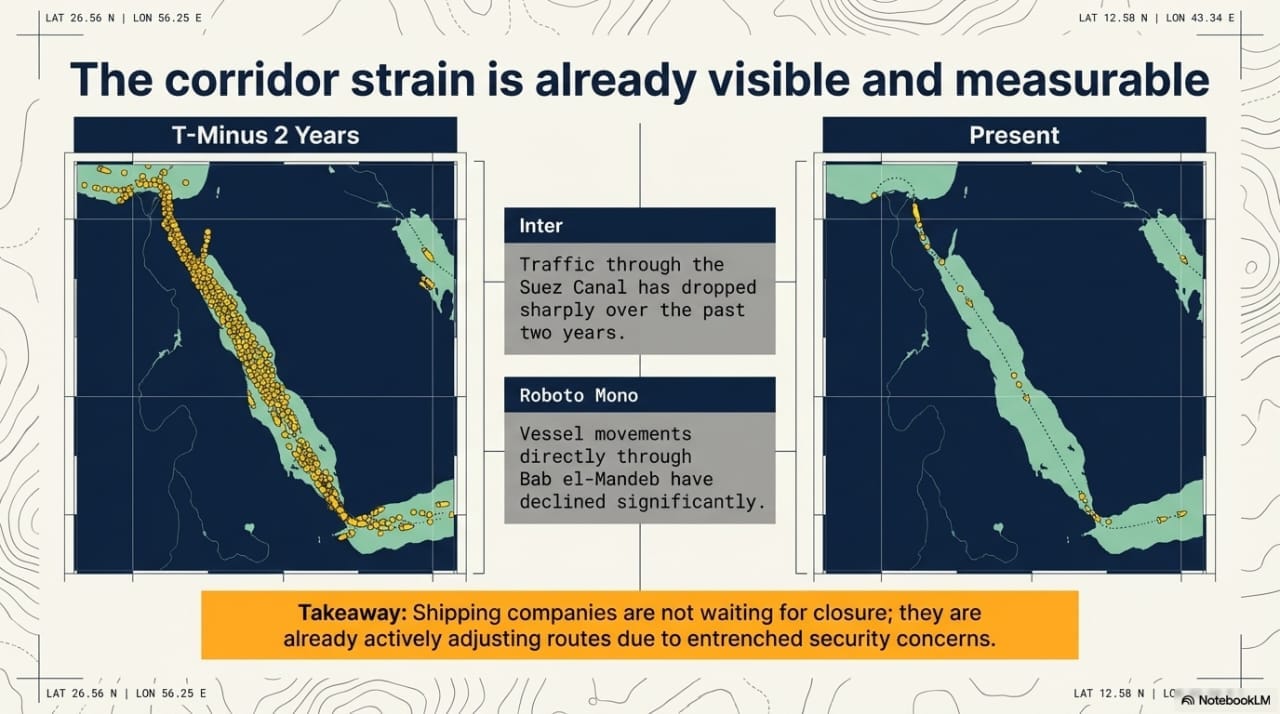
The strain on this corridor is already visible. Traffic through the Suez Canal has dropped sharply over the past two years, reflecting rising security concerns in the Red Sea region.
At the same time, vessel movements through Bab el-Mandeb have declined significantly, indicating that shipping companies are already adjusting routes in response to perceived risks.
What It Means for India
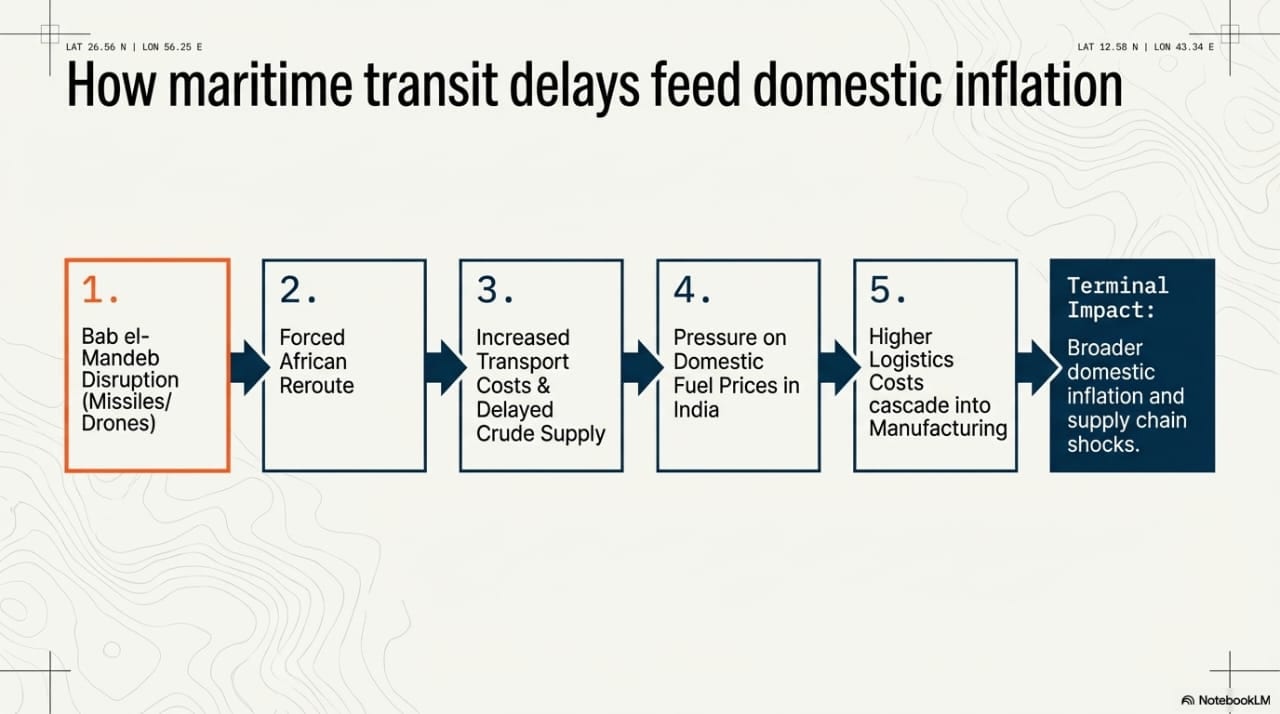
For India, the implications are significant. A disruption in the Bab el-Mandeb route would force oil shipments — particularly from western markets — to take longer routes around Africa. This would lead to higher transportation costs, delays in crude supplies, and increased pressure on domestic fuel prices. The impact would likely extend to manufacturing and trade, as higher logistics costs feed into broader inflation.
India's exports could also take a hit, with longer transit times and rising freight charges affecting competitiveness in key European markets.
The Bab el-Mandeb is already one of the most strategically sensitive and militarised maritime zones in the world. In the current geopolitical environment, it is quickly becoming a critical fault line for global trade.
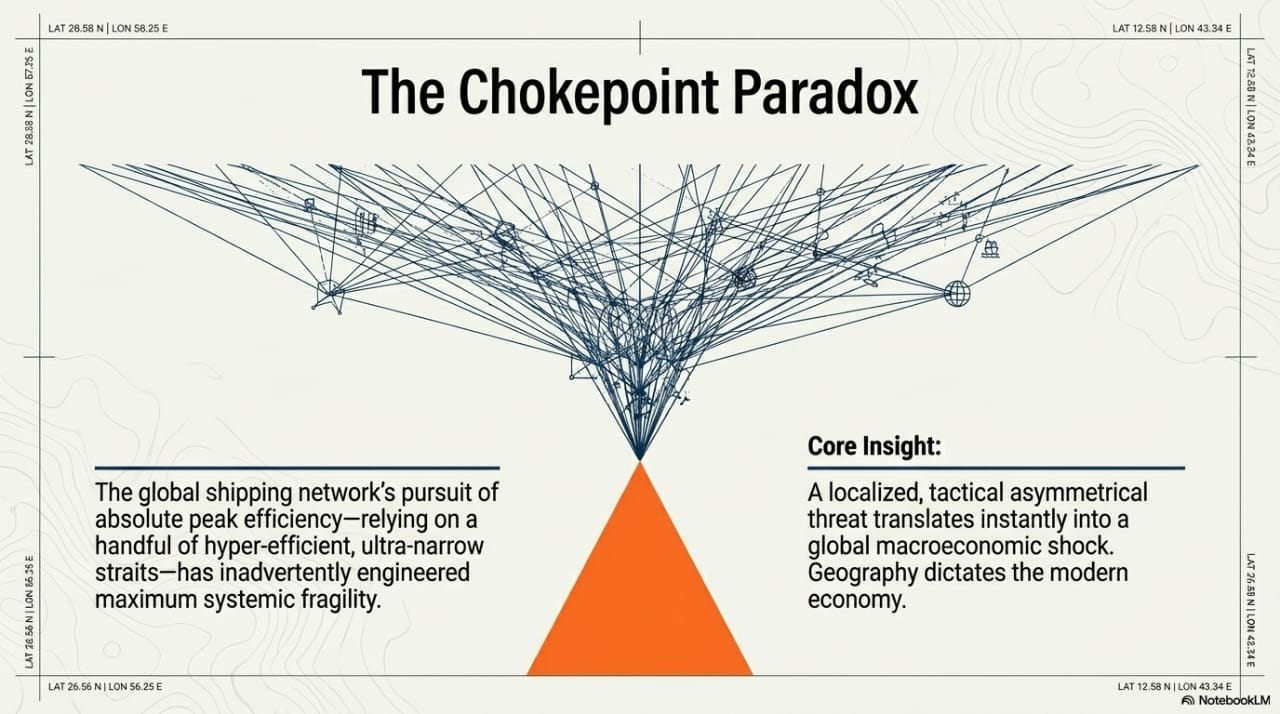
If disruptions intensify, the consequences could go far beyond oil — triggering a wider supply chain shock, pushing up costs across industries, and reshaping global shipping patterns. In a world already grappling with volatility, this narrow stretch of water may prove to be one of the most consequential risk factors for the global economy.
ALSO READ: When the World Is At War, Where Does Your Money Go? | An Infographic Story
Essential Business Intelligence, Continuous LIVE TV, Sharp Market Insights, Practical Personal Finance Advice and Latest Stories — On NDTV Profit.