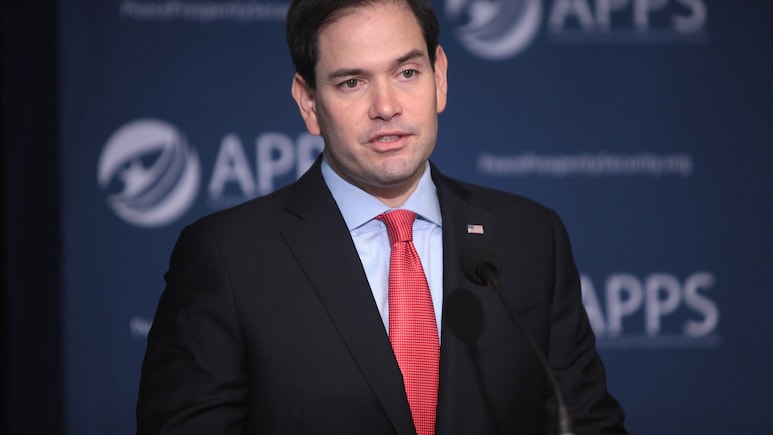
US Secretary of State Marco Rubio said on Tuesday that 60-70% of oil flows are now coming out of the Strait of Hormuz, with the share increasing, as Washington kept the door open to a possible meeting between US President Donald Trump and his Iranian counterpart.
Speaking to NBC's Today show, Rubio said the US was open to talks with Iranian officials during the UN General Assembly in New York, although no meeting between Trump and Iranian President Masoud Pezeshkian had been scheduled.

-
 Indian Markets Turning Corner After Two Tough Years, Says Sandeep Tandon
-
 NDTV Profit Ignite 2026: Experts See Opportunity In Equities, Stay Bullish For Long-Term
-
 Buy Right, Sit Tight Does Not Work for Individual Stocks, Says Dinshaw Irani
-
 'Worst Is Behind': Quant MF Sees Market Bottom, Flags 'Extreme Euphoria' In Midcaps
-
 India's Mutual Fund Industry Could Become A $1 Trillion Opportunity, Say Fund Managers
-
 'Foreign Investors Are Baraatis': Raamdeo Agrawal's Take On LTCG Tax
-
 Stay Invested Through Market Cycles: Raamdeo Agrawal at NDTV Profit Ignite
-
 Ramesh Damani Remains Bullish On India For Next 20-30 Years, Sees Bargains Amid Market Weakness
-
 CAS Came After A Long Consultation Process: SEBI Chairman Tuhin Kanta Pandey AT NDTV PROFIT IGNITE
-
 Aim To Cut FPI Onboarding Time From Mth To Five Days: SEBI Chairman Tuhin Kanta Pandey AT NDTV PROFI
"We're open to that. I don't think anything is scheduled at this point, but we're certainly open to something like that, especially if it has the prospects of leading to something positive," Rubio said.
Also Read | Layoffs Are Rising In Tech, But These Skills Are Helping People Unlock Better Pay
ALSO READ: Iran Proposes Reopening Strait Of Hormuz In 7 Days To Spur Diplomacy: Report
Fox News reported that Rubio said the US remains open to diplomacy with Iran and would not "close the door" to negotiations.
"Never close the door to diplomacy," Rubio said when asked about Iran, while reiterating Washington's position that Tehran must not be allowed to develop a nuclear weapon.
Rubio also said most ships were continuing to pass through the Strait of Hormuz without being attacked. He reiterated the US position that Iran must not be allowed to acquire a nuclear weapon.
The comments come as oil markets monitor developments around the strategic waterway, through which a significant share of global crude and fuel supplies normally pass.
On oil prices, Rubio said recent increases were not solely linked to developments around Iran or the Strait of Hormuz. He attributed the majority of the increase to disruptions and geopolitical risks linked to Yemen and the Ukraine conflict.
Rubio also said the US would stand by Saudi Arabia if the situation escalates.
"If it comes down to it, we'll stand by Saudi Arabia," Rubio said, according to Bloomberg.
Meanwhile, Saudi Arabia has restarted its East-West oil pipeline and could resume crude exports from the Red Sea port of Yanbu, Reuters reported, citing three sources familiar with the matter. The pipeline was operating at a low rate, according to two of the sources.
The pipeline restart could provide Saudi Arabia with an alternative route to move crude to global markets, reducing its reliance on the Strait of Hormuz. The East-West Pipeline has the capacity to reroute about 4 million barrels per day, or around 4% of global oil supplies.
The pipeline had been shut after drone attacks on September 13 disrupted crude loadings at Yanbu. Its restart came as oil prices eased on expectations of additional Gulf supply. Reuters reported Brent crude futures falling to around $98.33 a barrel during Tuesday trading.
Essential Business Intelligence, Sharp Market Insights, Practical Personal Finance Advice, Daily Fuel, Gold and Silver Prices and Latest Stories — On NDTV Profit.