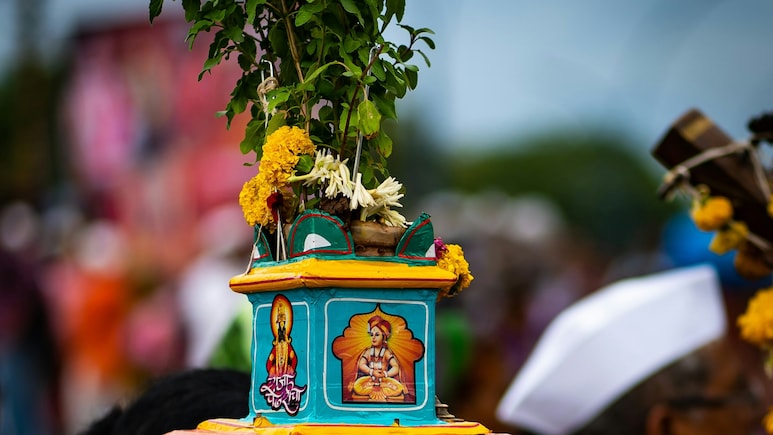
- Tulsi Vivah 2026 is on Saturday, November 21, marking Tulsi's marriage to Lord Vishnu
- The festival begins after Dev Uthani Ekadashi, starting the Hindu wedding season
- Rituals include decorating Tulsi, placing Shaligram, offerings, prayers, and traditional wedding rites
Tulsi Vivah, an important festival in the Hindu calendar, will be celebrated on Saturday, November 21, 2026. The occasion marks the symbolic marriage of Goddess Tulsi to Lord Vishnu in his Shaligram form. Devotees decorate Tulsi plants as brides and perform traditional wedding rituals to mark the divine union.
The festival is observed after Dev Uthani Ekadashi and marks the beginning of the Hindu wedding season. It is celebrated with prayers, offerings and traditional customs across the country.
Tulsi Vivah 2026: Date And Timing
Tulsi Vivah will be observed on Saturday, November 21, 2026, on Kartik Shukla Dwadashi, the twelfth day of the bright fortnight of the Hindu month of Kartik. According to Drik Panchang, the Dwadashi Tithi will begin at 6:31 am on November 21 and end at 4:56 am on November 22.
Also Read | Layoffs Are Rising In Tech, But These Skills Are Helping People Unlock Better Pay
The auspicious time for Tulsi Vivah will be from 5:25 pm to 7:49 pm on November 21. Brahma Muhurta will be from 4:40 am to 5:30 am, while Abhijeet Muhurta will be observed from 11:42 am to 12:28 pm.
The ceremony is traditionally performed during Godhuli Vela, the evening twilight period. However, the exact auspicious timing may vary depending on the location and regional customs.
What Is Tulsi Vivah? The Story Of Vrinda
According to Hindu mythology, Tulsi Vivah commemorates the marriage of Goddess Tulsi and Lord Vishnu in his Shaligram form. The festival is associated with the story of Vrinda, a devoted woman who was married to the demon king Jalandhar. Her devotion and loyalty to her husband protected him and made him extremely powerful, making it difficult for the gods to defeat him.
To help the gods overcome Jalandhar, Lord Vishnu took the form of Jalandhar and broke Vrinda's chastity through deception. When Vrinda discovered what had happened, she cursed Lord Vishnu to turn into a stone. According to mythology, Lord Vishnu took the form of the Shaligram stone.
Overcome with grief, Vrinda gave up her life, and a Tulsi plant grew from her ashes. Lord Vishnu later blessed her, promising that she would be worshipped alongside him. This is believed to be the origin of the Tulsi-Shaligram marriage tradition.
Significance Of Tulsi Vivah
Tulsi Vivah marks the conclusion of Chaturmas, the four-month period during which Lord Vishnu is believed to remain in cosmic slumber. Dev Uthani Ekadashi marks his awakening, after which auspicious ceremonies, including weddings, resume.
The festival holds special religious significance as devotees believe that performing Tulsi Vivah brings happiness, prosperity and marital harmony. It is also believed to bless unmarried women with a suitable life partner and strengthen marital relationships.
Tulsi Vivah 2026 Puja Vidhi And Rituals
Devotees begin the ceremony by cleaning and decorating the Tulsi Vrindavan with rangoli, flowers and traditional decorations. A mandap is prepared around the plant using sugarcane stalks, flower garlands and mango leaves.
Goddess Tulsi is dressed as a bride with a red or yellow chunari, bangles, flowers and other traditional ornaments. A Shaligram stone or an idol of Lord Vishnu is placed beside the Tulsi plant and decorated with yellow clothes, flowers and sandalwood.
Devotees then offer turmeric, kumkum, akshata (unbroken rice), flowers, incense sticks, diyas and sweets to the deities. Prayers are offered to Lord Ganesha, Goddess Tulsi and Lord Vishnu. The wedding ceremony is performed with traditional rituals, including the symbolic Kanyadaan, exchange of garlands and pheras, depending on family customs. Devotees also recite Mangalashtak during the ceremony.
A special tradition associated with the ceremony is the construction of a mandap using sugarcane stalks. Sugarcane symbolises sweetness, happiness and prosperity. The mandap is prepared as a prayer for peace, abundance and sweetness in married life.
The rituals conclude with aarti of Goddess Tulsi and Lord Vishnu, followed by the distribution of prasad among family members and devotees.
Tulsi Vivah 2026: Puja Samagri
Essential items for Tulsi Vivah puja
- Tulsi plant
- Shaligram stone or an idol of Lord Vishnu
- Sugarcane stalks for the mandap
- Red or yellow chunari
- Flowers, garlands and mango leaves
- Turmeric, kumkum, sandalwood and akshata (unbroken rice)
- Incense sticks and diyas
- Fruits, sweets and other offerings
Additional items for the wedding rituals
Bangles and traditional ornaments
- Cotton thread
- Other items as needed for the rituals
ALSO READ: Bali Pratipada 2026: Date, Significance And Rituals
Essential Business Intelligence, Sharp Market Insights, Practical Personal Finance Advice, Daily Fuel, Gold and Silver Prices, Watch Business News Live and Latest Stories — On NDTV Profit.