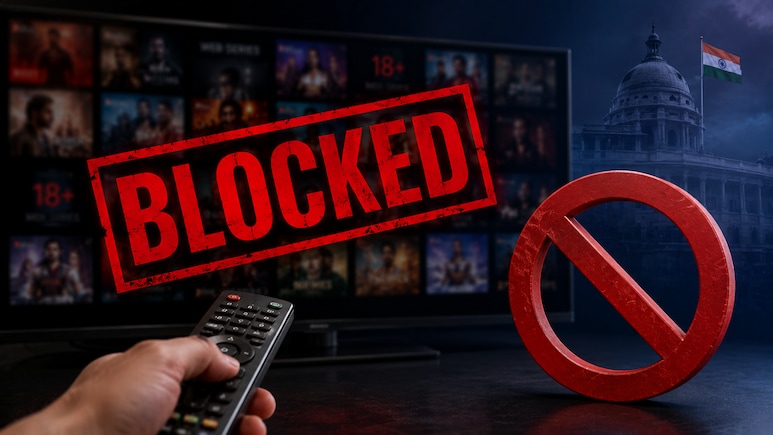
The Central government has blocked public access to 50 over-the-top (OTT) streaming platforms over the past two years after they were found hosting obscene and sexually explicit content in violation of multiple laws, the Lok Sabha was informed on Wednesday.
Minister of State for Information and Broadcasting and Parliamentary Affairs Dr L. Murugan disclosed the information in a written reply to a question raised by Nashik MP Rajabhau Parag Prakash Waje.
The action was taken following complaints against digital platforms and under provisions of the Information Technology Act, the Bharatiya Nyaya Sanhita (BNS), and the Indecent Representation of Women (Prohibition) Act.
Also Read | Layoffs Are Rising In Tech, But These Skills Are Helping People Unlock Better Pay
Why Were The OTT Platforms Blocked?
According to the government, the blocked platforms were found to have violated Sections 67 and 67A of the Information Technology Act, 2000, which deal with publishing or transmitting obscene and sexually explicit material in electronic form. They also violated Section 294 of the Bharatiya Nyaya Sanhita (BNS), relating to obscene acts and content; and Section 4 of the Indecent Representation of Women (Prohibition) Act, 1986.
The government said these legal provisions empower authorities to act against digital platforms found distributing unlawful content.
Action Taken Under IT Act
The Ministry of Information and Broadcasting stated that it regularly examines complaints related to digital content and takes action wherever violations are established.
Under Section 79(3)(b) of the Information Technology Act, intermediaries can be directed to remove unlawful content or disable public access after being notified by the appropriate government authority.
The provision forms part of the broader framework governing intermediary liability and compliance in India's digital ecosystem.
ALSO READ: Jana Nayagan OTT Release: When And Where Will Vijay's Final Film Stream? Here's What We Know
OTT Platforms Governed By IT Rules, 2021
The government also reiterated that OTT platforms and digital news publishers are regulated under the Information Technology (Intermediary Guidelines and Digital Media Ethics Code) Rules, 2021, which came into effect on February 25, 2021.
Part III of these rules lays down a Code of Ethics for publishers of online curated content and digital news. The framework also establishes a three-tier grievance redressal mechanism, allowing viewers and other stakeholders to file complaints regarding content published on digital platforms.
According to the ministry, complaints received under this framework are reviewed, and action is taken wherever content is found to violate applicable laws or the Code of Ethics.
Government Continues Oversight Of Digital Content
The latest disclosure highlights the government's continued monitoring of digital streaming platforms as OTT services expand their reach across India.
Authorities have consistently maintained that while online streaming platforms offer greater creative freedom and consumer choice, they remain subject to Indian laws governing public decency, obscenity and digital content.
The government, however, did not disclose the names of the 50 OTT platforms that were blocked during the two-year period.
The parliamentary response indicates that complaints from users and other stakeholders continue to play a significant role in triggering regulatory scrutiny and enforcement action against digital content platforms operating in India.
Also Read: OTT Releases This Week: From Musafir Cafe To Adarsh Baal Vidyalaya
Essential Business Intelligence, Sharp Market Insights, Practical Personal Finance Advice, Daily Fuel, Gold and Silver Prices and Latest Stories — On NDTV Profit.