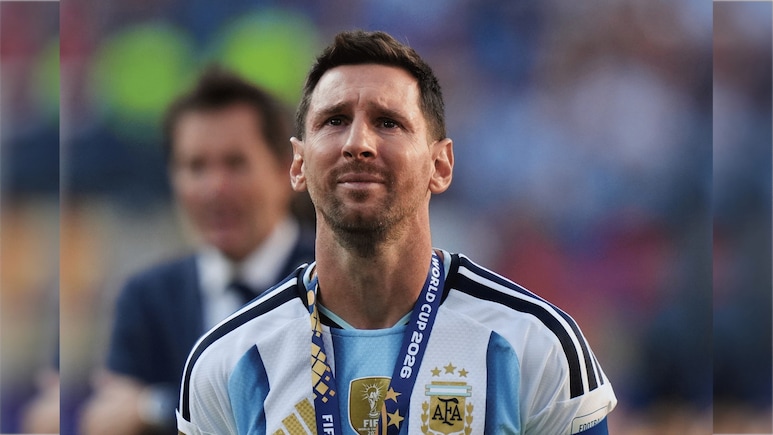
Lionel Messi's final FIFA World Cup appearance ended in heartbreak on Sunday as Argentina's title defence was brought to an end by Spain, who claimed a 1-0 extra-time victory in the 2026 final at the New York New Jersey Stadium. Ferran Torres' 106th-minute strike settled the contest after Argentina had spent much of the evening pinned inside their own half, becoming the first team since Opta began collecting comprehensive World Cup data in 1966 to fail to attempt a single shot during the 90 minutes of regulation time. Lionel Scaloni's side finished the match with just three attempts overall, neither of which tested Spain goalkeeper Unai Simon.
It was in stark contrast to the tournament that Argentina's talismanic captain Messi had produced. At 39, Messi had rolled back the years to lead his country to a second successive World Cup final, finishing the tournament with eight goals and four assists. He also topped the competition for expected assists (4.12) and key passes created (21), underlining his influence as both Argentina's chief scorer and creator.
Messi's campaign also saw him rewrite the World Cup record books. He became the oldest outfield player to appear in a men's World Cup final at 39 years and 25 days, surpassing Sweden's Gunnar Gren.
Also Read | Layoffs Are Rising In Tech, But These Skills Are Helping People Unlock Better Pay
ALSO READ | Spain Outclass Messi's Argentina In FIFA World Cup 2026 Final; Torres Hammers Only Goal In Extra-Time
Messi also became the first player to eclipse Miroslav Klose as the men's FIFA World Cup's all-time leading goalscorer during the tournament. Although Kylian Mbappe (22 goals) later overtook his tally, leaving the Argentine second on the all-time list with 21 strikes to his name.
His assist against Egypt earlier in the tournament made him the first player to register an assist in six different FIFA World Cups, and he also became the oldest player to score a World Cup hat-trick during Argentina's group-stage win over Algeria.
The Argentine great also finished his World Cup career with 12 assists, the most recorded by any player since comprehensive data collection began in 1966, while extending his records for most World Cup appearances (33) and most World Cup victories (24). He also became only the second player, alongside Kylian Mbappe, to score at least seven goals in two separate World Cup editions.
Across six tournaments spanning two decades, Messi's World Cup journey ends with one title, two runners-up medals and two Golden Ball awards. His final appearance may have ended in defeat, but his performances across Germany 2006, South Africa 2010, Brazil 2014, Russia 2018, Qatar 2022 and North America 2026 cemented one of the greatest careers in the tournament's history.
ALSO READ | Madonna, Shakira, BTS, Bieber, Coldplay Headline First-Ever FIFA World Cup Final Halftime Show
Essential Business Intelligence, Sharp Market Insights, Practical Personal Finance Advice, Daily Fuel, Gold and Silver Prices and Latest Stories — On NDTV Profit.