- China successfully recovered the first stage of Long March 10B on its maiden orbital launch
- The booster was caught using a sea-based net system, a first for orbital-class rockets
- Long March 10B uses landing hooks and a net, unlike SpaceX's vertical landing method
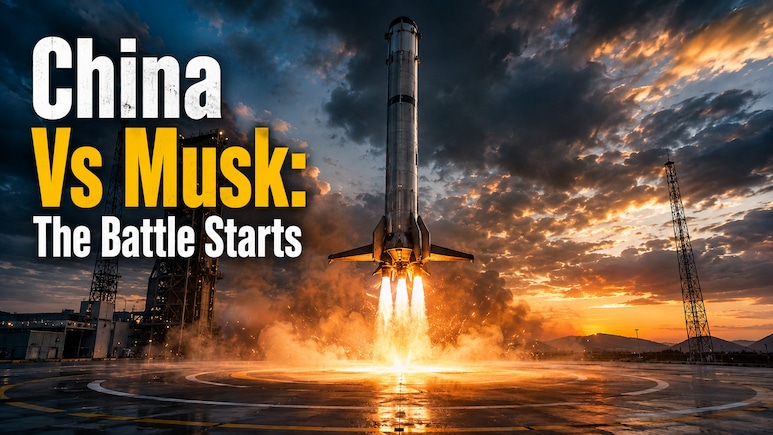
China has pulled off a historic first in the reusable rocket race, successfully recovering the first stage of its Long March 10B during the vehicle's maiden orbital launch on Friday, becoming only the second nation after the US to demonstrate controlled orbital-class booster recovery.
The rocket lifted off from the Hainan International Commercial Aerospace Launch Center in Wenchang at 12.15 pm local time. About six minutes after stage separation, the first-stage booster returned to Earth and was captured by a sea-based recovery platform using a wire-arrestment net system, a method never before used for an orbital-class rocket.
Unlike SpaceX's Falcon 9, which lands vertically on legs atop a droneship or landing pad, the Long March 10B relies on landing hooks that catch a suspended net strung across a floating barge. The 63.6-metre, two-stage rocket runs on seven kerosene-liquid oxygen engines on its first stage, with a methane-liquid oxygen engine powering the second.
Also Read | Layoffs Are Rising In Tech, But These Skills Are Helping People Unlock Better Pay
ALSO READ: US Judge Rejects Elon Musk's Attempt To Overturn Twitter Fraud Verdict
The success marks China's first controlled recovery of an orbital rocket, following two failed attempts in December by LandSpace's Zhuque 3 and the Long March 12A, both of which crashed while attempting leg-based landings similar to SpaceX's approach.
The China Aerospace Science and Technology Corporation, which developed the rocket, said the net-capture method sidesteps the added weight and precision demands of landing legs, potentially boosting payload capacity. The Long March 10B can carry at least 16 tonnes to low Earth orbit and is expected to serve as a workhorse for satellite launches, as well as a testbed for China's crewed lunar ambitions.
Markets reacted swiftly, with shares in China Spacesat and China Satellite Communications each jumping 10 per cent, the daily limit under Chinese trading rules.
The milestone comes a decade after SpaceX first landed a Falcon 9 booster in December 2015, a breakthrough that transformed the economics of spaceflight. China's achievement signals growing ambition to challenge American dominance in reusable launch technology, even as it charts a technically distinct path to get there.
ALSO READ: From Critic To Admirer? Elon Musk Praises Anthropic's Mythos, Fable; Calls It 'Leader In AI'
WATCH:
China lands and recovers a reusable orbital-class booster at sea for the first time. pic.twitter.com/LDcu1BOhDE
— Open Source Intel (@Osint613) July 10, 2026
Essential Business Intelligence, Sharp Market Insights, Practical Personal Finance Advice, Daily Fuel, Gold and Silver Prices and Latest Stories — On NDTV Profit.