- Jewellery exchange counts as two transactions, triggering capital gains tax on old gold sold
- Long-term capital gains tax on gold is 12.5%, plus 4% cess, totaling an effective 13% rate
- GST of 3% applies on new gold jewellery purchases, increasing the total tax burden significantly
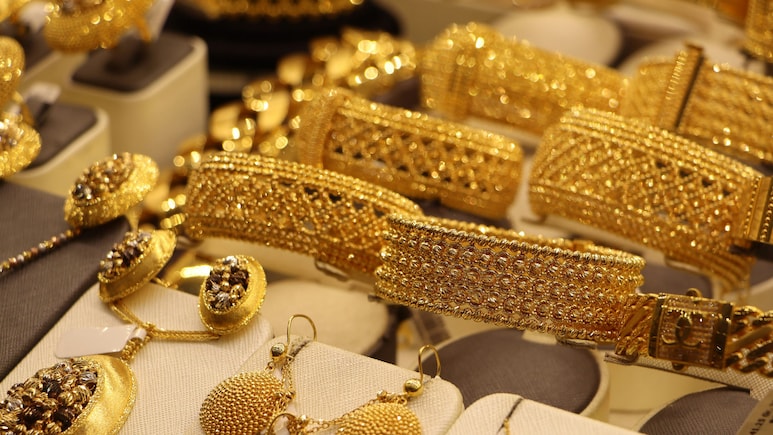
The wedding season is in full swing, and jewellery showrooms are pushing old-gold exchange offers hard. The pitch is simple, with customers asked to bring in their old ornaments, and walk out with a new necklace and pay only the difference.
What the counter staff rarely bring up is tax. Done the usual way, an exchange can leave a family with a tax bill of about Rs 5.49 lakh. Getting the same gold remade instead can bring that down to roughly Rs 36,000, entirely within the Income-tax Act, 2025. How wide the gap is depends on how the jeweller bills GST and how much the gold has gained.
Why An Exchange Gets Taxed Twice
As far as the tax department is concerned, an exchange is two transactions. You sell your old jewellery to the jeweller, and you buy new jewellery from him. The value credited for the old gold is simply adjusted against the bill.
Also Read | Layoffs Are Rising In Tech, But These Skills Are Helping People Unlock Better Pay
Jewellery is a capital asset because the law keeps it out of the definition of "personal effects". Handing it over in an exchange counts as a transfer, and any gain is taxable.
"The price of the new ornaments should not be treated as the consideration for the old jewellery and any additional amount paid towards the new ornaments is a separate payment," chartered accountant Suresh Surana told the Financial Express.
Gold held for more than 24 months is taxed at 12.5% on the gain, without indexation. Add the 4% cess and the effective rate is 13%. Take family jewellery bought 15 years ago for Rs 7 lakh and now valued at Rs 40 lakh. That is a long-term gain of Rs 33 lakh and a tax bill of about Rs 4.29 lakh.
Then comes GST. The new necklace is a fresh purchase, and gold jewellery attracts 3%. Charged on the full Rs 40 lakh, that is another Rs 1.2 lakh, taking the total to Rs 5.49 lakh.
That second figure is not settled, though. Amit Modak, director of P. N. Gadgil & Sons, told Mint that jewellers read the rules differently. Some charge GST only on the additional gold the customer pays for, while others tax the full value of the new piece.
ALSO READ: US Stocks Crashed, So Why Did Gold Fall 9%? The Margin Call Nobody Saw Coming
The Goldsmith's Route
Before exchange schemes took over, families took their gold to a goldsmith who melted it down, made a new piece and handed it back. Nothing was bought or sold. The customer paid only for the labour.
Jewellers still do this, and call it remodelling. Because the gold stays yours throughout, there is no transfer and no capital gains tax. GST applies only to the making charges.
The rate on those charges is higher, at 18%. The concessional 5% rate for job work on gold applies only when the owner of the gold is registered under GST, and an individual buyer is not. A GST FAQ published by the Jewellers' Association Bengaluru spells it out: the "Jeweller shall charge GST @ 18% on the making charges." On making charges of Rs 2 lakh, that comes to Rs 36,000.
This route has its own costs. Some gold is lost in melting and finishing, and the work takes longer than buying off the shelf, Modak told Mint. If the new design needs more gold than you brought in, the extra is a fresh purchase at 3% GST. The bill should record the weight and purity of the gold you handed over and of what came back, with making charges billed as a service. An invoice that shows the jeweller buying your gold turns the deal back into an exchange.
How much you save depends on how much your gold has gained. For pieces bought before April 2001, the fair market value on that date can be used as the cost. Inherited gold carries over the original owner's cost and holding period, so decades of price rise can land on a single exchange.
Large chains do offer remodelling openly, but exchange remains the default pitch. Ask before you hand over the gold whether the jeweller is remaking it or buying it. If you do exchange, keep the invoice showing what was credited for the old jewellery, along with proof of what it originally cost. You will need both when you report the gain in your tax return.
ALSO READ: Bought Gold On Akshaya Tritiya? Here's How Much You Lost After Rs 10 Lakh Investment
Essential Business Intelligence, Sharp Market Insights, Practical Personal Finance Advice, Daily Fuel, Gold and Silver Prices, Watch Business News Live and Latest Stories — On NDTV Profit.