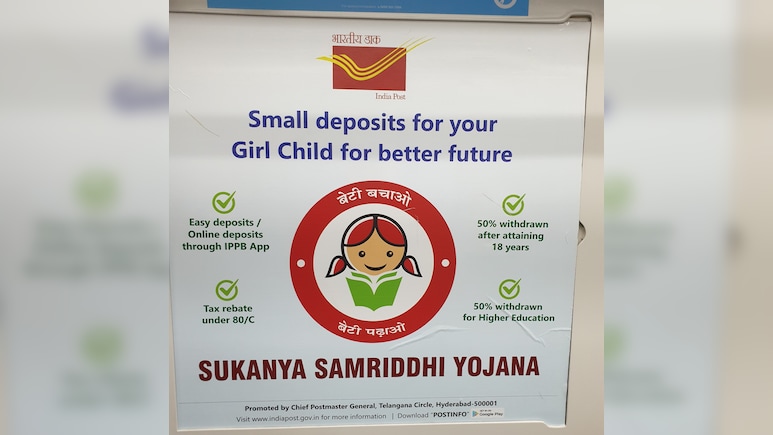
The Sukanya Samriddhi Yojana (SSY) offers parents an opportunity to set aside money for their daughters' future financial requirements. Backed by the government, the small savings scheme is intended to help families build a corpus for expenses such as higher education and other important needs. Parents with two daughters can open individual SSY accounts in their names, provided they meet the prescribed eligibility conditions and adhere to the applicable investment limits.
A clear understanding of the scheme's provisions is essential for families to structure their deposits correctly and make the most of this savings option.

-
 Indian Markets Turning Corner After Two Tough Years, Says Sandeep Tandon
-
 NDTV Profit Ignite 2026: Experts See Opportunity In Equities, Stay Bullish For Long-Term
-
 Buy Right, Sit Tight Does Not Work for Individual Stocks, Says Dinshaw Irani
-
 'Worst Is Behind': Quant MF Sees Market Bottom, Flags 'Extreme Euphoria' In Midcaps
-
 India's Mutual Fund Industry Could Become A $1 Trillion Opportunity, Say Fund Managers
-
 'Foreign Investors Are Baraatis': Raamdeo Agrawal's Take On LTCG Tax
-
 Stay Invested Through Market Cycles: Raamdeo Agrawal at NDTV Profit Ignite
-
 Ramesh Damani Remains Bullish On India For Next 20-30 Years, Sees Bargains Amid Market Weakness
-
 CAS Came After A Long Consultation Process: SEBI Chairman Tuhin Kanta Pandey AT NDTV PROFIT IGNITE
-
 Aim To Cut FPI Onboarding Time From Mth To Five Days: SEBI Chairman Tuhin Kanta Pandey AT NDTV PROFI
Deposit Limits
Also Read | Layoffs Are Rising In Tech, But These Skills Are Helping People Unlock Better Pay
The Sukanya Samriddhi Account scheme allows parents and legal guardians to invest between Rs 250 and Rs 1.5 lakh in an account every financial year. Any contribution made after the initial deposit must be in multiples of Rs 50.
ALSO READ: Want To Build A Rs 30-Lakh Corpus For Your Child? Here's How LIC Plans Work
For parents with two eligible daughters, the annual investment ceiling works out to Rs 3 lakh across both accounts. Each account carries an independent limit of Rs 1.5 lakh, meaning the maximum contribution is calculated separately for each child.
The scheme offers flexibility in making deposits. Parents can invest the entire amount at once or spread their contributions across several transactions during the year. There is no restriction on how many deposits can be made.
One condition to keep in mind is the minimum annual contribution. At least Rs 250 must be deposited into each account every financial year to prevent it from becoming inactive.
Rules For Two Daughters
Parents must open a Sukanya Samriddhi account before their daughter reaches the age of 10. The scheme does not permit multiple accounts for the same girl child, and the usual eligibility limit allows a family to open accounts for up to two daughters.
An exception is available in cases involving multiple births, such as twins or triplets. Such applications are subject to specific eligibility requirements and must be accompanied by relevant proof.
The facility is available through authorised banks and post offices. Applicants need to submit the child's birth certificate and the prescribed identification and other documents of the parent or legal guardian.
The deposit period and maturity timeline are two important aspects of the Sukanya Samriddhi Yojana. Parents are required to make contributions for 15 years from the account's opening date, although the investment continues until the completion of 21 years.
Consider a family that opens an account for a five-year-old girl. Deposits can be made until she reaches the age of 20, with the account becoming eligible for maturity when she turns 26.
The accumulated balance can also be accessed partially for certain education-related expenses. Withdrawals are allowed only after meeting the prescribed age criteria and other conditions laid down under the scheme.
ALSO READ: Your Employer Gives You Health Insurance. What Happens To Your Cover If You Lose Your Job?
Parents maintaining accounts for two daughters must remember that the maximum annual contribution of Rs 1.5 lakh is calculated separately for each account. Deposits exceeding this threshold do not qualify for interest and are subject to the applicable refund provisions.
Interest rates on small savings instruments are reviewed by the government periodically, making it important to check the latest applicable rate before investing.
Understanding these provisions and maintaining a consistent deposit schedule can help families use the scheme to plan for their daughters' long-term financial requirements.
Essential Business Intelligence, Sharp Market Insights, Practical Personal Finance Advice, Daily Fuel, Gold and Silver Prices and Latest Stories — On NDTV Profit.