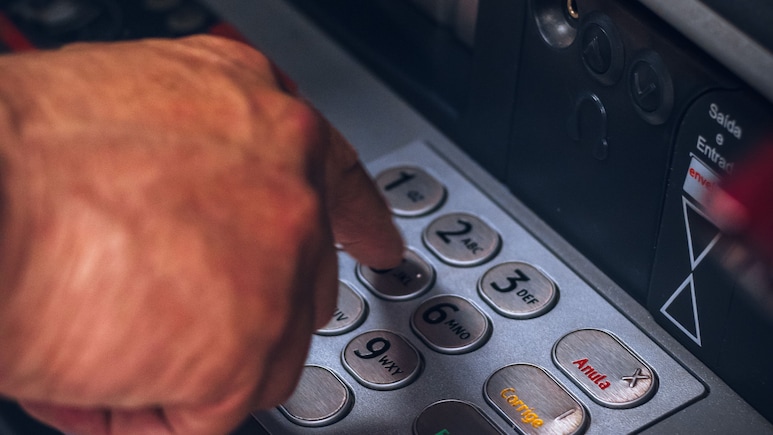
The banking crisis in Paraguay has raised questions about how safe bank deposits really are, particularly for people who keep large sums in traditional savings accounts. The episode has also prompted an online discussion about deposit insurance and whether the protection offered by banks is enough to cover substantial savings if a bank runs into trouble.In a viral Reddit thread, a user posted his query, asking if people with large deposits are opting for any alternative route to save money.
“Is it really safe to keep more than Rs 5 lakh across savings accounts, emergency funds, FDs, RDs and locker valuables in a single major bank? Given that DICGC deposit insurance in India covers only up to Rs 5 lakh per depositor per bank (including principal and interest), how do people manage larger cash reserves?,” a conversation unfolded on the India Personal Finance Community this week.
ALSO READ: 'Fired After Just 5 Days': Reddit User Says He Failed Test After Training, Lost Job Next Day
Also Read | Layoffs Are Rising In Tech, But These Skills Are Helping People Unlock Better Pay
Considering what happened in Paraguay, are you reconsidering how you distribute your money across banks?
by u/desi_man_friday in personalfinanceindia
Paraguay's central bank took control of Ueno, a digital-first lender, on Nov. 3, fearing that the bank was close to collapse. The bank held more than $800 million in public funds. The crisis also led to political trouble in the country. Paraguay's youngest-ever president, Santiago Pena, was impeached by the Senate over allegations that he used his position to illegally benefit Ueno. Pena had shares in Ueno's holding group until 2025.
As the news reaches Indian investors, many are worried about storing large deposits in banks. As per the RBI rules, bank deposits are insured up to Rs 5 lakh per depositor, per bank (including both principal and accrued interest) under the Deposit Insurance and Credit Guarantee Corporation (DICGC).
The Reddit post also asked other users for suggestions: “Do you routinely open accounts with multiple banks and distribute their deposits in multiples of Rs 5 lakh to avoid risk, or is there a more practical way to manage this?”
In his reaction, an investor said people with large deposits should consider keeping their money in established banks like the State Bank of India (SBI) to reduce the risk. “Usually park large amounts in banks like SBI. If SBI reaches a stage where it collapses then the country is a collapsed state and the money is the least of your worries,” the user noted.
Echoing similar sentiment, another said: “In a well regulated economy a bank won't fail. Even if it did, the government will guarantee its survival. If a government cannot guarantee bank survival, we have bigger problems than just the deposit amount. Don't worry your money is safe”
“Absolutely. Just park it in any of the top 5-6 banks. Most customers with multi crores in deposits usually prefer to deal with 1-2 banks maximum,” echoed a comment.
Most investors agreed that sticking to larger banks in crisis could be ideal. One of them wrote, “As long as it's banks like SBI, HDFC, ICICI Bank, Axis, consider your money safe, if these banks are defaulting, the country is probably in a civil war.”
An incident like the banking system collapse remains a less discussed conversation in India. Filmstars like Vijay, who is also the Chief Minister of Tamil Nadu, has proved that celebrities indeed manage their crores with a strong faith in the financial system.
For instance, when Vijay declared his income in his election affidavit during the Tamil Nadu polls, it was revealed that of his Rs 600 crore fortune, nearly half was held in traditional banking assets.
His election form showed that more than Rs 330 crore was parked in top 5-6 Indian banks. Among his largest holdings is over Rs 213 crore in a savings account at Indian Overseas Bank's Saligramam branch. He also has fixed deposits of Rs 25 crore with the same bank.
ALSO READ: 'When Did Rs 1 Crore Become Pocket Change?': Viral Reddit Post Calls Out Wealth Obsession
His other fixed deposits include Rs 40 crore with Axis Bank, Rs 20 crore with HDFC Bank and Rs 15 crore with the State Bank of India (SBI). In contrast, his equity shareholding only amounted to Rs 19.37 lakh at the time.
Essential Business Intelligence, Sharp Market Insights, Practical Personal Finance Advice, Daily Fuel, Gold and Silver Prices and Latest Stories — On NDTV Profit.