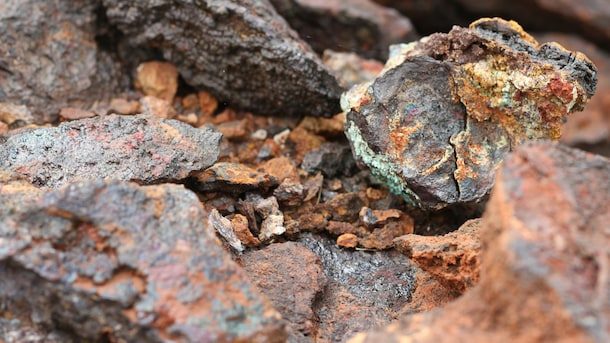
(Bloomberg) -- Tucked behind Geneva airport in an unremarkable office, and surrounded by colleagues bartering grains, cotton and soybeans, sit the men and women running one of the world's largest metals traders.
LDC Metals, a unit of foodstuffs merchant Louis Dreyfus Co., has built a trading force within a decade. It handles more than 3 million metric tons of material a year, bringing it closer to the ranks of the industry's top players.
Headed by Oxford-educated Paul Akroyd, a 25-year veteran of the group and former sugar trader, the division is now one of the five-largest refined metals traders. In concentrates -- the processed copper, zinc and lead ore sold to smelters -- it is in the top three, trailing just Trafigura Group and Glencore Plc.
Long overshadowed by the group's food trading, LDC Metals is gaining attention as Louis Dreyfus's profits fall amid oversupply of farming commodities and a lack of price volatility. The parent's first-half operating profit sank 20 percent.
The unit, founded in 2006, makes up a greater share of such earnings. Last year, it had net income of $40.3 million, according to a filing in the Netherlands. That's 19 percent of the $211 million profit parent Louis Dreyfus reported for the year. In 2014, it was 8.5 percent.
“Financial flexibility has helped Louis Dreyfus Metals to grow rather fast as it has allowed them to support their supply chain quite effectively through dedicated help from banks,” said Jean-Francois Lambert, an industry consultant and former commodity trade-finance banker at HSBC Holdings Plc.
Separate Funding
LDC Metals is separately funded with its own bank-trading lines. That enables the division to finance some of its customers and enter into long-term supply and off-take agreements with producers, as well as prepayment or pre-export financing, Lambert said.
Adding to the new-found attention for the operation is a plan by the 165-year-old parent, controlled by Russian-born billionaire Margarita Louis-Dreyfus, to seek a joint-venture partner for the unit next year. Louis Dreyfus Chief Executive Officer Gonzalo Ramirez Martiarena says it won't sell control.
The metals unit had an equity book value of $305 million in 2015, up from $266 million the year before, according to the Dutch Chamber of Commerce filing.
Customers and industry executives say it has forged deep ties with miners in Mexico, Peru, Bolivia and Chile, and smelters and other customers in Asia. With Trafigura and Glencore focusing on the biggest producers and smelters, LDC Metals has benefited by doing business with smaller mines and processors.
“Dreyfus is much more open for business and flexible compared with the other traders we deal with,” said Juan Carlos Saez, a general manager at Chilean miner Minera San Geronimo.
Lucrative Tolling
A focus on concentrates also helps, as does a lucrative tolling deal with a smelter in Namibia. The unit controls a stable of metals warehouses including port facilities in Taichung, Taiwan and El Callao, Peru, and has expanded its long-term supply volumes with off-take agreements including a key accord with China's Dongying smelter.
Despite falling metals prices, the division “recorded a very good performance” in the first half, the parent said in a recent presentation to bondholders. A spokeswoman declined to comment for this story.
The concentrates business, where LDC Metals has dominated, has benefited from a deepening zinc shortfall after miners led by Glencore Plc cut output.
LDC Metals still has plenty of challenges ahead.
Trading copper concentrates has been tougher in 2016, researcher CRU Group says. Many bought a lot at the start of the year expecting mine cutbacks and big purity problems that didn't happen, said Christine Meilton, a CRU consultant.
Difficulties Ahead
Refined metals have been difficult due to slower demand from top consumer China and weak premiums users pay on top of exchange prices. Competition is also rising in the aluminum business since Dreyfus added a trading desk for the commodity to its team of about 150 metals staff in the past two years.
To read more about traders struggling with physical markets, click here.
“The problem for aluminum traders is it's increasingly competitive,” said Eoin Dinsmore, a consultant at CRU in London. “There are lots of new entrants.”
While ties to China have been a strength, and a Chinese joint-venture partner is a possibility, LDC Metals will likely have to diversify now that the world's largest commodities consumer is slowing, according to Lambert.
“Louis Dreyfus Metals has been rather successful in a fully owned mode by the Louis Dreyfus Group. It could continue like that, but growth now that China is more developed will slow down,” he said. “The business will therefore become more challenging, requiring the trading house to find new ways to add value.”
--With assistance from Javier Blas To contact the reporters on this story: Andy Hoffman in Geneva at ahoffman31@bloomberg.net, Agnieszka de Sousa in London at atroszkiewic@bloomberg.net. To contact the editors responsible for this story: James Herron at jherron9@bloomberg.net, Lynn Thomasson at lthomasson@bloomberg.net, Tony Barrett, Nicholas Larkin
Essential Business Intelligence, Sharp Market Insights, Practical Personal Finance Advice, Daily Fuel, Gold and Silver Prices and Latest Stories — On NDTV Profit.