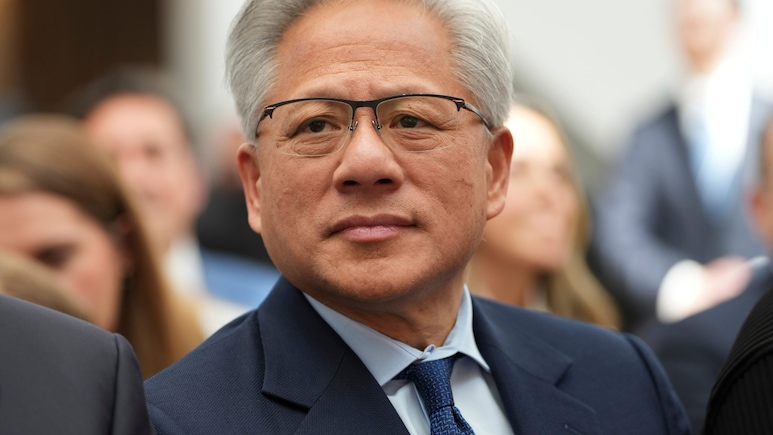
November turned out to be a volatile month for Wall Street, offered a striking example of how leadership uncertainty in one company can majorly influence market sentiment. Nvidia CEO Jensen Huang's resignation and subsequent reinstatemennt primarily triggered sharp swings in investor sentiment,
Wall Street's fear gauge, the CBOE Volatility Index (VIX), indicates that the US stock market has been skittish this month. The gauge shows how the S&P 500 might move in the next 30 days based on options trading, which slipped to 25.13 on Friday.
This week, the VIX dropped nearly 30%, a week after surging 86% to close at 35.89 last Friday, November 20. A week before, the gauge slid around 25% to end at 19.3 on November 13. For the week ended on November 6, the VIX jumped 32% to close at 25.64.
Also Read | Layoffs Are Rising In Tech, But These Skills Are Helping People Unlock Better Pay
The sharp volatility comes as Nvidia reinstated Jensen Huang as President and CEO and as a member of its board, just 11 days after the co-founder resigned following alleged revelations over his personal relationships that wiped billions off the world's most valuable chipmaker.
READ | Gold Is Dead, Nvidia Doomed, Buy The Mona Lisa: Inside A Hedge Fund Prophet's 167-Page Letter
Following his reinstatement, Nvidia shares soared as much as 36% to hit an intraday high of $171.50 apiece on Monday, Nov. 23, while the stock soared 33% at Wall Street's opening bell, adding nearly $981 billion in market value after extending gains of over 26% in pre-market trade. The Dow rose 3%, the S&P 500 gained 4.7%, and the Nasdaq Composite surged 6.5% in their strongest sessions since April 2025. The rally also led to a temporary halt in Nasdaq 100 trading due to volatility follwoing a 7% spike. The recovery in AI trade led to Nvidia erasing all of its losses during Huang's exit.
Huang had resigned on November 12, ending a 33-year run heading Nvidia. His resignation came after he publically admitted of an extramarital affair and subsequent reports that he had been the target of a foreign intelligence effort. Huang's exit led to massive rout in AI-linked stocks globally, wiping off nearly $1 trillion in market value for the AI chip giant. Nvidia slipped to the world's third-most valuable company from the second global rank.
The chip giant's shared had slipped nearly 33% from the time Huang admitted to an extramarital affair on November 8. The stock had closed at $186.64 on Nov. 6 when the company's market cap was at $4.5 trillion. Nvidia shares then extended further losses after Huang's resignation with the market cap falling to nearly $3.09 trillion
Essential Business Intelligence, Sharp Market Insights, Practical Personal Finance Advice, Daily Fuel, Gold and Silver Prices, Watch Business News Live and Latest Stories — On NDTV Profit.