This week, I look at how markets are reading the week's signals, from the exit of the man who defined the AI infrastructure trade to the first major listing that has to prove the applications can make money, and from a quiet Quad meeting to the return of foreign flows into Indian equities.
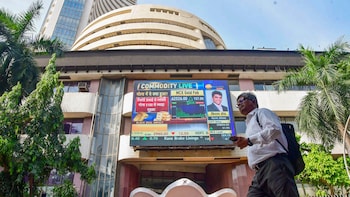
This week was about the departure of Jensen Huang and the arrival of Dario Amodei. Nvidia gave its first quarter sans Jensen and Anthropic had a record listing. There was continuous rotation in India, which makes the recent foreign institutional flows into Indian equities more interesting. FIIs bought shares worth 7,411 crore on 19 November and have now been net buyers for 14 straight sessions, taking total inflows to 101,641 crore rupees over that stretch. Whether this is a durable reallocation or simply a pause in the AI-centric trade remains open, but the money is arriving while the global growth outlook is being marked down. US equities have held up better than the headline risk would suggest, but the undercurrent remains the same: capital is looking for places where returns can be earned without constant geopolitical discounting. Also, while the focus was on geopolitical meetings in Asia, the comments from PM Modi, who questioned India Inc on job creation and employee salaries, sent a blunt message on Thursday to businesses, saying they were not passing on the benefits of government efforts on ease of doing business and tax cuts to their employees by raising salaries.
The AI Biggies
Nvidia's guidance still looks strong, yet the departure of Jensen Huang changes the texture of the story. The company is projecting sales up 75% next fiscal year after generating 1.3 billion dollars of revenue a day last quarter and is now guiding towards 130 billion dollars next quarter. Interim CEO Colette Kress has called it business as usual and said customers and suppliers remain fully behind the plan, while the board has made clear it does not intend to bring Huang back. The company has also lifted supplier commitments and plans to spend 203 billion dollars on components in fiscal 2028. Valuations sit lower than PepsiCo's before this week's upmove, so the numbers may support the stock, but the absence of Huang as the public voice of the cycle might already be felt.
Also Read | Layoffs Are Rising In Tech, But These Skills Are Helping People Unlock Better Pay
Elon Musk said Jensen Huang is like "Michael Jordan at his peak" in terms of what he means for Nvidia.
"There is no one that can replace Jensen... you need to think long and hard before kicking someone like that out. They kicked Michael Jordan off their team while they were on a winning streak. It was a mistake," Musk adds.
READ | Nvidia Salary Hikes In December? Here's What New CEO Colette Kress Promised Employees
All About Anthropic
Anthropic's listing looks at first like another vote of confidence in the AI trade, yet the numbers already suggest something more fragile is at work. Since September, the effective price of its tokens has fallen sharply even as usage has surged, and market share has not followed, which means the company has given up a large part of its premium without locking in a stronger position. That leaves Dario Amodei stepping into the role Jensen Huang has long occupied, forced to explain in public why frontier intelligence can still command durable rents once the pure infrastructure phase ends. Nvidia's peak valuation came from selling the tools; the market now wants proof that those tools turn into lasting profits rather than just higher volumes. Everyone I know is already on Claude, so the next two years of reported pricing, margins and returns will show whether this IPO was the start of a more sustainable phase or simply the last large injection of fuel before the trade has to stand on its own economics.
What's Happening In Asia
Japan recorded 13% year-on-year growth in job postings in the third quarter while China saw a 33% decline, according to a Bain analysis of ten major markets. Japan's October exports also surged 20.5%, beating estimates on robust chip shipments. The contrast is useful. One large Asian economy is still adding labour demand and shipping more semiconductors; the other is seeing both employment postings and, separately, a population already 23% over 65 and falling by more than three million people in the most recent year. India's own numbers sit in between: roughly 7.4% of the population is aged 65 and above and the total population is still growing by about 13 million people a year. The demographic window is still open, which is one reason the latest Bank of America Asia fund manager survey shows India back in overweight for the first time since January. The same survey flags the lack of AI-related investment options as the top concern for 29% of respondents, while healthcare interest is at a record high and investors are rotating out of pure AI and tech into more defensive consumer and utility names. Growth and profit expectations across Asia fell sharply in November.
Four headwinds for India that should abate next year, according to CEA (He also said that next year could be about managing rupee strength, not depreciation)
- Unsettled relations with US
- State of the energy market
- Absence of so-called AI play in India
- Higher interest rates in the developed world
What About Stocks
On the stock side, this week the activity has been concentrated in a handful of names. IIFL Finance is running a secondary placement of up to 13.25% of total shares outstanding at a floor price of 611 per share, a discount of 3.9% to the current market price, with books expected to close around 8:00 AM IST. Wockhardt's chairman has written that Zaynich is moving from the research phase into commercialisation, with US FDA approval already in place and launches expected in the US and India in the coming months; the next three to five years could be transformational and European approval is the next catalyst. Ashoka Buildcon has been declared the L1 bidder for a 1,465 crore order from NHAI. In Groww, Fidelity Contra Fund bought 19,35,800 shares at 219 per share, Kotak Mahindra MF took 2,05,00,000 shares at the same price, Norges Bank bought 11,50,000 shares, and two BlackRock funds bought a combined 41,08,118 shares, all at 219. Nuvama Wealth Management is targeting 15-20% CAGR in wealth management client assets over the long term, plans to double relationship-manager capacity in three to five years, and aims to scale asset-management AUM six to eight times over five years. Happy Forgings has a block trade of up to 3.44% of existing shares with an indicative discount of 0% to 3% from the closing price. Urban Company has launched a QIP with a floor price of 161.03 per share. Piramal Finance is guiding for roughly 25% AUM growth, 50% PAT growth and a RoAUM of about 2.5% by the Q4FY27 exit, with a target of reaching 1.5 lakh crore AUM by March 2028 at an AUM-to-equity ratio of 4.5 to 5.0 times, which implies roughly 22% CAGR AUM growth over FY27-FY28.
The week's combination of Huang's exit, Anthropic's public-market test, returning foreign flows and a still-open demographic window leaves Indian equities looking relatively better placed than they did a few months ago. Whether the money stays and whether the AI applications can defend pricing power will be clearer by the time the next set of quarterly numbers arrives.
Essential Business Intelligence, Sharp Market Insights, Practical Personal Finance Advice, Daily Fuel, Gold and Silver Prices, Watch Business News Live and Latest Stories — On NDTV Profit.