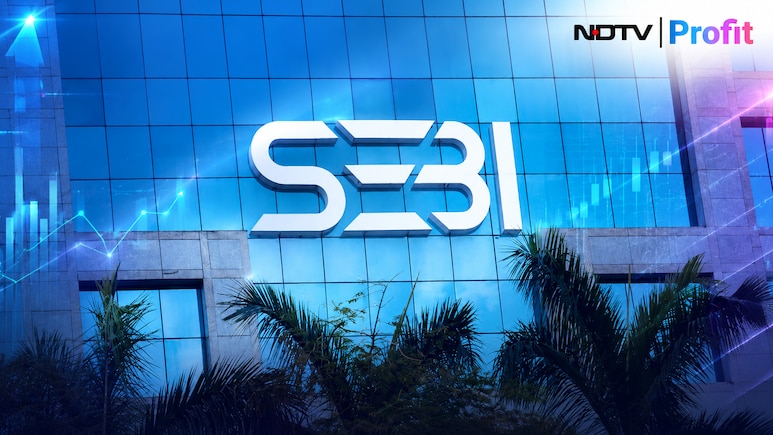
The Securities and Exchange Board of India (SEBI) on June 19 approved a slew of measures aimed at deepening capital markets, improving ease of doing business and enhancing investor protection. Among the biggest changes was the reintroduction of open market buybacks through stock exchanges.
Effective Aug. 1, 2026, companies will have an additional route to undertake buybacks apart from the tender offer route and open market buybacks through book-building. The regulator has mandated that such buybacks be completed within 66 working days, with at least 40% of the earmarked amount deployed during the first half of the programme.
Promoters will not be allowed to participate and their holdings will remain frozen during the buyback period. SEBI has also made the appointment of merchant bankers optional, a move aimed at reducing costs and improving operational flexibility.
ALSO READ | SEBI Eases Intraday Borrowing Rules For Mutual Funds, Expands Scope Beyond Redemptions
SEBI also approved a series of amendments to boost India's nascent municipal bond market and widen participation. Municipal bodies will now be allowed to raise funds to refinance existing project debt, offering greater financial flexibility.
Smaller municipalities will be able to pool resources and access capital markets through a pooled finance vehicle, enabling broader participation beyond large cities. To encourage retail investors, issuers can offer incentives such as additional interest or discounted issue prices to categories including senior citizens, women, defence personnel and retail investors.
The regulator has also lowered the minimum face value to Rs 10,000 from Rs 1 lakh, making municipal bonds more accessible, while permitting electronic modes for advertisements and relaxing timelines for financial disclosures.
SEBI approved amendments to mutual fund regulations to allow fund houses to avail intraday borrowings for managing temporary liquidity mismatches. The facility can be used to bridge differences arising from pay-in and pay-out settlement timings, forex settlements and mark-to-market obligations on derivative positions.
However, SEBI clarified that intraday borrowings cannot be used as a source of leverage and must be repaid by the end of the day. Asset management companies will be responsible for ensuring compliance and maintaining adequate documentation and internal policies governing the use of such borrowings.
The regulator also unveiled the Green-Channel AIF Rollout Upon Document Acknowledgement, or GARUDA, mechanism to speed up launches of Alternative Investment Fund schemes. Under the new framework, the timeline for launching regular AIF schemes has been reduced to 10 working days.
ALSO READ | SEBI Chief Says NSE Settlement Approved Internally, Resolution Expected Soon
AI-only schemes and angel funds comprising accredited investors have been exempted from filing private placement memorandums with SEBI and can be launched immediately upon registration or filing. The move is aimed at facilitating faster deployment of capital and improving ease of doing business for the private capital ecosystem.
Lastly, SEBI also approved comprehensive reforms to simplify the transmission of securities to legal heirs and claimants of deceased investors. It introduced a new Quick Transmission Processing mechanism for small-value claims and doubled the limits for simplified documentation to Rs 10 lakh for physical holdings and Rs 30 lakh for dematerialised holdings.
The requirement to submit PAN has been removed, probate of wills has been dispensed with and a combined affidavit-cum-NOC will now suffice. QR-coded death certificates have also been made acceptable documents, with the regulator expecting the changes to reduce procedural hurdles and enable faster settlement of claims.
Essential Business Intelligence, Sharp Market Insights, Practical Personal Finance Advice, Daily Fuel, Gold and Silver Prices and Latest Stories — On NDTV Profit.