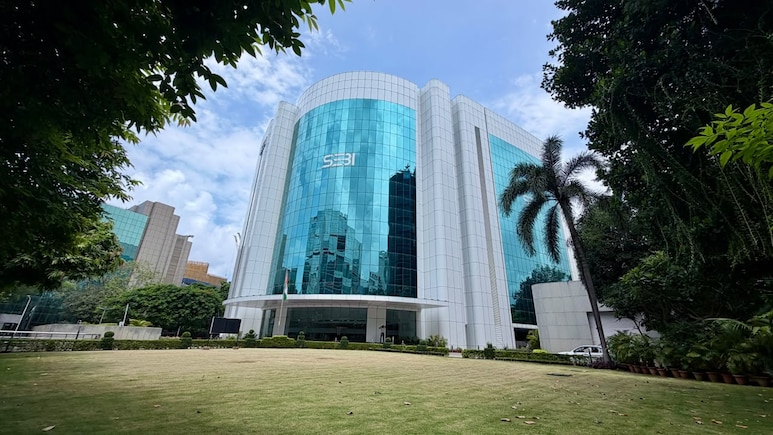
Markets regulator Sebi is aiming to reduce the onboarding time for Foreign Portfolio Investors (FPIs) from several months to as little as five business days through digital workflows and system integration, its chairman Tuhin Kanta Pandey said on Friday.
Addressing the 17th Capital Markets Conference organised by ASSOCHAM, Pandey said the regulator has also proposed removing the additional disclosure framework for FPIs, bringing India's regulatory framework closer to global standards.
"Through digital workflows and system integration, we aim to cut FPI onboarding from months to as little as five business days," Pandey said.
Also Read | Layoffs Are Rising In Tech, But These Skills Are Helping People Unlock Better Pay
Over the past few months, Sebi has taken several measures to ease the compliance burden for FPIs.
Under the SWAGAT-FI (Single Window Automatic and Generalised Access for Trusted Foreign Investors) initiative, around 740 FPIs, accounting for nearly 17 per cent of FPI assets under custody, have registered.
"SWAGAT-FI gives trusted, low-risk FPIs single-window access, simpler compliance and longer KYC review cycles," he added.
READ | SEBI Allows FPIs To Trade In Physically Settled Non-agri Commodity Derivatives From June 2027
On the regulatory front, Pandey said Sebi is undertaking a comprehensive review of the Listing Obligations and Disclosure Requirements (LODR) framework to eliminate duplicative disclosures in filings with the Ministry of Corporate Affairs (MCA). The regulator also plans to replace multiple stock exchange fines for the same compliance lapse with a single penalty.
Sebi is simultaneously reviewing the Issue of Capital and Disclosure Requirements (ICDR) framework, which governs initial public offerings (IPOs), follow-on public offerings (FPOs), preferential issues and qualified institutional placements (QIPs). The review will also cover the SME IPO framework and the Innovators Growth Platform.
For stock brokers, the regulator is exploring a graded compliance framework under which regulatory obligations would be aligned with a broker's scale, client exposure and dependence on technology.
Pandey said the Securities and Exchange Board of India (Sebi) is also working towards harmonising the regulatory frameworks governing Investment Advisers and Mutual Fund Distributors.
On the technology front, the regulator is exploring the development of a domestically governed artificial intelligence (AI) model for the securities market, enabling smaller regulated entities to access secure and affordable AI solutions. Guidelines on the responsible use of AI are being prepared, while a proposed AI sandbox will allow innovators to test applications in a controlled environment, he said.
In the corporate bond market, Sebi is developing a market-making framework in consultation with the Reserve Bank of India (RBI) and the Ministry of Finance, focusing on liquidity, market infrastructure and access to repo facilities. Fixed Income Channel Partners will help expand bond distribution via regulated online platforms, while Phase II of Demat 2.0 will enable secondary-market trading in tokenised bonds.
In the cash market, the regulator is reviewing the framework for short selling and securities lending and borrowing (SLB) to improve liquidity and price discovery. For Alternative Investment Funds (AIFs), the regulator is simplifying requirements linked to investor consent, related-party transactions, co-investments and exits.
In the case of Real Estate Investment Trusts (REITs) and Infrastructure Investment Trusts (InvITs), Sebi aims to reduce the listing timeline from six working days to three days and simplify the process for rights issues.
Highlighting the growth of India's capital markets, Pandey said companies raised around Rs 9 lakh crore through equity and debt in the first seven months of the current financial year. So far, 235 IPOs have collectively raised approximately Rs 1.45 lakh crore, while more than Rs 5 lakh crore has been mobilised through corporate bonds.
(This story has not been edited by NDTV staff and is auto-generated from a syndicated feed.)
Essential Business Intelligence, Sharp Market Insights, Practical Personal Finance Advice, Daily Fuel, Gold and Silver Prices, Watch Business News Live and Latest Stories — On NDTV Profit.