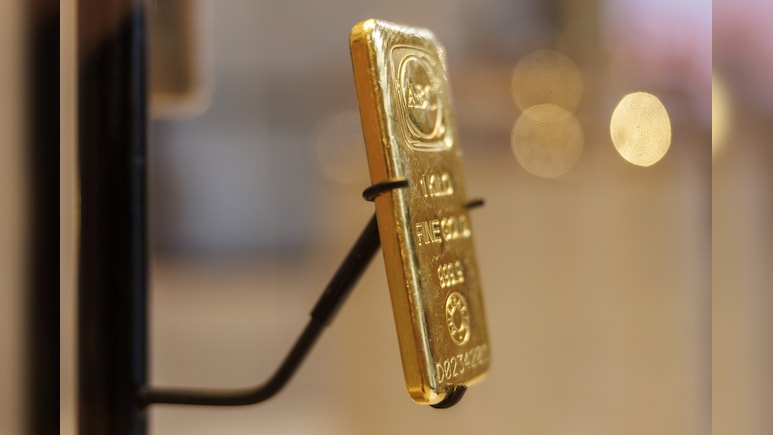
Gold fell to a two-month low as clashes between the US and Iran risked derailing peace talks and kept inflation risks high, while a stronger dollar also weighed on the precious metal.
Bullion fell as much as 2% to near $4,365 an ounce. American forces carried out strikes on a military site and other targets near the Strait of Hormuz, a US official said. In response, the Islamic Revolutionary Guard Corps said it targeted the US base that launched the attack, Press TV reported in a post on X.
Separately, Kuwaiti Air Defenses said they were responding to missile and drone threats, underscoring risks to negotiations to end the conflict in the Middle East.
Also Read | Layoffs Are Rising In Tech, But These Skills Are Helping People Unlock Better Pay
The incidents came hours after US President Donald Trump said he was “not satisfied” in negotiations with Iran, damping expectations for an imminent breakthrough.
Trump didn't indicate what steps the US would take to ensure free passage of vessels through the Strait of Hormuz, a key sticking point in resolving the war with Iran. The near-closure of the crucial energy waterway has triggered price surges for oil products that have shaken the global economy since late February.
Brent oil spiked toward $98 a barrel on Thursday, raising inflation risks as well as the expectation for rate hikes. Even if a peace deal is achieved, higher energy prices are likely to keep inflation elevated and force central banks to hold rates higher for longer, rather than deliver cuts many expected before the Iran war.
Bullion typically performs badly in a higher-rate environment as it pays no interest, while a stronger dollar makes it more expensive for many buyers. It has slumped more than 17% since the Iran conflict erupted in late February, nearly erasing year-to-date gains. Federal Reserve Governor Lisa Cook on Wednesday said inflation is heading in the wrong direction and she would be prepared to raise interest rates if that persists.
Signals from the options market show traders withdrawing their bullish convictions and expecting less wild swings going forward. Implied volatility, a measure of expected future movement, on State Street's SPDR Gold Shares, the biggest gold-backed exchange-traded fund, has collapsed. In addition, the premium to speculate or hedge on it rising over the next three months is near the lowest level since December.
“Traders are losing confidence in the safe-haven narr ative and they have better things to do with the money” such as investing in some of the high profile listingssaid Justin, Lin, an investment strategist at Global X ETFs Australia. Gold is likely “looking at $4,000-4,250 range for support if oil trades higher,” he added.
Spot gold was down 1.8% at $4,374.11 an ounce as of 1:18 p.m. in Singapore. Silver was 3.6% lower at $71.98. Platinum and palladium also retreated. The Bloomberg Dollar Spot Index, a gauge of the US currency, was 0.3% higher, rising for a third day.
(This story has not been edited by NDTV staff and is auto-generated from a syndicated feed.)
Essential Business Intelligence, Sharp Market Insights, Practical Personal Finance Advice, Daily Fuel, Gold and Silver Prices and Latest Stories — On NDTV Profit.