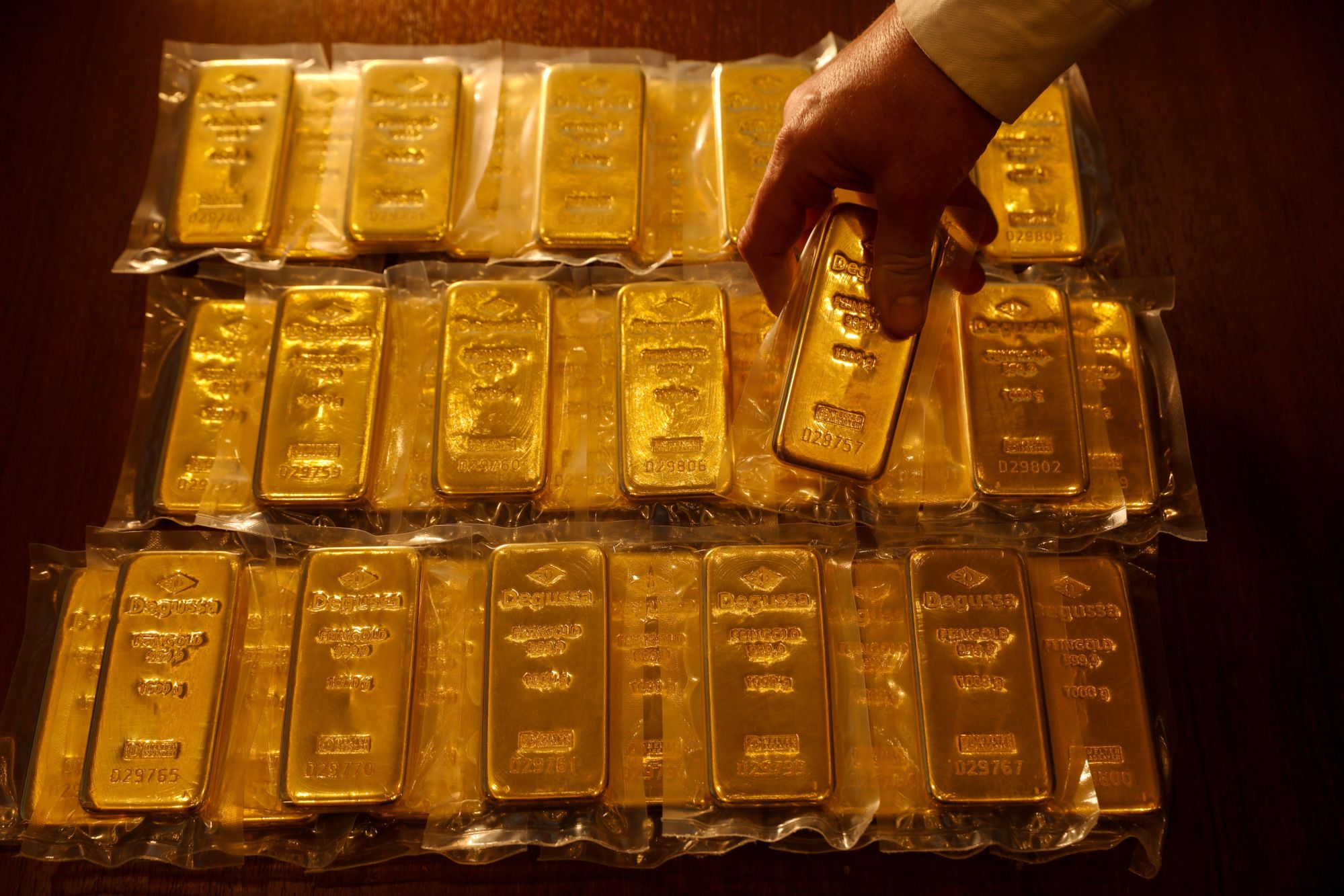
(Bloomberg Businessweek) -- Trading on one of the world's oldest markets depends on a network of high-security vaults located underneath Greater London. There, some 50,000 gold bars, each worth more than $650,000, change hands every day among the four big banks in charge of processing transactions.
The system, which includes some $500 billion worth of gold stored in locations, has been trundling along with little change for most of the past two decades. David Tait, who heads the World Gold Council, the main lobby group for miners of the metal, thinks it's time for an overhaul.
The former investment banker is trying to push through changes he hopes will significantly increase demand, including a database using blockchain technology to keep track of almost every gold bar in the world. Once that's up and running, he says, it should be possible to create a digital token backed by physical gold that can be more easily traded.
Market players gathering for a conference on Oct. 16 are skeptical the proposed overhaul will get off the ground, because previous attempts to make even small changes to the market have fallen flat. But the package of changes, dubbed Gold 247 (for 24/7), has taken on fresh urgency. Post-financial crisis banking reforms began to affect gold this year after market participants were unable to prove that the asset could easily be traded in stressful times.
The new rules, in effect, made it more expensive for banks to hold bullion, compressing the already meager returns they make trading the commodity, and raising concerns the market will shrink. And in the past decade, gold has faced growing competition from cryptocurrencies for the attention of investors looking for alternatives to stocks, bonds, and cash—with some boosters even calling Bitcoin “digital gold.”
Tait says digitization will make a wider range of investors comfortable holding the metal. “There's a plethora of industries, let alone institutions out there, who haven't gone near this product in the past,” says Tait, a former managing director at Credit Suisse AG. “They'll have the opportunity to do that if we get this right.”
Retail investors struggle to access the gold market directly. Like many physical commodities, it's subject to different standards in different places. London uses 400-ounce bars for its trading, while popular Comex futures traded in the US use 100-ounce bars. But even the smaller version will set you back more than $160,000, so most retail investors must instead buy smaller bars and coins from dealers, often at large premiums. Tait thinks creating tokens that are easily exchangeable for physical bullion could solve that problem.
The concept of a tradeable asset that represents ownership of metal held in a vault somewhere isn't new. The council in 2004 helped launch a gold-backed exchange-traded fund, SPDR Gold Shares, that currently holds $50 billion in assets. But retail investors generally can't swap ETF shares for the actual metal; that's only for large institutional investors who help maintain the market for the shares. There are also gold-backed crypto stablecoins, but they've failed to gain much traction.
The token Tait's team envisions would need the backing of the entire market, from Wall Street banks to the Indian and Chinese authorities who run the top consumer markets. In the meantime, a blockchain ledger that tracks gold bars could help reassure buyers of their origin and purity while helping to fight money laundering.
The main hurdle will be persuading the market's big players to embrace a project that risks eroding their dominance. Trading of gold futures on the London Metal Exchange was shelved this year because JPMorgan Chase & Co. and HSBC Holdings Plc, the two biggest banks involved in processing transactions, declined to get involved. JPMorgan and HSBC did not respond to requests for comment.
Many of the big players in London like the current setup, says Jan Nieuwenhuijs, an analyst at Gainesville Coins. “But I know a lot of people within the market are not satisfied with how it trades,” he says, and would prefer a system with greater transparency. Others argue that the whole point of gold is its physical presence, so digitization is doomed to fail. “Form and location do matter,” says Adrian Ash, head of research at the online gold investment service BullionVault. “The problem with any tokenization is you are abstracting the asset, because what you now own is the token.”
Tait, who took over as head of the council in 2019, has firsthand experience of the current setup's weaknesses. He shut down the commodity trading desk at Credit Suisse in 2014 because it was easier and less risky to get returns from other asset classes. “We need to attract more people to clearing, to the market, and defending turf is the wrong way of doing it,” he says. “I don't think that historic dependence on the status quo is going to be here in the future.”
The project is starting with a program to ensure the integrity of gold bars, run with the London Bullion Market Association, which uses blockchain technology to monitor supplies. Pilots involving 30 participants including miners, refiners, and banks have just concluded, Tait says.
Last year, a working group set up by the UK government of banks and investors recommended policies to make trading on the London gold market more transparent. “We got the unanimity amongst all the banks—no exceptions—that it could be better,” says Tait, who chairs the precious metals unit of the group. “They have to change, and there has also been a realization around the table that the market will grow as a consequence.”
More stories like this are available on bloomberg.com
©2022 Bloomberg L.P.
Essential Business Intelligence, Continuous LIVE TV, Sharp Market Insights, Practical Personal Finance Advice and Latest Stories — On NDTV Profit.