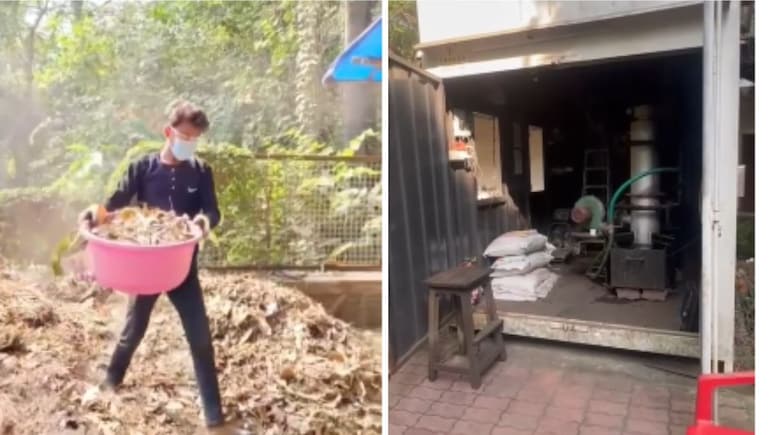
- IIT Bombay has developed a system to convert fallen leaves into biomass gas for cooking.
- The innovation cuts LPG use by up to 50% while reducing waste and emissions.
- Despite early challenges, the technology is now successfully powering camp
In a strategic solution to achieving fuel independence amidst the current LPG shortage in the country, IIT Bombay has developed a technology that converts fallen leaves into cooking fuel.
The decade-long project to convert campus leaf waste into usable fuel through biomass gasification was first proposed by Professor Sanjay Mahajani.With a campus spread across 2 km, IIT Bombay generates a considerable two to three tonnes of leaf waste every day.
Also Read: Rs 75,000 A Month On Road, Rs 30,000 In Office: Who's Winning In Mumbai?
Also Read | Layoffs Are Rising In Tech, But These Skills Are Helping People Unlock Better Pay
Fuel from leaves
The idea took root after researchers realised that leaves contain calorific value, which could be consumed as energy. The question was how to do it.
As initial stages always take years to pave the way to success, the technology in its early phase failed to generate a consistent, clean gas supply, making it unsuitable for kitchen use. "There was excessive smoke, operational inefficiencies, and frequent blockages," Prof. Mahajani told NDTV. Researchers invested their time and resources into the design it so that it could be provide cleaner emissions and offer stable gas quality. Now, the final product generates enough steam, which is used directly for cooking in the kitchen.
It also saves the institute the cost and labour involved in disposing the leaf waste.
Challenges in the journey
Technical issues aside, the primary obstacle was user adoption. Kitchen staff were initially hesitant to use the unfamiliar technology, leading to early rejection. Prof. Mahajani notes convincing the cooks was a "tough task".
To overcome this, the development team integrated user feedback into terminal improvements. Supported by forward-thinking management, this persistence eventually paved the way for long-term success.
Reality of biomass fuel
Today, the campus kitchen is fully functional on biomass gas. The kitchen has cut down its LPG consumption by 40-50%. It earlier used two cylinders, and now uses only one per day. "With this gasifier, we are replacing one LPG cylinder every day," Prof. Mahajani informed NDTV, adding, "If we install another such system, LPG may not be needed at all, but that would require changes in cooking utensils."
Impact on fuel economy
Exploring biomass as an energy source would decrease India's heavy reliance on LPG imports. Not only would the country have sufficient in-house fuel, but the energy would be cleaner too as converting leaf-waste to fuel emits low carbon. It could also result in considerable savings. As per the NDTV report, replacing 90 tonnes of LPG could result in savings of Rs 50 lakh annually and reduce CO₂ emissions by 300 tonnes.
Essential Business Intelligence, Sharp Market Insights, Practical Personal Finance Advice, Daily Fuel, Gold and Silver Prices and Latest Stories — On NDTV Profit.