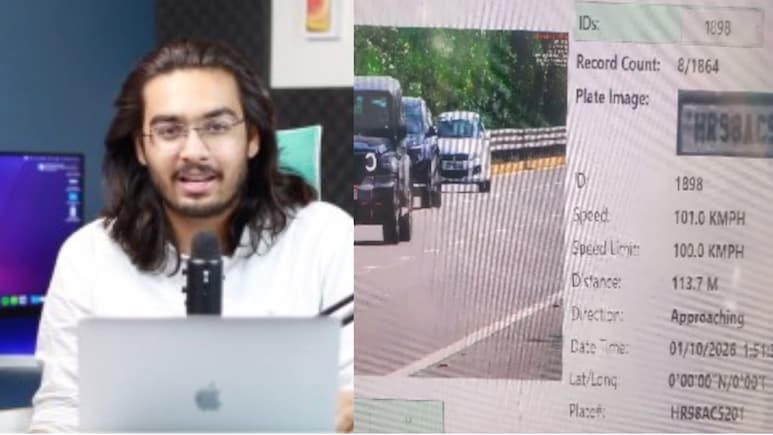
A driver on the Yamuna Expressway was fined Rs 2,000 for travelling at 101 kmph in a 100 kmph zone. But the one-kilometre-per-hour difference was not the only thing that caught people's attention. The e-challan placed the location of the offence at 0°N, 0°E, a point in the Atlantic Ocean, raising questions about the accuracy of the automated system issuing the fines.
A driver on the Yamuna Expressway was fined Rs 2,000 for travelling at 101 kmph in a 100 kmph zone. But the one-kilometre-per-hour difference was not the only thing that caught people's attention. The speeding challan also placed the alleged violation at 0°N, 0°E, a location in the Atlantic Ocean, thousands of kilometres away from the Indian highway.
ALSO READ: 5 Or More Unpaid Challans? Patna Traffic Police Moves To Cancel Driving Licences
Also Read | Layoffs Are Rising In Tech, But These Skills Are Helping People Unlock Better Pay
An X user, Anujeet Shivam (@anujitshivam), shared a copy of the challan, questioning why he had been fined Rs 2,000 for exceeding the speed limit by just 1 kmph.
According to the ticket, his vehicle was travelling at 101 kmph in a zone where the maximum permitted speed was 100 kmph.
"1 km/h. That's it," he wrote, questioning the lack of a margin in automated traffic enforcement.
Why did the challan show a location in the Atlantic Ocean?
While the fine itself drew criticism, users soon spotted another unusual detail. The GPS coordinates recorded on the challan were 0°N, 0°E.
These coordinates point to a spot in the Atlantic Ocean, off the coast of West Africa, commonly referred to as 'Null Island'. It is where the Equator and the Prime Meridian meet.
The location error added to questions about the accuracy of the automated system used to issue the challan.
What did social media users say?
The post drew mixed reactions, with some questioning the fine while others defended strict speed limits.
- On speed limits: Some users argued that a 100 kmph limit is a maximum, not a suggested cruising speed. One commenter advised drivers to stay between 90 and 95 kmph rather than risk crossing the limit.
- On automated enforcement: Others questioned whether automated cameras could account for technical errors and exercise the judgement needed before issuing fines.
- On the permissible speed margin: Some users cited a 5 per cent tolerance under Indian rules and argued that a challan for travelling at 101 kmph should not have been issued. One user also shared an official notification to support the claim.
- On expressway speed limits: Another section of users questioned the 100 kmph cap, arguing that expressways should permit speeds of up to 120 kmph.
Tagging the Noida and Uttar Pradesh traffic police, Shivam questioned whether this was the right way to enforce road safety. The Noida Traffic Police responded by asking him to contact the e-challan helpline at 7065060882.
In his post, Shivam wrote:
Got a ₹2,000 challan on the Yamuna Expressway. My speed: 101 km/h Limit: 100 km/h 1 km/h. That's it. Bonus: the speed gun logged my location as 0°N, 0°E. That's the middle of the Atlantic Ocean ???? @Noidatraffic @uptrafficpolice is this really how road safety works? https://t.co/XZSCaU8BSL
— Anujeet Shivam (@anujitshivam), November 12, 2026
The incident has brought attention to two questions: how much leeway should drivers get when speed is measured by automated cameras, and how are technical errors in challans checked before fines are issued?
ALSO READ: Samruddhi Expressway Accident: Massive Vehicle Pile-Up Leaves 22 Injured, Six Critical
Essential Business Intelligence, Sharp Market Insights, Practical Personal Finance Advice, Daily Fuel, Gold and Silver Prices and Latest Stories — On NDTV Profit.