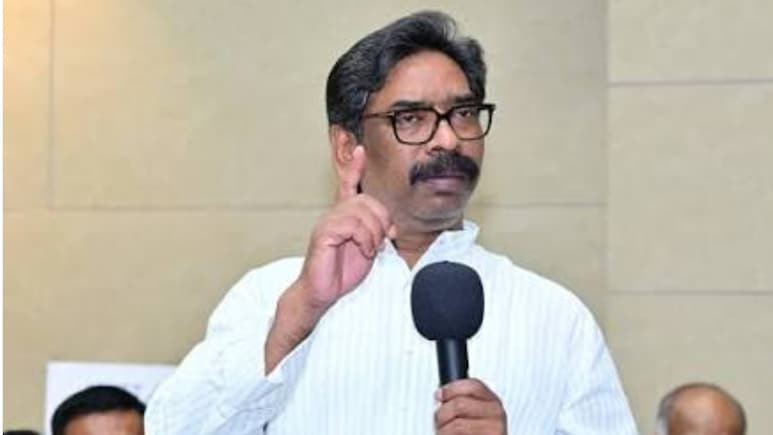
| Jharkhand Chief Minister Hemant Soren on Thursday urged Prime Minister Narendra Modi to reconsider the Mines and Minerals (Development and Regulation) Amendment Bill, 2026, saying restrictions on state levies could significantly reduce the state's fiscal space and affect its ability to address the social and environmental costs of mining. In a letter to Modi, Soren said mining revenue accounted for 84.9% of the state's own non-tax revenue in 2024-25, according to the State Economic Survey for 2025-26. Earlier in the day, Parliament passed the Mines and Minerals (Development and Regulation) Amendment Bill, 2026, which seeks to restrict states' powers to levy taxes on mineral rights and mineral-bearing lands. Soren, who also sought intervention from President Droupadi Murmu, said the Mineral Bearing Land Cess was expected to generate around Rs 7,110 crore annually and described mineral-related revenue as crucial to the state's finances. Also Read | Layoffs Are Rising In Tech, But These Skills Are Helping People Unlock Better Pay "Any substantial restriction on this revenue would directly affect Jharkhand's ability to sustain development, welfare and social-security interventions," Soren said. ALSO READ: Monsoon Session Wrap: 11 Key Bills Passed, FCRA Amendment Deferred To Joint Committee Jharkhand accounts for about 40% of the country's minerals. The chief minister argued that the state's mineral wealth must be assessed alongside the heavy costs borne by the state and its people. Decades of large-scale mining have resulted in displacement, land alienation, environmental degradation, pollution, pressure on local infrastructure and disruption of traditional social and cultural systems, he said. He said the state had contributed significantly to India's industrialisation, energy security and economic growth through its mineral resources, but its mineral wealth cannot be treated simply as an economic advantage when the state and its people bear substantial and continuing consequences of extraction. He said revenues from minerals, including royalty, District Mineral Foundation contributions and other statutory receipts, enable the state to invest in roads, drinking water, healthcare, education, livelihood support, rural infrastructure, rehabilitation and social security in mining-affected areas. The Mineral Bearing Land Cess, he said, was conceived as an additional fiscal instrument to strengthen these interventions. Soren also linked mineral-related fiscal capacity to welfare initiatives, including the Mukhyamantri Maiyaa Samman Yojana, which he described as a flagship programme for the economic empowerment and social security of women, particularly those from rural and economically weaker sections. An abrupt loss of fiscal resources, without an alternative and sustainable source of revenue, could seriously impair the state's ability to continue welfare and development programmes, he warned. The consequences, Soren said, could extend beyond government finances, potentially causing public dissatisfaction and social tension in areas that have already borne the adverse consequences of mining. "The concern is therefore not merely one of revenue," Soren said, adding that the issue directly affects the ability of an elected state government to respond to development needs and fulfil welfare commitments made through its legislative and budgetary processes. He also stressed that a substantial share of mining activity in Jharkhand is undertaken by Public Sector Undertakings, which have derived significant economic value from the state's mineral resources. A reasonable share of that value, he said, should remain available for the welfare and development of people and regions from where the resources are extracted. He cited the Supreme Court's nine-judge Constitution Bench judgment delivered on July 25, 2024, saying the court recognised the legislative competence of states to tax lands comprising mines and quarries under 'Entry 49 of the State List'. Soren also questioned provisions seeking to extend Union "regulation" to mineral-bearing lands, arguing that they could intrude into a field constitutionally assigned to the states. Soren also called for consultations with mineral-producing states, including Odisha and Karnataka, before restrictions are prescribed under the proposed law. ALSO READ: MMDRA Bill 2026 A Key Positive For Miners, Gives Centre Rule-Making Discretion, Says Morgan Stanley He suggested a structured mechanism along the lines of the GST Council. The CM said Jharkhand remained committed to cooperative federalism, national mineral security and sustainable mining, but maintained that its people have a legitimate claim to benefit from the natural resources extracted from their state. He urged Modi not to proceed with the Bill in its present form and reserved Jharkhand's right to pursue appropriate constitutional and legal remedies, including before the Supreme Court. In a separate letter to Congress leader Rahul Gandhi, Soren sought his intervention to ensure justice for the people of Jharkhand. |
(This story has not been edited by NDTV staff and is auto-generated from a syndicated feed.)
Essential Business Intelligence, Sharp Market Insights, Practical Personal Finance Advice, Daily Fuel, Gold and Silver Prices and Latest Stories — On NDTV Profit.