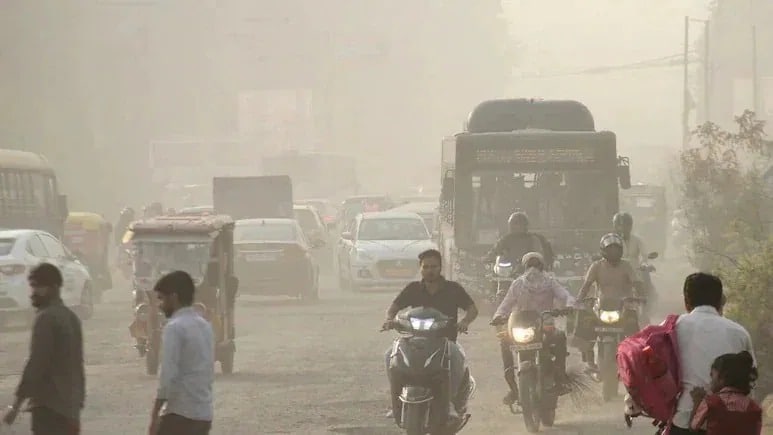
Bihar's Saharsa has emerged as the most polluted city in India, recording an Air Quality Index (AQI) of 498, according to the list shared. Raiganj in West Bengal followed closely with an AQI of 463, placing it in the second position.
The list of India's 10 most polluted cities features several locations from Bihar and West Bengal.
As many as eight cities from these two states have made it to the list, while Gwalior in Madhya Pradesh and Dhanbad in Jharkhand also feature among the top 10.
Also Read | Layoffs Are Rising In Tech, But These Skills Are Helping People Unlock Better Pay
ALSO READ: Mumbai, Kolkata AQI Crosses 200; Check Air Quality In Delhi, Bengaluru And Other Cities
As per the rankings, Saharsa recorded an AQI of 498, with its pollution level listed as 22 times above the standard value. Raiganj followed at 463, with its level 20 times above the standard. Asansol in West Bengal ranked third with an AQI of 384.
Bhagalpur in Bihar recorded an AQI of 360, followed by Darjeeling at 330 and Siliguri at 306. All six cities were marked under the 'Hazardous' category in the shared list.
Gwalior recorded an AQI of 292, while Dhanbad and Gorakhpur registered readings of 288 and 283, respectively. South Dumdum in West Bengal rounded off the list at the tenth position with an AQI of 277. These four cities were marked under the 'Severe' category.
India's 10 Most Polluted Cities
Here is the list of the 10 most polluted cities in India, along with their AQI readings and status:
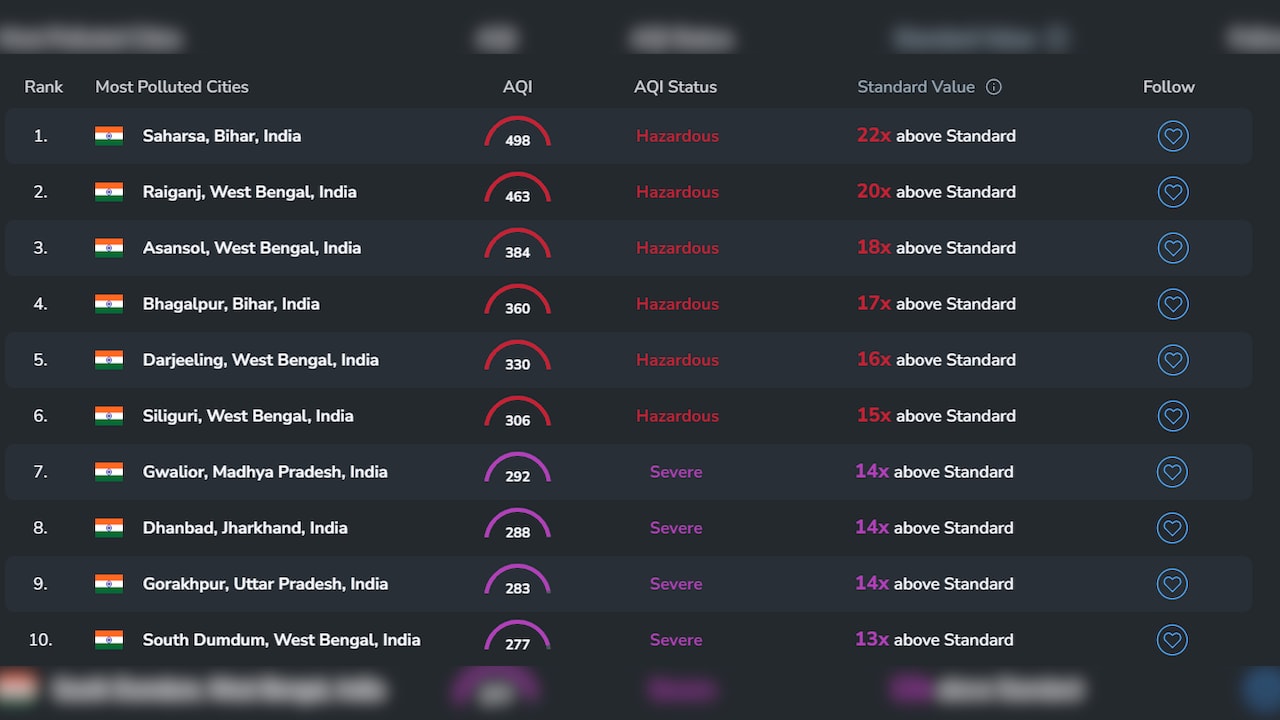
The AQI readings mentioned above were recorded as of 7:40 PM
What Are PM2.5 And PM10?
One of the main contaminants used to evaluate the quality of the air is particulate matter.
Fine particles with a diameter of 2.5 micrometers or less are referred to as PM2.5, and particles with a diameter of 10 micrometers or fewer are referred to as PM10.
Inhaling these particles can cause them to enter the respiratory system. Because PM2.5 is tiny and can enter the lungs deeply, it is especially dangerous.
Long-term exposure to high particulate matter concentrations can exacerbate pre-existing heart and lung problems and make breathing difficult.
Who Should Be Careful?
ALSO READ: Air Purifier Sales Surge As NCR AQI Deteriorates; Demand Spreads Beyond Traditional Markets
Air pollution poses a greater risk to children, older adults and those with heart-related illnesses, as well as people with asthma and other respiratory conditions.
When air quality reaches hazardous levels, prolonged outdoor exposure and strenuous physical activity can increase the risk of health complications.
Residents in affected cities should monitor local air quality updates and limit extended outdoor activities, particularly when pollution levels remain high.
Essential Business Intelligence, Sharp Market Insights, Practical Personal Finance Advice, Daily Fuel, Gold and Silver Prices and Latest Stories — On NDTV Profit.