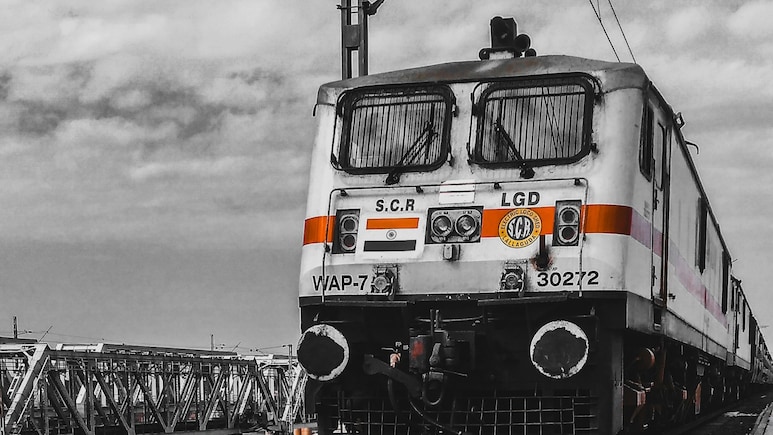
The Supreme Court has recommended that the Indian Railways stop using the term "second-class passenger" in its manuals and official records, saying the classification should refer to the coaches rather the person travelling in it.
The court observed that such terms would be more consistent with the constitutional principles of equality and dignity. The observation came from a bench comprising Justices Sanjay Karol and Nongmeikapam Kotiswar Singh, while delivering its verdict in a compensation case related to the death of a passenger who fell from a moving train in 2015.
ALSO READ: IRCTC's New Website's Beta Version Is Live: Major Improvements You Should Know
Also Read | Layoffs Are Rising In Tech, But These Skills Are Helping People Unlock Better Pay
In its judgment, the apex court said the phrase "second class" should be used only to identify the category of the railway coach and not the passenger travelling in it.
"One aspect that caught our attention while perusing the manual and other related documents was the use of the term “second class passenger," the court said. "While it is ostensibly linked to the expenditure incurred by the passenger to travel, we may suggest that the class connotation be attached to the coach and not to the passenger, in recognition of the history of class divisions in our country and the same being offensive to the spirit of the Constitution of India."
The case before the court involved Chandrakant Thakkar, who died after falling from the Ahmedabad-Howrah Mail in November 2015 and his family was denied compensation by both the Railway Claims Tribunal and the Madhya Pradesh High Court, which held that no train ticket had been recovered following the accident.
The Supreme Court, however, set aside both rulings and directed that Rs 8 lakh be paid as compensation to the widow, as reported by India Today.
ALSO READ: India's First Hydrogen Train Flagged Off By PM Modi - Route, Speed & Key Features
In its verdict, the bench observed that the Indian Railways, as an instrumentality of the State, is bound by the constitutional vision of a welfare state under Article 38.
It said the Railways should not take an unduly narrow or technical view while deciding compensation claims, adding that procedural deficiencies or technical lapses should not undermine the welfare intent of the law.
Essential Business Intelligence, Sharp Market Insights, Practical Personal Finance Advice, Daily Fuel, Gold and Silver Prices and Latest Stories — On NDTV Profit.