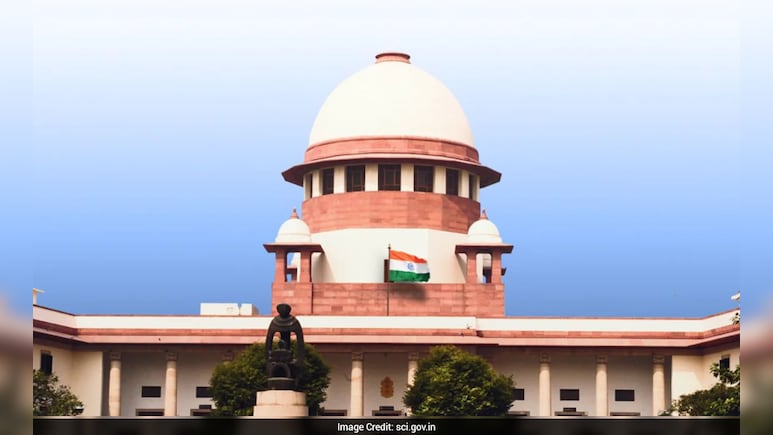
The Supreme Court on Thursday clarified that students who have already taken up three languages under the Central Board of Secondary Education's (CBSE) revised policy can keep their choices.
They do not have to go back to two. A Bench of Chief Justice of India Surya Kant and Justices Joymalya Bagchi and V Mohana gave the clarification, NDTV reported.
What Did The Court Clarify?
Also Read | Layoffs Are Rising In Tech, But These Skills Are Helping People Unlock Better Pay
The ruling covers two groups of students. Those already studying three languages can carry on with them. Those studying only two will be allowed to stay with two this year, on the condition that they take up the third next year.
The CJI said, "Where two languages are going on, they will be allowed to continue with two languages this year, subject to the condition that next year they will take…that is what our order says."
Why Was The Clarification Needed?
CBSE had asked the court to modify its 28 September order. The board argued that the exemption for students of Classes 6 to 9 needed another look, because some students had already chosen three-language combinations.
The 28 September order directed CBSE to give the current Class 6 batch the same relief already available to Classes 7, 8 and 9. The new implementation timeline begins on 1 April 2027.
READ | CBSE Releases Class 10 And 12 Date Sheets For 2027 Board Exams, Check Key Details
What Is The Policy?
Under the revised framework, students must study three languages, including two native Indian languages. The third language is assessed at school level rather than in a board examination.
The September order also extended to the current Class 6 batch the exemption from the Class 10 board examination in the third language.
How Did The Case Get Here?
The court first asked CBSE on 10 September to consider a reprieve for Class 6. It told the board that, having chosen Class 6 as the starting point, it could give students that year relief.
READ | CBSE Makes Studying Three Languages Including Two Native Languages Compulsory For Class 9 Students
The court said Class 6 students should get the same exemption as Class 7. CBSE told the court that a five-member committee was formed on 16 September to monitor implementation in Classes 6 to 10.
The wider challenge to the policy is still pending. It includes the question of treating English as a foreign language.
The Solicitor General told the court it could pass the proposed order, and that CBSE would return if difficulties remained. "We will do that," the CJI said.
Essential Business Intelligence, Sharp Market Insights, Practical Personal Finance Advice, Daily Fuel, Gold and Silver Prices, Watch Business News Live and Latest Stories — On NDTV Profit.