- Wage hike to Tk 17,000 failed to end protests by Bangladeshi garment workers demanding Tk 30,000.
- Ongoing unrest caused $428 million production losses and $254 million orders shifted to India.
- Bangladesh is the second-largest garment exporter, with $38.48 billion earnings in 2024.
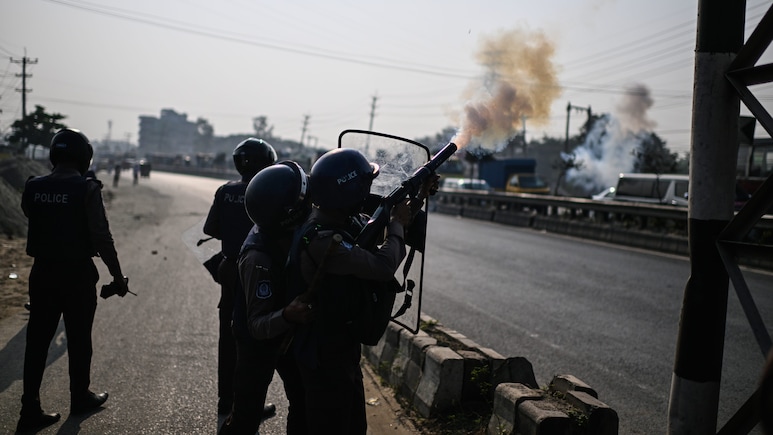
The decision to hike wages for Bangladesh's garment workers have not brought an end to the impasse as several factories in Bangladesh still face closure resulting in delays in deliveries for clothing giants across the world.
Bangladesh's readymade garments and textile industry employs around four million workers who have now organised themselves and manufacturing of garments for major global brands including H&M, Primark and Uniqlo have been affected with the continuing protests.
Many of the major brands are now looking at neighbouring India as the disruption continues in Bangladesh with readymade garment workers continuing their stir over a demand for a minimum wage hike. The monthly minimum wage of readymade garment workers has been raised to TK 17,000 from TK 12,500 amid a demand for a minimum wage of TK 30,000. The raise falls short of expectations and the protests are likely to continue.
Also Read | Layoffs Are Rising In Tech, But These Skills Are Helping People Unlock Better Pay
Bangladesh has been a global hub for textiles and apparel manufacturing and is currently the second-largest exporter of ready-made garments worldwide, after China. In 2024, the sector recorded $38.48 billion in export earnings, with knitwear contributing $20.52 billion and woven garments $17.95 billion. The sector employs sector approximately 4.4 million workers.
READ | Trump Tariffs On India: Which Stocks Are Likely To Be Impacted? Jefferies Decodes
While Bangladeshi garments still maintain a strong presence in traditional markets, led by the European Union, with key export destinations such as Germany, Spain, France, the Netherlands, Poland, Italy, and Denmark, the ongoing stir has become a major threat to keeping the traditional markets and customers with them. The United States remains the largest single-country export market, followed by the United Kingdom and Canada. But the stir has shaken the foundation of this sector and prolonged disturbances are making key players for alternative suppliers. Neighbouring India has stepped in to fill in the vacuum, and this could translate into long term shifts as well as Bangladesh struggles to quell the unrest.
According to a Reuters report, between November 1 and November 18, major global brands diverted about $254 million worth of orders from Bangladesh, with most moving to neighbouring India. This shift is a major blow to a key pillar of Bangladesh's economy and could extend beyond the current unrest with India emerging as an alternative manufacturing destination with ready infrastructure and skilled workers.
The shift was confirmed by the leading trade body in the sector in Bangladesh, Bangladesh Garment Manufacturers and Exporters Association. Bangladesh's readymade garment sector has already suffered production losses worth $428 million in just 18 days due to ongoing instability and disruptions, while buyers have shifted confirmed orders worth another $254 million to competing countries. The garment industry generates an income of nearly $40 billion annually for Bangladesh, which account for 10% of its GDP.
The BGMEA is the largest trade associations in the country representing the readymade garment industry, particularly the woven garments, knitwear and sweater sub-sectors and has around has around four thousand registered garment factories under its aegis. The BGMEA says it is committed to ensure all legitimate rights and privileges of the garment workers but has highlighted that as it collaborates with local and international stakeholders, including brands and development partners, the challenges have grown since the unrest which is almost into a month now.
The survey by the BGMEA also revealed that buyers had already shifted 59 million pieces of confirmed garment orders, worth approximately $254 million, to other countries amid concerns over the prevailing instability, state-run news agency Bangladesh Sangbad Sanstha reported.
NDTV has requested of BGMEA President Mahmud Hasan Khan, who is also managing director of Rising Fashions Ltd, a clothing production firm in Bangladesh, for a statement, which is awaited.
However, in a statement to local media in Bangladesh, Mahmud Hasan Khan said, "If someone is competing with us, the closest is India and Pakistan. But I will say due to infrastructure reasons, India is much ahead of us. They have their own cotton, their own machinery, they have deep seaports and they don't need transhipment, they need less time. They have no labour issues, and they have recently concluded an FTA with the European Union."
Alongside that, a proposed 18 percent US tariff could push up clothing prices for American consumers, forcing them to cut spending and weakening demand for Bangladeshi garments which could also trigger a shift towards other manufacturing hubs.
The Bangladesh Government has dismissed the reports of export orders shifting to other countries. Bangladesh Prime Minister's Tarique Rahman's Political Adviser and BNP acting secretary general Ruhul Kabir Rizvi on Saturday dismissed reports of Bangladesh's garment export orders shifting to other countries as misleading, describing them as part of a coordinated campaign to undermine the government.
Ruhul Kabir Rizvi said the government had responded promptly to workers' concerns through discussions and steps to ensure their legitimate dues and minimum wages, questioning the basis of reports about the relocation of garment sector orders. Rizvi made the remarks at a press briefing at the BNP's central office at Nayapaltan in Dhaka.
Bangladesh's readymade garment sector will face more challenges as international brands diversify their sourcing destinations. Internally too, the garment workers' protests have exposed the weaknesses of a business model built on low production costs and competitive prices as demands for higher wages will significantly push up production costs.
READ | Zara, H&M Look To India As Bangladesh Unrest Disrupts Garment Industry: Report
Essential Business Intelligence, Sharp Market Insights, Practical Personal Finance Advice, Daily Fuel, Gold and Silver Prices, Watch Business News Live and Latest Stories — On NDTV Profit.