In July 1830, Parisians took to the streets, erected barricades, and overthrew the Bourbon monarchy in what became known as the July Revolution. It soon inspired the Belgian Revolution and triggered unrest in several European states. The speed of this contagion led Austrian statesman Metternich to remark that "when Paris sneezes, Europe catches cold."
Two centuries later, America's financial dominance changed the quote to "when the Fed sneezes, the world catches cold." Changes in interest rates in the US ripple through global capital flows, exchange rates, and financial markets.
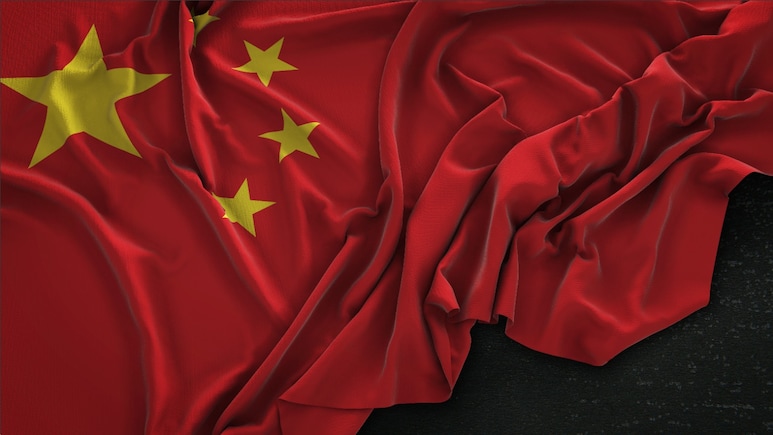
Today, another variation is emerging. As China's industrial capacity expands far beyond its domestic demand, "when China sneezes, the developing world catches cold."
Also Read | Layoffs Are Rising In Tech, But These Skills Are Helping People Unlock Better Pay
The First China Shock
Lower wages and China's openness to the world attracted factories from the US and Europe to China. However, the US workers bore the cost the most. Between 1990 and 2007, one-quarter of US manufacturing jobs declined due to the rise of Chinese imports, according to the landmark research of David Autor, David Dorn and Gordon Hanson. The industrial belt saw more factory closures, higher unemployment, lower labour-force participation, weaker wages and greater reliance on transfers.
It wasn't restricted to trade and economics alone. The trade-hit regions also shifted toward Republican candidates and conservative media, changing the American social and political preferences.
China Isn't Giving Up
Countries usually start with labour-intensive industries such as footwear, textile, leather and apparel because labour is cheap and capital is scarce. As incomes rise and workers become more skilled, economies move up the value chain, leaving lower-end manufacturing to poorer countries. This is how industrialisation spread across the world for decades.
However, when it was China's turn to do the same, it didn't give up the lower-end of manufacturing to others. Shoumitro Chatterjee and Arvind Subramanian find that at China's current income level, rich countries historically accounted for just 8% of global exports in these labour-intensive sectors. China accounts for 27%. That gap translates into roughly $140 billion of exports. That's the amount of trade that could have otherwise gone to developing economies such as India, Vietnam, Bangladesh, Ethiopia, Nigeria, and others.
China+1 May Not Be Enough
China's excess capacity, heavy industrial subsidies, manufacturing surplus, and reluctance to leave space for other countries mean that many developing economies now compete with China in the same export markets.
Analysis from Global Trade Alert shows that 76% of Vietnam's exports overlap with China's top 100 export products. The overlap for South Korea is 71%, Mexico 67%, India 35%, and Brazil 13%. It suggests that even if production moves away from China, competition with China does not.
This means that even if countries do everything right — attract foreign investment, build industrial parks, improve infrastructure, and integrate into global supply chains — they may still find themselves competing directly with Chinese firms in many of the same markets.
The Double Squeeze
The story doesn't end with exports. Chatterjee & Subramanian find that China imports far less from developing countries than what the rich economies did at a similar stage of development. When advanced economies were as rich as China is today, they imported roughly five times more low-skilled goods.
As a result, developing countries face a double squeeze: they must compete with Chinese exports abroad while finding limited demand for their own exports in China. Therefore, they write that in the current China Shock, developing countries will face a much larger impact than the one that impacted the rich countries in the 2000s.
Countries Must Unite To Avoid Big Crisis
Competing with China is not easy. Certainly, many countries have their own problems-slow decision-making, weak industrial policies, corruption, civil unrest, or difficulties in land, labour, and capital. Over time, these issues can be addressed. Many countries, including India, have already taken steps to make doing business easier.
But the bigger challenge is competing with a state-backed manufacturing powerhouse. Researchers argue that China's export growth is no longer driven by productivity alone. Industrial subsidies, cheap financing, and an undervalued currency have also played a major role. Most developing countries cannot match that. They do not have the fiscal capacity to provide subsidies on China's scale, nor can they replicate its economic model.
As a result, the issue is no longer just about becoming more competitive. It is also about whether China is willing to leave enough space for other developing countries to industrialise and grow in labour-intensive sectors.
Chatterjee & Subramanian write, "Hegemons gain legitimacy not by dominating others, especially the poor, but by enabling their rise." The US did it by keeping the markets open, creating export opportunities for many countries, including China. Now, it is its turn.
Final Take
I purposely discussed the impact of the first China Shock on advanced economies to show how trade shocks can spill far beyond economics. The research already shows that the current shock will be worse than the previous one. The recent unrest in Indonesia — linked in part to deindustrialisation and exposure to Chinese competition — offers a glimpse of what may lie ahead.
The lesson, however, is not that countries should blame China for their problems. Governments still need to focus on the basics: better education, stronger healthcare systems, more investment in research and development, reliable infrastructure, and a business environment that allows firms to grow and innovate.
The key takeaway is that countries that get the basics right and faster will be better positioned to withstand the ripple effects of Chinese competition. Those who fail may find the economic, social and political costs difficult to manage.
Disclaimer: The views expressed in this article are solely those of the author and do not necessarily reflect the opinion of NDTV Profit or its affiliates. Readers are advised to conduct their own research or consult a qualified professional before making any investment or business decisions. NDTV Profit does not guarantee the accuracy, completeness, or reliability of the information presented in this article.
ALSO READ: Let's Rethink Risk-Free Assets | The Reason Why
Essential Business Intelligence, Sharp Market Insights, Practical Personal Finance Advice, Daily Fuel, Gold and Silver Prices and Latest Stories — On NDTV Profit.