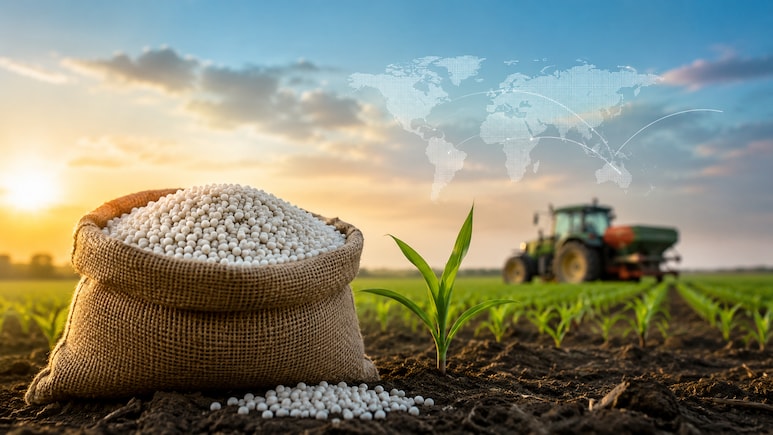
Modern agriculture depends on four key fertilisers: nitrogen, phosphate, potash and urea. China, India and the U.S. account for most nitrogen production, while China, Morocco and the U.S. lead phosphate output. Potash supplies come mainly from Canada, Russia, Belarus and China, while Gulf countries, including Qatar and Saudi Arabia, are among the largest producers of urea. Any disruption to natural gas supplies, mining, exports or shipping across these regions can affect fertiliser availability worldwide.
The fertiliser industry has faced three major shocks over the past five years. The first followed supply chain disruptions during the Covid-19 pandemic in 2020. The second came after the Russia-Ukraine war in 2022. The latest disruption stems from the Israel-U.S.-Iran conflict.
Each episode has fuelled concerns over global food security. Some commentators and institutions have warned that fertiliser shortages could trigger widespread food shortages and even famine. While those concerns are understandable, history suggests that such outcomes are unlikely.
Also Read | Layoffs Are Rising In Tech, But These Skills Are Helping People Unlock Better Pay
Markets And Farmers Adapt Faster Than Expected
A common assumption is that fertiliser shortages inevitably reduce global food production. In practice, agriculture has proved more resilient. A combination of market forces, government intervention and changes in farming practices has helped prevent large-scale food shortages in most regions.
Farmers are usually the first to respond. When fertiliser prices are low, many apply more than the optimum amount to maximise yields. However, additional fertiliser delivers diminishing returns beyond a certain point. As prices rise, farmers typically reduce application rates to more efficient levels without materially affecting output.
ALSO READ: Ethanol Blending Isn't Just A Water Debate | The Reason Why
That happened in Europe during 2022, when soaring natural gas prices forced temporary closures of nitrogen fertiliser plants. Farmers responded by improving nutrient management rather than cutting production. Precision farming also enables growers to apply more fertiliser where yields are higher and less where returns are lower.
When reducing fertiliser use is not enough, farmers often switch to crops that require fewer nutrients. Crop substitution has long been a response to changing demand, rising costs and uncertain weather conditions. Farmers in the U.S. and Brazil, for example, have increasingly planted soybeans instead of corn during periods of elevated fertiliser prices.
According to the U.S. Department of Agriculture, farmers are expected to plant more soybeans and less corn this year, following a similar pattern to 2022. Basic economic principles suggest that greater soybean production could weigh on soybean prices, while lower corn acreage could support corn prices.
ALSO READ: Morality, Economics Have Complicated Relationship | The Reason Why
Governments Cushion The Impact
Farmers can also absorb lower profit margins when crop prices remain high enough to offset rising fertiliser costs. Where that is not possible, governments often step in.
Countries where food security carries political and economic importance typically rely on measures such as fertiliser subsidies, interest-free loans, loan waivers, tax relief and investment incentives to support farmers during periods of elevated input costs.
These disruptions also encourage governments to diversify import sources, strengthen domestic production and reduce dependence on external suppliers.
India, for example, allocated an additional Rs 1.10 lakh crore to its fertiliser subsidy programme in FY23. During the current crisis, the government is seeking to double the existing allocation of Rs 1.7 lakh crore. China, meanwhile, restricted phosphate exports in 2021 to prioritise domestic supplies, and those restrictions remain in place. More recently, the U.S. suspended certain import tariffs on Moroccan phosphate fertiliser to lower costs for American farmers.
The Current Crisis Differs From 2022
The fertiliser shock in 2022 drove food prices higher and raised fears of a global food crisis. Although food insecurity worsened in poorer countries, global agricultural production remained resilient as farmers adapted, governments intervened and supply chains adjusted. The crisis ultimately became more about affordability than production.
The current disruption shares several characteristics with 2022 but also differs in important ways. Fertiliser inventories are stronger, and supply chains have become more flexible and resilient.
At the same time, crop prices are lower than they were in 2022. That leaves farmers with less room to absorb higher fertiliser costs. Unless food prices rise sharply, the current disruption is more likely to affect farm profitability than overall food production or affordability.
Policymakers should recognise this distinction. Only two years ago, farmers across several countries protested against rising input costs and what they viewed as inadequate government support.
ALSO READ: Financial Advisors & Finfluencers Talk About Risk Too Little, Too Late | The Reason Why
Why Worst-Case Scenarios Rarely Play Out
Warnings of a global food crisis often highlight genuine risks but can underestimate the ability of markets, governments and technology to adapt.
More than two centuries ago, economist Thomas Malthus argued that population growth would eventually outpace food production. Instead, innovations such as the Haber-Bosch process and the Green Revolution transformed agriculture and enabled it to feed a rapidly growing global population. Today, synthetic nitrogen fertilisers support food production for roughly half the world's population.
That does not mean such warnings should be dismissed. Rather, history suggests that governments, markets and technology have repeatedly adjusted more quickly than many expected.
This resilience, however, is uneven. Many African countries remain vulnerable to fertiliser shortages and rising food prices. At the same time, excessive use of inorganic fertilisers has contributed to water pollution, environmental degradation, deforestation and health concerns in several parts of the world.
A Turning Point For Agriculture
The fertiliser shocks of this decade could prove as significant for agriculture as the oil shocks of the 1970s were for the energy sector. The Arab oil embargo exposed the risks of relying on inexpensive energy, but it also drove decades of innovation and improvements in efficiency. Today, the world uses roughly half as much oil as it did in the 1970s to generate the same level of economic output. Agriculture should pursue a similar path.
The priority should shift from producing more fertiliser to using existing supplies more efficiently. Precision agriculture, biotechnology, crop varieties that require fewer nutrients and improved organic alternatives can all help reduce dependence on conventional fertilisers. Countries should also strengthen domestic fertiliser production, diversify supply chains and build strategic reserves to reduce exposure to future geopolitical or energy-related disruptions.
The latest estimates from the U.S. Department of Agriculture point to broadly stable global food grain production this year, providing some reason for optimism. Even so, regional and crop-specific disruptions cannot be ruled out. Some countries could face higher prices for certain commodities, while production of particular crops may become uneconomical. Localised shortages may also emerge.
Viewed at the global level, however, the outlook is less alarming than many of the worst-case predictions suggest. Recent experience indicates that the agricultural system has continued to adapt to repeated shocks. If those patterns hold, the current fertiliser disruption is more likely to reshape farming practices and policy than trigger a collapse in global food production.
Disclaimer: The views expressed in this article are solely those of the author and do not necessarily reflect the opinion of NDTV Profit or its affiliates. Readers are advised to conduct their own research or consult a qualified professional before making any investment or business decisions. NDTV Profit does not guarantee the accuracy, completeness, or reliability of the information presented in this article.
Essential Business Intelligence, Sharp Market Insights, Practical Personal Finance Advice, Daily Fuel, Gold and Silver Prices and Latest Stories — On NDTV Profit.