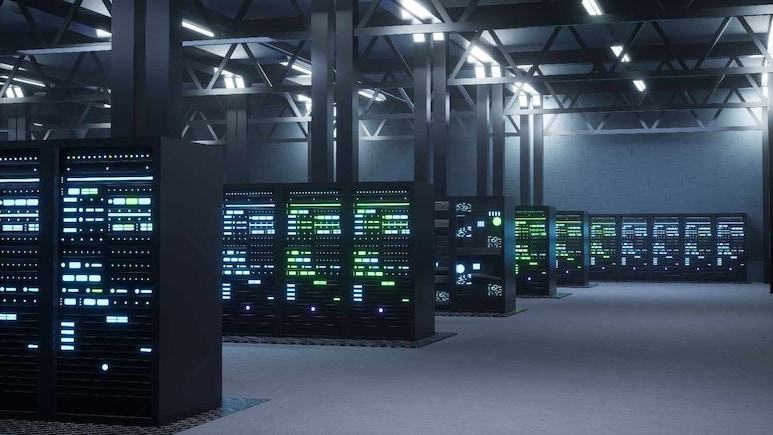
The ongoing conflict in West Asia is changing how companies think about their data centers, with a growing shift away from keeping backup facilities nearby to placing them farther away to reduce risk.
Earlier, companies preferred secondary data centers to be located in the same city or nearby regions to keep costs low and ensure faster data access. That approach is now changing.
"We're seeing a shift from proximity-led redundancy to risk-distributed resilience," said Sachin Tayal, Managing Director at Protiviti Member Firm. He added that firms are now preparing for scenarios where "an entire region goes down," not just a single facility.
Also Read | Layoffs Are Rising In Tech, But These Skills Are Helping People Unlock Better Pay
ALSO READ | No Truce In Sight? Iran Calls US 15-Point Plan 'Illogical', Prepares Counterproposal
This shift is already showing up in demand. Co-Founder and CEO of Yotta Data Services Sunil Gupta said data center demand has jumped sharply in the past three to four weeks, with fresh requirements ranging between 200 and 500 megawatts. He added that this reflects companies reworking their infrastructure to hedge against geopolitical risks.
India is emerging as a key alternative location. Gupta said India can offer nearly twice the data center capacity for the same investment compared to some Asia-Pacific regions, and could absorb 15–20% of workloads from the Gulf in the next three to six months.
According to Tayal, companies are increasingly choosing multiple locations across regions or countries instead of relying on a single geography. This is especially visible in sectors such as financial services and digital platforms, where downtime risks are high.
At the same time, firms are trying to balance performance and safety. Critical, real-time operations are still kept closer to users, while backup systems are being moved to distant locations. "It's no longer about choosing between latency and resilience, but designing systems that deliver both," Tayal said.
ALSO READ | Iran, Israel Will Continue War Even If US Pulls Out; Ceasefire Unlikely: JNU Professor
Importantly, companies are now willing to spend more for this added safety. What was earlier seen as an optional cost is now being treated as essential risk protection.
Taken together, executives say this marks a longer-term shift. Gupta noted that the move towards geographically spread-out data infrastructure is not temporary, but a "permanent structural change" in how companies build and manage their digital backbone.
Essential Business Intelligence, Sharp Market Insights, Practical Personal Finance Advice, Daily Fuel, Gold and Silver Prices and Latest Stories — On NDTV Profit.