Imagine going back 10 years.
You are running late for work. There is a traffic jam everywhere, your cab is taking forever, and an auto driver has quoted you a price you don't want to pay. Then someone tells you, “Just book a bike. Someone will come and pick you up.” Sounds strange, right?
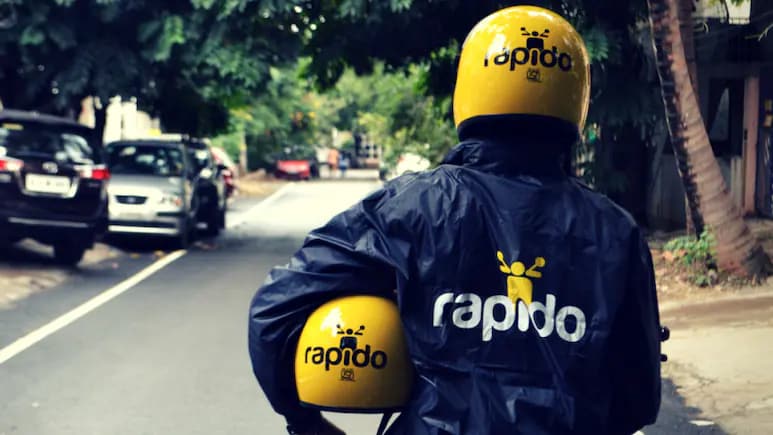
A stranger arrives on a motorcycle, hands you a helmet and gives you a ride through the traffic.
Also Read | Layoffs Are Rising In Tech, But These Skills Are Helping People Unlock Better Pay
Or imagine you are at home and suddenly realise you have forgotten an important document at work. Instead of asking a friend to drive across the city, you open an app, book a delivery, and someone arrives to pick it up and drop it where you need it.
Today, these things barely raise an eyebrow.
But a decade ago, the idea of turning an everyday motorcycle into a ride-hailing service, or using a network of people and vehicles for hyperlocal deliveries, was far from obvious.
That is where Rapido's story begins.
The idea that came from a failed startup
Rapido was not the first idea that brought its three founders together.
Aravind Sanka, Pavan Guntupalli and Rishikesh S.R. had initially built a logistics startup called theKarrier. The business focused on connecting customers with mini-trucks for intra-city transportation.
But the company struggled to scale the way the founders had expected. Instead of continuing to push a model that wasn't working, the trio decided to rethink the problem.
And that rethink took them from trucks to motorcycles.
According to accounts shared by the founders, they had noticed something interesting while working on their logistics business. People travelling between assignments were often spending a significant part of their earnings on transport. Buses could be slow and unreliable, while autos and cabs were not always affordable.
There was, however, one thing everywhere around them: bikes.
Pavan Guntupalli later recalled seeing people getting lifts from colleagues on motorcycles. The founders began experimenting with the idea of using bikes for short-distance travel, even coordinating some rides through WhatsApp in the early days.
The idea was deceptively simple. What if the spare seat on a motorcycle could become a mode of urban transport? And Rapido was born
In 2015, the founders pivoted from theKarrier and launched Rapido as a bike-taxi platform in Bengaluru.
At the time, India's ride-hailing conversation was largely about cars. Ola and Uber were aggressively building cab networks, while the idea of getting a passenger onto the back of a motorcycle was still unfamiliar to most consumers.
Rapido was betting on something different. India was already a two-wheeler-heavy country. Motorcycles and scooters were cheaper to operate than cars, could move through congested roads more easily and offered a much more affordable option for short trips.
The founders saw a gap that larger cab companies were not solving.
As Aravind Sanka later explained, the team recognised that India had a huge two-wheeler base and that existing bikes could be used to solve last-mile connectivity.
The challenge was getting people to actually trust the idea.
ALSO READ: 6,500+ Jobs Gone In 10 Days: Uber, PayPal, Zomato And More Cut Workforce
Convincing people to sit behind a stranger
Rapido's early days involved more than just building an app. The company had to convince two groups of people. Passengers had to believe that getting on a stranger's bike was safe. And bike owners had to believe that carrying passengers could become a legitimate source of income.
The founders themselves were deeply involved in getting the model off the ground. When Rapido launched, some of its earliest Captains were actually members of the team, including founders and sales employees who rode bikes themselves.
The company also built safety measures into the service, including rider verification, GPS tracking and emergency support. Slowly, the unusual started becoming normal.
From a bike taxi to an everyday mobility platform
The real breakthrough for Rapido came when the bike taxi stopped being seen as a novelty and started becoming a practical commuting option. A rider could avoid traffic, spend less on a short trip and get to the destination faster. For Captains, the model offered a way to earn using an asset they already owned.
The company eventually expanded beyond bike taxis, adding auto-rickshaw and cab services and moving into hyperlocal parcel deliveries and other mobility businesses.
What had started as a solution for short two-wheeler rides was turning into something much larger — a platform connecting people, vehicles and everyday transport needs.
Rapido now operates across more than 400 cities and has positioned itself as one of India's major mobility players.
From a failed idea to a $3 billion company
The scale of that transformation became even clearer in May 2026. Rapido raised $240 million in fresh funding in a round led by Prosus, with existing investors including WestBridge Capital and Accel participating. The investment valued the company at $3 billion. The round was part of a larger $730 million primary and secondary financing.
For the three founders, the journey had come a long way from their first attempt at building a logistics company. And that is perhaps what makes the Rapido story interesting.
The biggest idea did not necessarily arrive as a lightning-bolt moment. It came from noticing something ordinary. A person taking a lift on a bike. A commuter trying to save money. A city struggling with traffic.
And three entrepreneurs willing to abandon an idea that wasn't working and look at the problem differently.
Today, booking a bike ride on an app feels completely normal.
Rapido's biggest achievement may have been turning that absurd-sounding idea into something millions of people now considering an everyday way to get around.
Essential Business Intelligence, Sharp Market Insights, Practical Personal Finance Advice, Daily Fuel, Gold and Silver Prices, Watch Business News Live and Latest Stories — On NDTV Profit.