- India aims to increase Battery Energy Storage Systems (BESS) for grid stability and renewable integration
- BESS defined as stationary systems storing electric energy via electrochemical materials under 2026 rules
- National Electricity Plan targets 47.24 GW/236.22 GWh BESS capacity by FY 2031-32 for 500 GW renewable grid
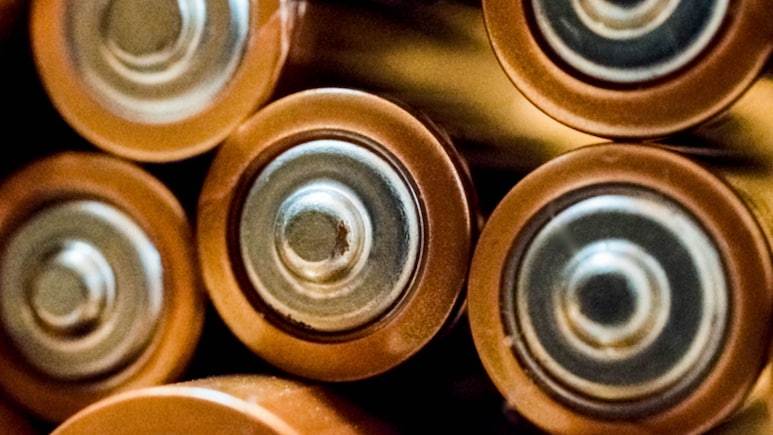
India stands at a critical juncture in its energy transition, with an increasing need for grid stability. Battery Energy Storage Systems (BESS) act as a key enabler for energy transition and are increasingly being deployed to support grid stability. Energy Storage Systems (ESS) were first statutorily recognised as an independent asset class under the Electricity (Amendment) Rules 2022, enabling them to operate as generation, transmission, or distribution infrastructure, as well as on a standalone basis.
Subsequently, BESS has been defined under the Central Electricity Authority (Measures relating to Safety and Electric Supply) Regulations 2026 as a stationary system connected to the electricity system that is used to store electric energy by means of electrochemical materials, typically including batteries, power conversion system and battery management system.
The energy storage obligation trajectory, notified through the Ministry of Power's order dated 22 July 2022, requires obligated entities to progressively increase their procurement of storage capacity to 4% by FY 2029-30. The National Electricity Plan 2023 (NEP 2023) provides that projects in India by FY 2031-32 will include 47,244 MW/ 236,220 MWh of storage capacity, and 230 GW of BESS with 1,840 GWh of storage by FY 2047, simply to support a grid carrying 500 GW of variable renewable energy. NEP 2023 further sets out the requirement of BESS in India i.e., 8.68 GW / 34.72 GWh of BESS by FY 2026-27, rising to 41.65 GW / 208.25 GWh by FY 2029-30, and 47.24 GW / 236.22 GWh by FY 2031-32.
Also Read | Layoffs Are Rising In Tech, But These Skills Are Helping People Unlock Better Pay
ALSO READ: Manufacturing To Soft Power: PM Modi's Seven-Pillar Roadmap For India's Economy Explained
Viable BESS Structures
The deployment of BESS in India has been carried out by developers as per the following models:
- BESS as a charging infrastructure: BESS developer procures energy from its own generating station and may further sell such energy to a distribution company/ state utility during peak power management. BESS developer may also utilise such stored energy to meet the contracted capacity for its co-located plant.
- BESS for distribution purpose: BESS developer procures power from the distribution licensee/ open access consumer during off-peak hours and supplies an equivalent quantity of electricity back to the respective licensee or consumer during peak periods, adjusted for the round-trip efficiency losses of the BESS. The tariff for such transactions is determined mutually between the parties. This arrangement operates as a tolling mechanism, whereby the BESS provides energy storage and time-shifting services rather than acting as a conventional power supplier.
- Merchant BESS (Market Exposure): The most structurally interesting development in India's BESS market is the emergence of a viable merchant model, where projects operate without long-term offtake agreements and earn revenue through power exchange participation and ancillary services.
Steps To Encourage BESS Deployment
The 'National Framework for Promoting Energy Storage Systems' dated August 2023, issued by the Ministry of Power, Government of India (National Framework) recognises that renewable energy sources such as solar and wind are to be used instantly, considering the nature of the sources and identifies storage as the mechanism through which the "variability associated with RE sources" and the resulting grid balancing challenge can be resolved, enabling larger renewable integration.
In 2022, ESS were included in the Harmonised Master List of Infrastructure by the Department of Economic Affairs. This classification provides storage developers with improved access to institutional credit and concessional financing.
In addition to the above, the CERC (Sharing of Inter-state Transmission Charges and Losses) (Fourth Amendment) Regulations 2025 provides for a waiver of inter-state transmission charges on electricity generated and used by BESS projects. BESS projects commissioned on or prior to 30 June 2028 receive a 100% waiver of transmission charges, with such waiver being applicable for period of 12 years from the date of commissioning.
Challenges And Future Outlook
BESS compounds its strategic value when combined with adjacent technologies. Authorities such as NTPC Limited has invited bids to replace diesel generation with BESS, directly implementing the National Framework's mandate under the Electricity (Rights of Consumers) Amendment Rules, 2022 to shift away from diesel generator sets toward cleaner energy with battery storage.
As India's EV sector develops, co-located BESS increasingly supports charging infrastructure and opens pathways toward vehicle-to-grid integration. India's National Green Hydrogen Mission also envisions BESS as part of the stable, low-cost electricity supply stack for electrolysers, consistent with the ISTS charge waiver under CERC (Sharing of Inter-state Transmission Charges and Losses) (Fourth Amendment) Regulations 2025, which extends to green hydrogen production facilities.
The National Framework contemplates that the Central Government may consider issuing a list similar to the already existing ALMM list for solar cells and panels, but for BESS. The ALMM framework has proven transformative for solar, gradually creating protected procurement channels and manufacturing hubs. Accordingly, an equivalent regime for BESS is likely to emerge between in the coming years, once the manufacturing output reaches sufficient scale to meet project demand.
ALSO READ: India Proposes New Rules To Open Nuclear Sector To Private, Foreign Firms
While policies exist for the framework of BESS, execution on the ground still falls short on account of limited domestic manufacturing, dependence on exports and grid instability. As of June 2026, manufacturing of battery cells have increased upto approximately 4 GWh and packs manufacturing is up to 32-37 GWh. It is estimated that by December 2026, the installed BESS capacity in India will surpass 10 GWh.
Between the period of 2018 to 2026, India auctioned approximately 97.8 GWh capacity across 191 tenders for projects with BESS component, yet only approximately 8.5 GWh capacity is operational as of June 2026 (of which 6.9 GWh is in merchant mode). Winning bid tariffs have ranged significantly by project type, with tariff of standalone BESS projects ranging between INR 2.85 to INR 4.44 lacs per MW per month, while co-located projects have attracted bids ranging from INR 2.86 to INR 3.52 per kWh. For FDRE projects, tariffs have ranged from INR 4.35 to INR 5.06/kWh for round-the-clock projects to INR 6.27 to INR 8.50/kWh for peak-specific projects.
About the author: The article has been authored by Shivanshu Thaplyal, Partner; Shivang Sinha, Principal Associate and Disha Jain, Associate at Khaitan & Co. Views expressed are personal.
Essential Business Intelligence, Sharp Market Insights, Practical Personal Finance Advice, Daily Fuel, Gold and Silver Prices and Latest Stories — On NDTV Profit.