The big, global push to paint India as a climate bugbear has started taking shape. All fingers are pointing at India, criticisms are growing on New Delhi's energy policy and how it is apparently not in sync with global standards. Surprisingly, these experts—activists and policymakers—are asking India to follow standards they would never follow for life.
Isn't it strange?
No wonder the debate is terribly lopsided. And all those clamouring that India is the world's third-largest emitter of greenhouse gases are missing the forest for the trees. New Delhi is aware that burning coal is bad for the environment, but it is evident that India cannot bear the humongous human costs of exiting from a carbon-based economy. The big issue which needs to be highlighted is about the developed nations and whether they have made significant emission reductions? So why push India to wean off coal?
Let me further the argument with some interesting statistics.
India needs power to lift an estimated 75 million pushed into poverty due to the pandemic. These 75 million continue to live on less than $2 per day. Power is crucial to lift these people out of poverty, and the rest of the population. Power is crucial to end malnutrition, improve health, education, and raise industrial and agricultural productivity. And coal is super important in India to generate power, ostensibly because the alternatives are just not there.
And then look at India's consumption of electricity. India's annual per capita electricity consumption is 972 kilowatt-hours, which is a mere 8% of what Americans consume and 14% of Germans consume. There's the electricity grid, and—of late—Indians have started vigorously using bottled cooking gas that is considered a cleaner fuel. More importantly, it checks indoor air pollution. Bottled cooking gas is widely used across the developing world. If you look at India's demand, you will realise India will need loads and loads of energy; by 2040 New Delhi will have the largest growth in energy demand across the world. It is a figure certified by the Paris-based International Energy Agency. In short, India will need a variety of conventional and renewable energy sources. And it is here the need for coal is felt uppermost because it powers 75% of India's electricity generation. The rest is wind and solar power, still in the developing stage.
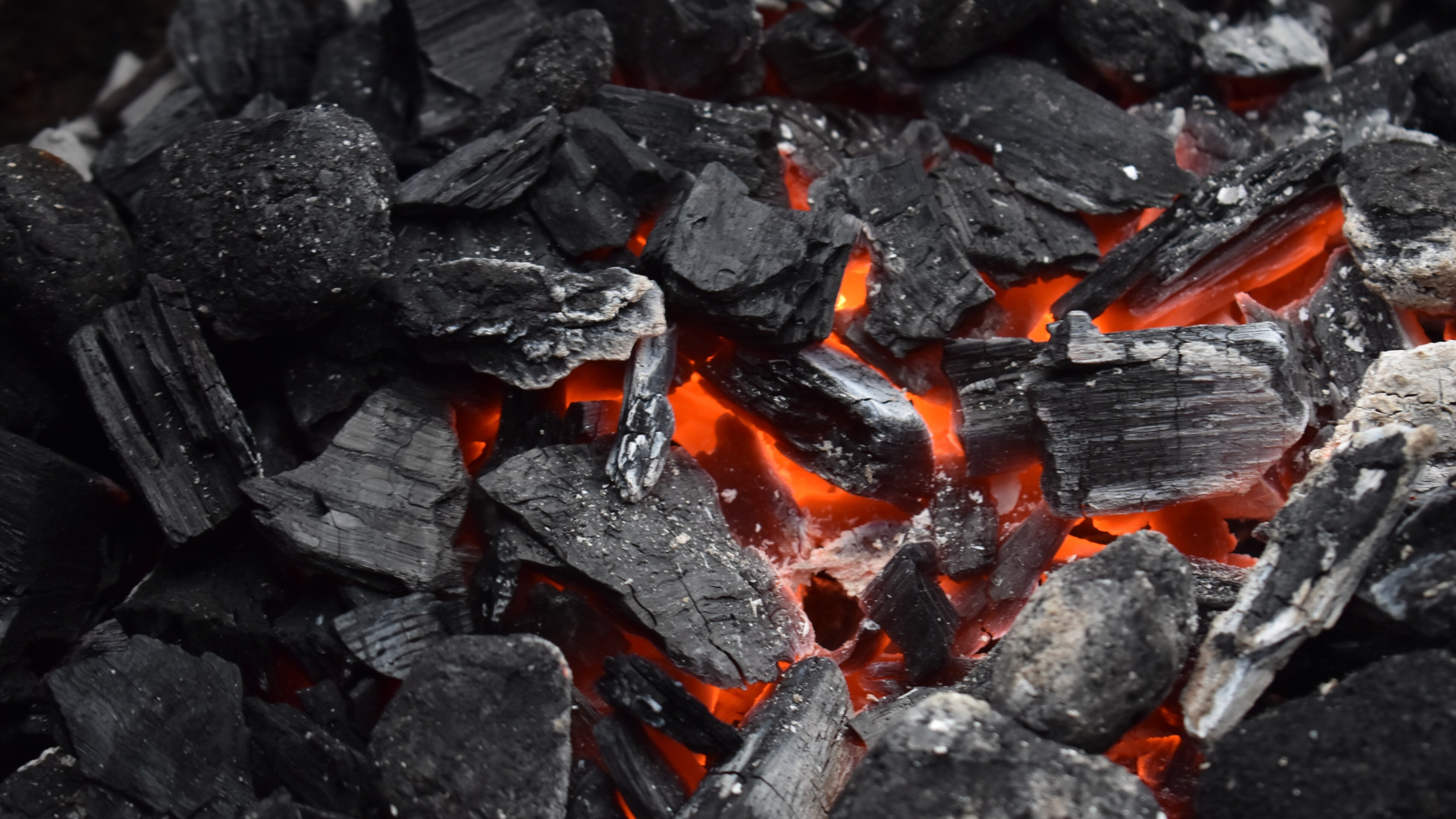
India has an estimated 100 billion tonnes of coal reserves and just one company, the state-owned Coal India—the world's largest miner—produces approximately 600 million tonnes of coal a year. And coal is a vital source for jobs and economic growth, it is a big driver of India's industrialisation programme. Over 4 million people are linked with the coal sector in India. Apart from generating electricity, coal contributes to several non-power sectors such as cement, brick, fertilisers, steel, sponge iron and various other industries. Almost half of India—over 800 districts—have coal dependency. The situation is exactly the one the developed nations experienced around the time they pushed their economies to greater heights.
But now these very nations are hating India's coal policy. They do not want to know how costly it can be to transition to green power. For the record, closed coal mines have created mass unemployment and devastated local communities in the US. The experts lecturing India do not know it is not easy to transfer millions to green jobs. These experts do not want to remember that the UN Secretary-General António Guterres has asked the developed nations to be the first to phase out coal, not countries like India.
Has that happened? No, it has not. Worse, countries in the West have set their own times to exit from fossil fuels and given themselves maximum flexibility when transitioning to renewables.
But they are hyperventilating about India. Why? This is nothing but total hypocrisy. Consider the case of Germany, considered by many as the West's green poster child. It will record its biggest jump in emissions in three decades this year. And this will happen mainly due to a sharp rise in coal use. Germany will not tell the world that it generates 27% of its electricity from coal. And this figure will increase once it shuts down all its nuclear plants. Once that happens, an additional 60 million tonnes of carbon emissions will happen annually as more coal and gas will be needed to meet the demand for electricity.
The world must know India—a billion-plus nation and the world's third largest emitter—is trying hard to decarbonise its power sector, it aims to build 450 GW of renewable energy capacity by 2030. It has plans to use technologies like improved battery storage to make renewables more dependable. Installations of solar, wind, hydro, biomass and nuclear plants will reach more than 500 gigawatts by 2030, which will be almost tripling of current levels, and account for 64% of India's generation capacity.
New Delhi wants to be a global hub for production of green hydrogen and green ammonia. Yet, coal will account for half of India's electricity generation till 2030, it will remain the country's largest source of electricity. India will need as much as 46 gigawatts of additional capacity alongside new renewables. India has plans to phase out 2 gigawatts of coal-burning plants by 2030, the final plan is to shut down 25 gigawatts of old plants.
And then there are taxes. The coal industry pays a myriad of taxes to the state and central governments including royalty, goods and services tax, GST compensation cess, and a host of other cess. In India, the central and state governments' dependence on coal is at 25% and 13% of their tax revenues. Coal is responsible for 10% and 2% of the central and state governments' energy tax revenues, respectively. Electricity— majorly generated from the coal sector —also contributes 7% and 15% of the energy tax revenues to the central and state governments respectively. This totals to thousands of crores on an annual basis. So, in short, to phase out coal, as targeted at the Conference of Parties in Glasgow, will severely impact taxes collected by the governments. Worse, it could eventually negatively impact the economy down to a micro-economic scale.
The critical West needs to take into account all of these before resuming their rant. India will phase out coal but, like the western nations, it must do it on its own terms.
Shantanu Guha Ray is the Asia Editor of Central European News, UK. His book on the Indian coal market, Black Harvest, will hit the stands soon.
The views expressed here are those of the author and do not necessarily represent the views of BQ Prime or its editorial team.
Essential Business Intelligence, Continuous LIVE TV, Sharp Market Insights, Practical Personal Finance Advice and Latest Stories — On NDTV Profit.