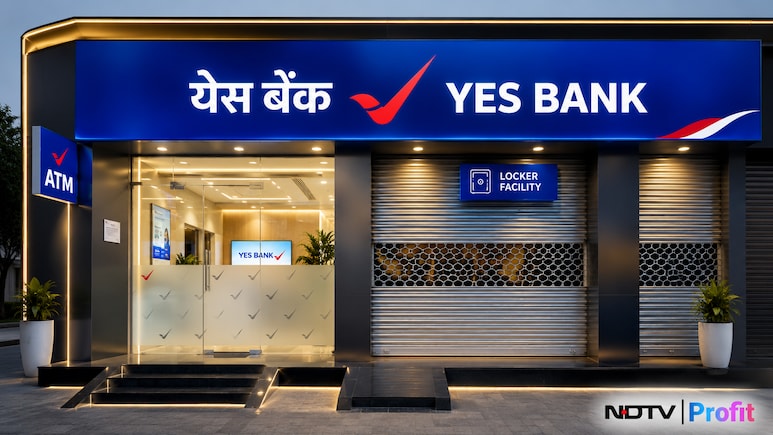
- The Supreme Court reserved its verdict on Yes Bank's Rs 8,415 crore AT1 bond write-down case
- The Centre argued write-downs follow RBI rules and bond contracts, not the reconstruction scheme
- Bondholders claimed the final scheme excluded write-down provisions, preserving their rights
The Supreme Court on Wednesday reserved its order in the Yes Bank Rs 8,415 crore AT1 bond write-down case, as it examined whether the decision taken during the bank's 2020 rescue was legally valid. The Centre told the court that the outcome could have wider implications for the nearly Rs 1 lakh crore AT1 bond market.
Key takeaways from today's hearing
The hearing centred on a crucial legal question. Whether the write-down of AT1 bonds was backed by the reconstruction scheme or by the RBI master circular and contractual terms governing the bonds.
Appearing for the Centre, the Solicitor General argued that AT1 bonds are governed by RBI rules and bond contracts, not by the reconstruction scheme. He said the RBI master circular provides a complete framework covering the trigger, action and consequences of a write-down.
Also Read | Layoffs Are Rising In Tech, But These Skills Are Helping People Unlock Better Pay
The government maintained that the key trigger is “non-viability”, which means a bank is on the brink of failure. According to the Centre, this trigger can arise even before the final reconstruction of a bank is completed.
ALSO READ | Waaree-Backed Solfin Finance Raises Rs 280 Crore To Expand Green Lending Business
The Solicitor General also argued that the reconstruction of Yes Bank was not a single event, but a process that unfolded over several steps. These included notification of the scheme, capital infusion, cessation of the moratorium and eventual takeover by a new board.
A key submission was that writing down AT1 bonds before the capital infusion led by State Bank of India could have worsened Yes Bank's financial position. The Centre argued that such a move could have jeopardised the rescue effort.
Importantly, the government warned of broader systemic risks. It told the court that nearly Rs 1 lakh crore of AT1 bonds are outstanding across banks, and any adverse ruling could weaken investor confidence in these instruments and affect future bank rescues.
Bondholders challenge the write-down
Counsel for bondholders argued that the final reconstruction scheme deliberately did not provide for any write-down or conversion of AT1 bonds.
They said the government had initially considered provisions for AT1 bonds in the draft scheme but chose to exclude them in the final notification. According to them, this meant the scheme preserved bondholder rights.
The petitioners also argued that even if the bank relied on the RBI master circular and bond terms, it was required to follow due process. This includes following procedural safeguards and compliance requirements before taking such a drastic step.
They questioned the authority of the administrator, arguing that he could not unilaterally write down bonds after the scheme came into force.
Bondholders also pushed back against the systemic risk argument. They told the court the case is limited to whether the law and due process were followed in this specific instance.
ALSO READ | Yes Bank Shares Swing After Q4 Profit Jumps 45%; Asset Quality Improves
Key issues before Supreme Court
The Bench focused on three key issues during the hearing.
First, the timing of reconstruction. Judges repeatedly asked when a bank is considered to be legally reconstructed. They questioned whether it happens on the date the scheme is notified or only after all steps in the scheme are completed.
Second, the source of legal authority. The court asked whether the write-down was carried out under the reconstruction scheme or under the RBI circular and bond contract.
Third, the trigger for write-down. The Bench examined whether the non-viability trigger can arise independently, or whether it must be linked to a completed reconstruction under Section 45 of the Banking Regulation Act.
The court also engaged with the capital position of Yes Bank and considered arguments that writing down bonds before capital infusion could have further weakened the bank.
Background
The case goes back to March 2020, when Yes Bank was facing a severe financial crisis with rising bad loans and falling depositor confidence.
The Reserve Bank of India stepped in, superseded the board and imposed a moratorium, before the government approved a reconstruction scheme backed by capital infusion from a consortium led by State Bank of India.
As part of this rescue, the bank's administrator wrote down AT1 bonds worth Rs 8,415 crore to zero, wiping out investments of institutional and retail bondholders.
ALSO READ | AI-Driven Fraud, Breaches Put Insurers On Notice, IRDAI Seeks Review
AT1 bonds are high-risk instruments designed to absorb losses when a bank's capital falls below specified thresholds.
The write-down triggered a wave of litigation. In January 2023, the Bombay High Court set aside the decision, holding that the final reconstruction scheme did not explicitly authorise the write-off.
The RBI, Yes Bank and the Centre challenged that ruling in the Supreme Court, where the matter is currently being heard.
Essential Business Intelligence, Sharp Market Insights, Practical Personal Finance Advice, Daily Fuel, Gold and Silver Prices and Latest Stories — On NDTV Profit.