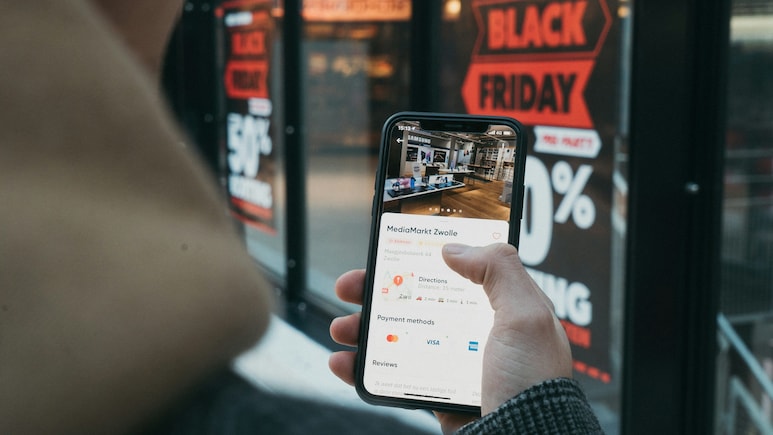
Artificial intelligence is becoming a regular part of holiday shopping. Consumers are turning to AI agents to compare products, find discounts and even place orders. But retailers are not ready to hand over control of their shopping platforms.
Amazon has emerged as one of the strongest opponents of unrestricted AI shopping agents. The company blocked Meta's Muse shopping agent from accessing its platform in September. It had also stopped Elon Musk's Grok Bot from placing orders.
Amazon has taken its concerns further by pursuing legal action against AI startup Perplexity. The dispute centres on its Comet browser agent, which Amazon accuses of disguising automated shopping activity.
Also Read | Layoffs Are Rising In Tech, But These Skills Are Helping People Unlock Better Pay
The company's position does not rule out working with third-party AI agents altogether. CEO Andy Jassy has indicated that such partnerships could happen, provided the companies agree on suitable commercial arrangements.
For retailers, the concern is not necessarily AI itself. It is allowing an external system to browse products, access customer accounts and complete payments without the same checks applied to human shoppers.
Amazon Is Not Alone In Restricting AI Shopping Agents
Retailers are taking different approaches to the technology. Walmart and Sephora have opened their platforms to selected AI shopping tools. Others, including eBay, United Airlines and Kohl's, restrict or block certain agent activities.
Gap and Coach allow AI agents to browse their product catalogues but do not let them complete purchases. Target has also encountered situations where automated shopping tools were blocked unintentionally.
This creates a fragmented shopping experience. An AI agent might find the right product on one website but struggle to log in or finish checkout on another. CAPTCHA checks and other security measures can interrupt the process.
There is also a question of whether these agents can make the right buying decisions.
A Visa study tested 22 AI models from 12 AI laboratories. Shopping agents failed in approximately 43% of test runs. More than half of those unsuccessful attempts involved agents purchasing products that did not match customers' stated requirements.
Also Read | Black Friday Lifts Wall Street's Retail Stars: Amazon, Walmart, Costco Shares Climb On Spending Surge
Who Is Responsible When An AI Agent Makes A Wrong Purchase?
The security concerns go beyond failed checkouts. Retailers fear automated agents could make fraudulent purchases or expose customer accounts to risks.
Human shoppers provide certain identity signals when they browse and transact online. AI agents do not always provide the same assurances. This makes it harder for retailers to establish who is operating an account and whether a purchase has genuine customer approval.
Companies such as Skyfire are working on systems that verify AI agents and establish whether customers have authorised their purchases.
Payment companies are also beginning to address the problem. American Express has introduced protections against eligible charges resulting from AI agent errors. Stripe offers protection for certain purchases made through its Link wallet.
However, customer protection remains inconsistent. Best Buy's terms place responsibility for digital agent activity on customers. JPMorgan Chase has also restricted external agents from operating on customer accounts over security concerns.
This leaves consumers with an important question: if an AI agent misunderstands an instruction or buys the wrong product, who bears the cost?
Black Friday Puts AI-Powered Shopping To The Test
Despite these concerns, retailers are not stepping away from AI commerce. They are trying to find ways to benefit from the technology without giving up control of transactions.
Walmart, for instance, has partnered with Meta to help consumers discover Black Friday deals through Muse.
The commercial opportunity is significant. Salesforce estimates that AI and digital agents could influence $75.8 billion, or 21%, of global Cyber Week sales this year. McKinsey and ICSC have also projected that US agentic commerce revenue could reach $1 trillion by 2030.
But those projections need to be viewed against the technology's current adoption. Bain estimates that agent-led purchases account for just 0.4% of global transactions and 0.2% of transaction value.
That gap highlights how much work remains before AI agents become a mainstream way to shop.
For now, retailers are willing to let AI help customers discover products, but many remain reluctant to let it spend their money. The coming holiday shopping season will offer another test of whether these tools can move beyond product recommendations and handle actual purchases.
Also Read | Retailers Bet On Black Friday To Close Year On A High Amid Uneven Demand
Essential Business Intelligence, Sharp Market Insights, Practical Personal Finance Advice, Daily Fuel, Gold and Silver Prices, Watch Business News Live and Latest Stories — On NDTV Profit.