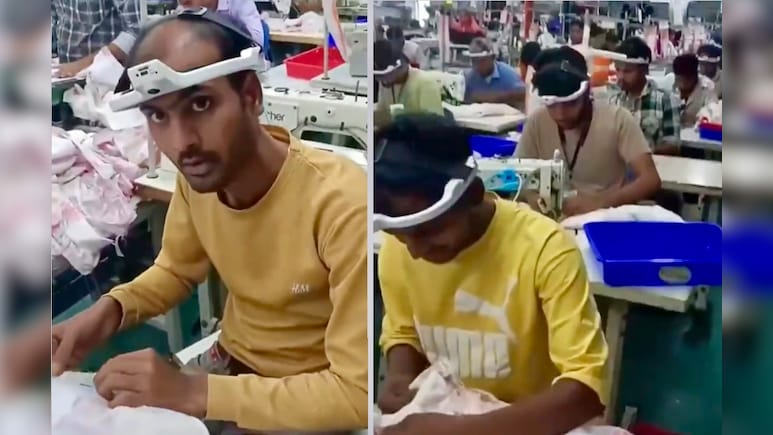
A viral video showing Indian factory workers wearing head-mounted camera devices while stitching garments sparked widespread debate about whether such footage is being used to train AI systems for robotics and automation, as per The Scroll.
The video shows workers in apparel factories sewing clothes while wearing lightweight cameras attached to headbands, recording their hand movements and actions throughout the shift. It quickly gained attention online, with speculation that the data could be used to replace human labour with robots in the future.
???????? Indian factory workers are wearing head cameras so AI can learn every move they make.
Every gesture. Every shortcut. Every instinct.
They're not just working anymore—
they're training their replacements in real time.
Source: longliveai on IG in short pic.twitter.com/aKono6PInUAlso Read | Layoffs Are Rising In Tech, But These Skills Are Helping People Unlock Better Pay
— Nitesh Das (@Realnitesh945) April 13, 2026
The investigation by Scroll identifies factories where such devices were used, including a Gurugram unit of Pearl Global Industries and textile facilities in Maharashtra. Workers reported being asked to wear the devices during work hours so companies could analyze how tasks are performed on the factory floor.
Start-ups involved in collecting this data describe it as “egocentric video footage” captured from a first-person perspective. The data is then processed into datasets used to train artificial intelligence and robotics systems that can replicate human actions.
One such company, Egolab.AI, founded in 2026, claims to collect large-scale labour-sourced video data from factory workers using wearable cameras. It states that this information is packaged into datasets for global AI firms working on robotics and computer vision systems.
Workers, however, said consent was unclear or not properly obtained in some cases. They reported discomfort with the devices, which were worn for long hours and sometimes caused heat and irritation. Some also expressed concern about surveillance and privacy while wearing them.
Egolab said it provides productivity analysis reports to manufacturing firms based on AI models trained on the collected footage, claiming to help improve efficiency. These reports include breakdowns of worker activity and comparisons of productivity levels.
An AI-powered "productivity analysis" sample report seen by Scroll uses camera footage to track factory workers' activity. It claims workers idle for 2.2 hours daily on average, costing roughly Rs 33,000 in lost output, by highlighting individual best and worst performers.
Essential Business Intelligence, Sharp Market Insights, Practical Personal Finance Advice, Daily Fuel, Gold and Silver Prices and Latest Stories — On NDTV Profit.