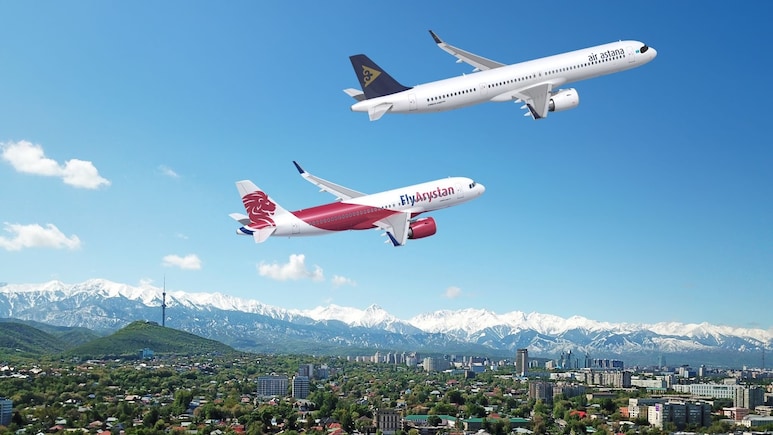
Airbus lowered its 20-year industry-wide demand projection for passenger aircraft by 1% on Wednesday, following a substantial uptick in airline activity since the COVID-19 outbreak due to the Iran war and trade concerns.
The largest aircraft manufacturer in the world stated that while it still anticipated strong jet demand, with Asia expected to account for almost half of all deliveries, the Gulf and tariff crises had dampened earlier growth forecasts, reported Reuters.
As airlines reduce their capacity growth plans due to rising oil prices resulting from the Iran war, the lowered long-term growth prognosis indicates a somewhat less optimistic aviation market ahead.
Also Read | Layoffs Are Rising In Tech, But These Skills Are Helping People Unlock Better Pay
Airbus said it anticipated 42,060 overall passenger jet deliveries between 2026 and 2045, down 1% from its previous rolling 20-year prediction, after reviewing demand throughout the industry, including aircraft sold by rival Boeing and newcomer China.
This comprises 8,140 wide-body or long-haul aircraft, down 1% from the previous 20-year prediction, and 33,920 single-aisle aircraft in the busiest sector of the business, which includes the Airbus A320neo family and Boeing's 737 MAX.
ALSO READ: Has Air India Grounded 11 Boeing 787-8 Aircraft? Airline Clears The Air Amid 'Fake' Claims
That is just sufficient to meet Airbus and Boeing's declared production plans, and leaves space for China's rival C919 in the upcoming years, indicating that the recent, severe aircraft shortages may gradually subside.
Instead of expanding fleets, Airbus predicted that a larger percentage of all passenger jet deliveries—47% as opposed to the previous 45%—would be used to replace ageing aircraft.
Additionally, the European company updated its headline statistic for passenger traffic growth from 3.6% to 3.9% annually. Officials stated that this represents a reduction from 4.1% on a like-for-like basis.
The Middle East, whose Gulf hubs have returned to normal traffic volumes, is one region that is continuing to recover robustly during a precarious ceasefire in the Iran dispute, according to Airbus.
Airbus updated its prediction for annual domestic traffic growth to 9.1% from 8.9%, indicating that India is still the fastest-growing air transport market in the world. For China's massive domestic market, it reduced its growth projection from 5.4% to 4.7%.
ALSO READ: Aequs Shares Could Nearly Double, Says Nuvama As It Initiates Coverage; Bets On Aerospace Growth
According to Airbus and Boeing, aviation has demonstrated the capacity to withstand shocks, such as COVID-19, the financial crisis, and 9/11.
However, the sector is maturing as air travel grows, which means that some long-term growth rates are beginning to slow down. According to Da Costa, airlines are also extending the duration of their flights or accommodating more passengers, and AI could further increase efficiency.
Airbus emphasised the value of secondary cities in its most recent edition while promoting small aircraft that can "bypass megahubs," such as the A220 and the narrow-body A321XLR.
Ten years ago, Airbus was highlighting the vital role of "megacities" that its A380 superjumbo, the largest airliner in the world, served. However, due to low demand, production of this aircraft has since stopped.
Essential Business Intelligence, Sharp Market Insights, Practical Personal Finance Advice, Daily Fuel, Gold and Silver Prices and Latest Stories — On NDTV Profit.