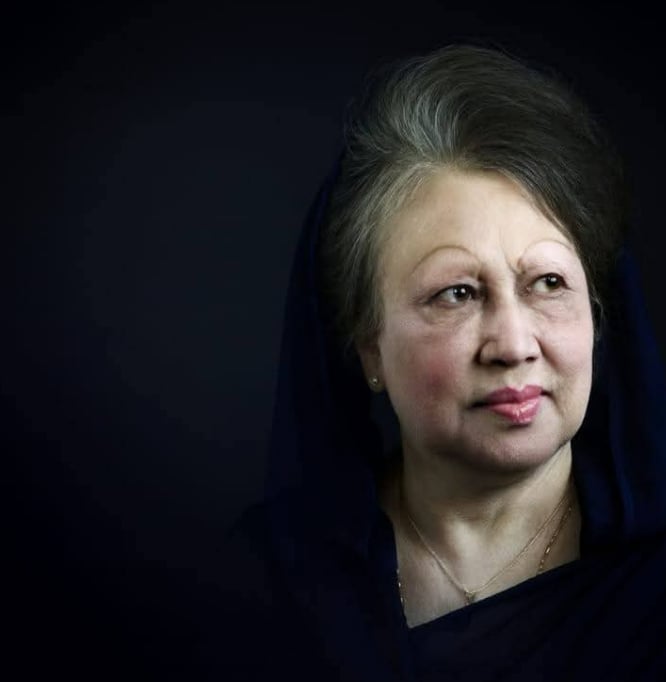
Bangladesh's first female Prime Minister, Begum Khaleda Zia, has died after a prolonged illness. She was 80. According to a statement from the Bangladesh Nationalist Party (BNP), Khaleda Zia died at 6 a.m. on Tuesday, Dec. 30, while undergoing treatment.
“The BNP Chairperson and former Prime Minister, Begum Khaleda Zia, passed away today at 6:00 a.m., shortly after the Fajr prayer,” the statement read.

-
 Indian Markets Turning Corner After Two Tough Years, Says Sandeep Tandon
-
 NDTV Profit Ignite 2026: Experts See Opportunity In Equities, Stay Bullish For Long-Term
-
 Buy Right, Sit Tight Does Not Work for Individual Stocks, Says Dinshaw Irani
-
 'Worst Is Behind': Quant MF Sees Market Bottom, Flags 'Extreme Euphoria' In Midcaps
-
 India's Mutual Fund Industry Could Become A $1 Trillion Opportunity, Say Fund Managers
-
 'Foreign Investors Are Baraatis': Raamdeo Agrawal's Take On LTCG Tax
-
 Stay Invested Through Market Cycles: Raamdeo Agrawal at NDTV Profit Ignite
-
 Ramesh Damani Remains Bullish On India For Next 20-30 Years, Sees Bargains Amid Market Weakness
-
 CAS Came After A Long Consultation Process: SEBI Chairman Tuhin Kanta Pandey AT NDTV PROFIT IGNITE
-
 Aim To Cut FPI Onboarding Time From Mth To Five Days: SEBI Chairman Tuhin Kanta Pandey AT NDTV PROFI
Khaleda Zia was admitted to Dhaka's Evercare Hospital on Nov. 23 after being diagnosed with infections in her heart and lungs. She was also battling pneumonia, Bangladeshi daily The Daily Star reported.
Also Read | Layoffs Are Rising In Tech, But These Skills Are Helping People Unlock Better Pay
The BNP Chairperson and former Prime Minister, Begum Khaleda Zia, passed away today at 6:00 a.m., shortly after the Fajr prayer. Inna lillahi wa inna ilayhi rajiâun. We pray for the forgiveness of her soul and request everyone to offer prayers for her departed soul. pic.twitter.com/KY2948UPD5
— Bangladesh Nationalist Party-BNP (@bdbnp78) December 30, 2025
Begum Khaleda Zia: Political Career, Rise to PM Office
Khaleda Zia was born to Iskandar Majumder and Taiyaba Majumder in Dinajpur District on August 15, 1946, as per the party's official website. The daughter of a tea trader, she studied at Dinajpur Missionary School before completing her matriculation at Dinajpur Girls' School in 1960.
Known by the nickname “Putul,” Khaleda Zia was the second of five siblings, with three sisters and two brothers, The Daily Star reported.
In 1960, she married Ziaur Rahman Bir Uttam, then an officer in the Pakistan army, and continued her education at Surendranath College until 1965, the part website added.
When Ziaur Rahman Bir Uttam became the President of Bangladesh, she accompanied him as the First Lady and met world leaders including UK Prime Minister Margaret Thatcher.
When the Liberation War erupted in 1971, Ziaur Rahman rebelled across frontlines. Following his assassination in May 1981, the BNP plunged into a severe crisis. It was then that Khaleda Zia entered the BNP. She was appointed the party's vice-president on Jan. 12, 1984, and made the chairperson on May 10, 1984, the official website said.
The 1991 parliamentary elections marked her breakthrough. The BNP won a clear majority, and Khaleda Zia, who contested from five constituencies in three successive general elections, won every seat she stood for. On March 20, 1991, she was sworn in as Bangladesh's prime minister. As cited by BBC, she became “the first female leader of Bangladesh, and only the second woman to lead a Muslim country.”
Trump Says He Still Might Fire Powell as Fed Chair Pick LoomsKhaleda Zia secured a second term in the February 1996 election, though major opposition parties boycotted the polls. Responding to growing pressure, her government introduced a constitutional amendment to establish a non-partisan caretaker administration to oversee elections. After handing power to this caretaker setup on March 30, 1996, her party was defeated in the subsequent June elections, and she became Leader of the Opposition during the 1996-2001 Awami League tenure.
Khaleda Zia returned to power when the BNP-led four-party alliance swept the 2001 polls, winning more than two-thirds of parliamentary seats. She was sworn in for a third term on Oct. 10, 2001, The Daily Star reported.
The army-backed caretaker government that took over in 2007 arrested her alongside other political leaders. Though later freed, her party failed to secure victory in the 2008 election. The BNP also boycotted the 2014 election, leaving the party, and Khaleda Zia herself, without parliamentary representation for the first time since 1991.
Legal battles then defined her life. In 2018, Khaleda Zia was sentenced to 17 years in prison in 2018 for the Zia Orphanage Trust and Zia Charitable Trust corruption cases.
With the Covid-19 pandemic unfolding, the government suspended her sentence through an executive order on March 25, 2020, on the condition that she doesn't leave the country. Finally, on Aug. 6 this year, she was fully released after Bangladesh President Mohammed Shahabuddin granted her clemency.
First Female PM Of Bangladesh, Khaleda Zia Dies At 80Essential Business Intelligence, Sharp Market Insights, Practical Personal Finance Advice, Daily Fuel, Gold and Silver Prices and Latest Stories — On NDTV Profit.