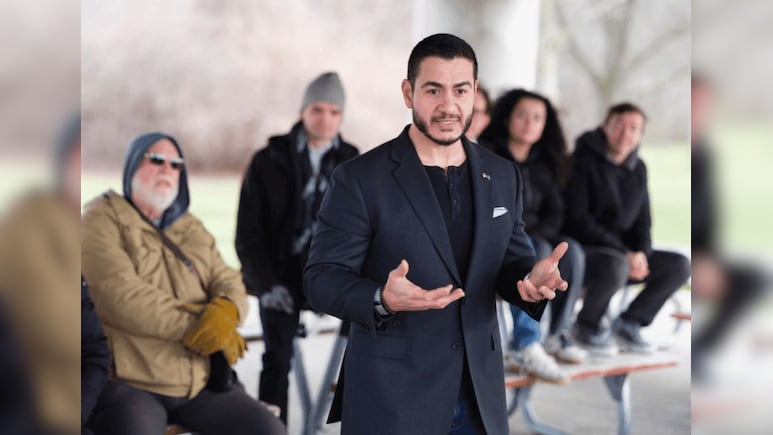
Pakistan, Egypt and Saudi Arabia should not count on unconditional American weapons if Abdul El-Sayed has his way.
The Democrat, who is set to enter the US Senate as its first Muslim member, told the American broadcaster PBS on Friday that he sees no reason for US taxpayers to bankroll other nations' militaries with no conditions attached.
“I don't pay my tax dollars so the government of Egypt gets tanks or the government of Pakistan or the government of Saudi Arabia. I don't believe that we should be doing unconditional foreign military aid as a matter of course,” he said.
Also Read | Layoffs Are Rising In Tech, But These Skills Are Helping People Unlock Better Pay
Michigan's New Senator
El-Sayed, 42, won the Senate seat in Michigan on November 3, beating former Republican Congressman Mike Rogers. He takes over from Democrat Gary Peters, who did not contest again. A former health official in the state, he campaigned on universal healthcare, less corporate money in politics and a harder stance on arming Israel.
International Law As The Test
His central argument is that aid should depend on the recipient's record. Countries facing accusations of breaking international law through genocide, apartheid or wars to grab territory should not get American help automatically, he said.
Abdul El-Sayed: I don't pay my tax dollars so the government of Egypt gets tanks, or the government of Pakistan, or the government of Saudi Arabia. I don't believe that we should be doing unconditional foreign military aid as a matter of course. https://t.co/9sWO8SGpQW
— Clash Report (@clashreport) November 13, 2026
“I think that for us, we should be conditional, right, when it comes to any foreign military aid on upholding international law,” El-Sayed told PBS.
ALSO READ | Wall Street Races For Megadeals As Countdown Begins On Trump Era
In his view, that yardstick cannot be reserved for Israel alone. Earlier in the week, speaking to ABC News, he applied the same reasoning to Egypt, Pakistan and Jordan, saying the US also had to answer to international law.
‘Voters Have Decided'
Israel was a flashpoint during his primary battle. When PBS asked whether Democrats needed to find common ground on the issue, El-Sayed suggested Americans were already on the same page.
“The public has pretty much clearly reached consensus. We don't pay our tax dollars to buy bombs and tanks for other countries. We want to pay our tax dollars to buy good schools and healthcare here on our own. Whether or not parties recognise that, that is their choice,” he said.
He wants Washington to scale down military aid to Israel and put limits on weapons sales, arguing that American-supplied arms must not be used to violate international law.
ALSO READ | From High-flying AI Stocks To Tariff-hit Alcohol Companies, US Midterms Shook Up Wall Street
What The US Gives Israel
Aid to Israel currently runs under a 2019-2028 agreement worth $38 billion. Every year, Israel receives $3.3 billion through Foreign Military Financing and another $500 million for joint missile defence.
In the first year after the October 7, 2023 Hamas attack and the war in Gaza that followed, the US provided at least $16.3 billion in extra direct military aid, according to estimates by the Costs of War project at Brown University's Watson Institute. US President Donald Trump plans to stop nearly $4 billion in yearly military grants to Israel from 2027, though arms sales will continue, the Associated Press has reported.
El-Sayed's road to the Senate included an August primary win over Congresswoman Haley Stevens, the party establishment's pick, even as outside groups poured money into defeating him.
ALSO READ | AI Giants Could Face A Regulatory Reckoning As US Democrats Take Congress
Essential Business Intelligence, Sharp Market Insights, Practical Personal Finance Advice, Daily Fuel, Gold and Silver Prices and Latest Stories — On NDTV Profit.